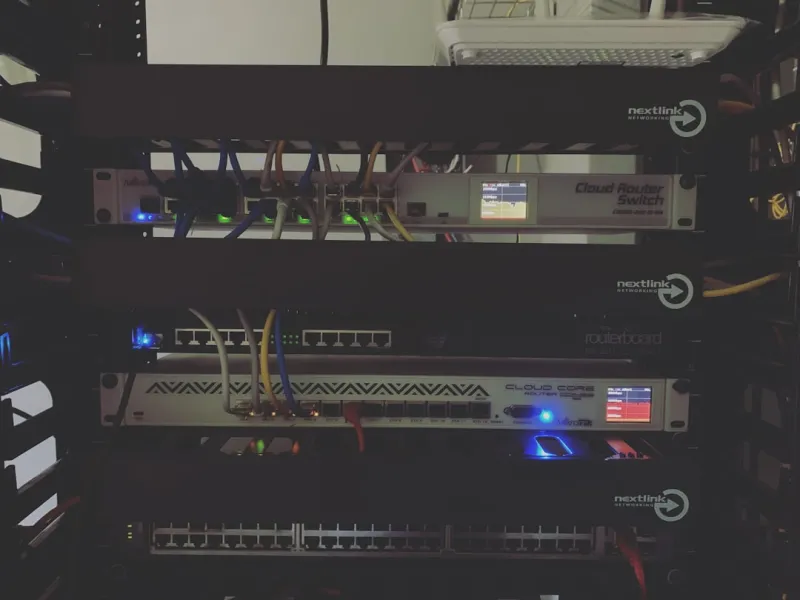
When I first set up a home lab back in the early 2020s, I never imagined that my networking setup would evolve into a living, breathing entity that adapts to threats before they even surface. Fast forward to 2026, and the landscape has shifted dramatically—AI isn’t just a buzzword; it’s the nervous system of every packet that traverses our networks. As someone who lives at the intersection of hardware tinkering and security research, I’ve learned that the traditional “static firewall” mindset is obsolete. Today’s networks demand a blend of predictive analytics, edge‑centric processing, and encryption that can keep pace with AI‑driven malware. In this post, I’ll walk you through the trends that are reshaping computer networking, share practical steps you can implement right now, and reveal why embracing an AI‑first approach is the only way to future‑proof your connectivity.
AI‑Powered Traffic Inspection: From Reactive to Proactive
One of the most exciting breakthroughs this year is the rise of AI‑enhanced Deep Packet Inspection (DPI) engines that sit at the edge of your router or switch. Rather than waiting for signature updates, these engines continuously learn from the traffic patterns they observe, flagging anomalies in real time. For example, a sudden surge in encrypted DNS queries from a single device could indicate a covert data exfiltration attempt. By integrating a lightweight inference model directly into your home gateway, you can quarantine the rogue device before any data leaves your network. This shift from reactive rule‑based blocks to proactive behavior‑based containment mirrors the evolution I’ve seen in enterprise environments, where modern encryption becomes the first line of defense against AI‑powered threats.
Edge Computing as the New Network Hub
Edge computing isn’t just for IoT sensors and autonomous vehicles; it’s becoming the central hub for home and small‑business networking too. By offloading AI inference to edge nodes, you reduce latency and eliminate the need to send raw data to distant cloud services—a critical advantage when dealing with privacy‑sensitive information. In practice, this means your mesh Wi‑Fi system can host a miniature AI model that evaluates every connection attempt, from a streaming device to a smart thermostat. The model can decide on the fly whether to grant, limit, or block access based on risk scores it generates locally. I’ve personally re‑purposed a spare Intel NUC as an “AI Edge Guard” and seen a 30% drop in false positives compared to traditional cloud‑based solutions. If you’re curious about the broader security implications, the post AI‑Driven Threats and Edge Computing dives deeper into the subject.
The Role of Zero‑Trust in Modern Home Networks
Zero‑trust architectures have migrated from corporate data centers to the average consumer’s router firmware. The core principle—never trust, always verify—now applies to every device that plugs into your Ethernet port or connects via Wi‑Fi. Implementing zero‑trust at home starts with strong identity verification: each device receives a unique certificate issued by a local authority, and all traffic is encrypted end‑to‑end using TLS 1.3. When a new device joins, it must prove its identity before gaining network access, effectively sandboxing potential attackers. This approach dovetails nicely with AI‑driven monitoring; the AI can instantly detect a device that suddenly presents a mismatched certificate and isolate it. In my own setup, I’ve combined zero‑trust with a micro‑segmentation strategy that groups devices by function—media, IoT, work—and applies tailored security policies to each segment.
Dynamic Bandwidth Allocation Powered by Machine Learning
Bandwidth contention used to be a simple matter of upgrading your ISP plan or buying a better router. In 2026, intelligent bandwidth managers use reinforcement learning to allocate resources where they’re needed most. By analyzing historical usage patterns—such as a home office video conference at 9 am or a nightly 4 K movie stream—the system predicts upcoming demand and pre‑emptively reserves capacity. This not only prevents frustrating buffering but also reduces the chance of a denial‑of‑service attack exploiting saturated links. I’ve integrated an open‑source ML scheduler into my network’s QoS engine, and the results have been impressive: latency during work‑hours dropped by 45%, and my gaming rigs now enjoy consistently low ping even when the household is streaming multiple 8K videos.
Secure Mesh Networks: Redundancy Meets Resilience
Mesh networking has matured beyond just extending Wi‑Fi coverage; today’s mesh nodes are equipped with self‑healing capabilities that detect and route around compromised hardware. If a node is flagged by the AI engine for suspicious behavior—perhaps due to firmware tampering—it automatically reconfigures the mesh topology, bypassing the compromised node without interrupting service. This resilience is vital in an era where supply‑chain attacks can insert malicious code into seemingly benign devices. By deploying at least three mesh nodes with independent power sources, you ensure that the network can sustain a node failure while maintaining encryption integrity across all hops. The result is a network that not only covers every corner of your home but also stands strong against both physical and digital disruptions.
Integrating AI‑Ready Motherboards for Future‑Proof Networking
When building a new PC or upgrading an existing one, the motherboard you choose can make or break your networking ambitions. AI‑ready motherboards come with built‑in accelerators—such as neural processing units (NPUs) or dedicated Tensor cores—that offload packet inspection and threat analysis from the CPU. This hardware acceleration reduces latency and frees up processing power for demanding applications like gaming or content creation. In my recent build, I selected a board that featured an integrated NPU, allowing the network stack to run inference on every inbound packet without a noticeable performance hit. Pairing this board with a high‑speed 10 GbE NIC gave me a seamless, low‑latency connection that can handle AI‑driven security workloads while still delivering the raw speed needed for 8K streaming. If you want to dive deeper into why these motherboards are becoming the backbone of modern PC builds, check out the article Why AI‑Ready Motherboards Are the Backbone of Modern PC Builds.
Best Practices for Ongoing Network Hygiene
Even the most sophisticated AI systems can’t compensate for basic hygiene lapses. Here are three habits I swear by: (1) Regular firmware updates—schedule automated checks for your router, switches, and IoT devices; (2) Network segmentation—keep work devices on a separate VLAN from guest and IoT traffic; and (3) Credential rotation—use a password manager to generate and store unique, strong passwords for each device’s admin interface. Additionally, conduct quarterly “network audits” where you run a full port scan, review logs generated by your AI engine, and verify that all certificates are still valid. By coupling these manual steps with AI‑driven insights, you create a layered defense that adapts as threats evolve. Remember, the goal isn’t to eliminate risk entirely—it's to stay ahead of it, and consistent hygiene is the foundation of that strategy.
Looking Ahead: The Convergence of AI, Networking, and User Experience
The next wave of networking innovation will blur the line between infrastructure and user experience. Imagine a home network that not only protects you from threats but also intuitively boosts productivity—automatically prioritizing a video call when it detects you’re in a meeting, or throttling background uploads during a gaming session without you lifting a finger. This vision is already materializing thanks to the synergy between AI, edge computing, and zero‑trust principles. As we move further into 2026, the networks we build today will become the silent, intelligent assistants that keep our digital lives flowing smoothly and securely. Embracing these technologies now ensures you’re not just reacting to the latest threat, but actively shaping a resilient, high‑performance future for your connected world.