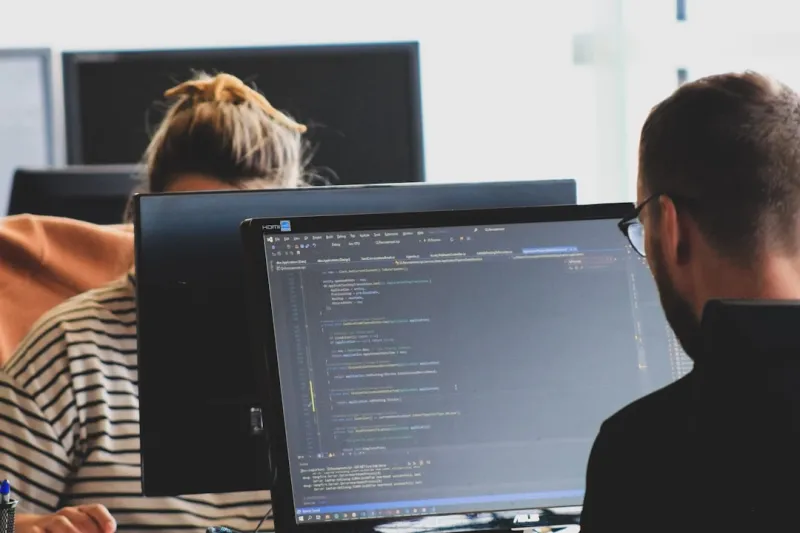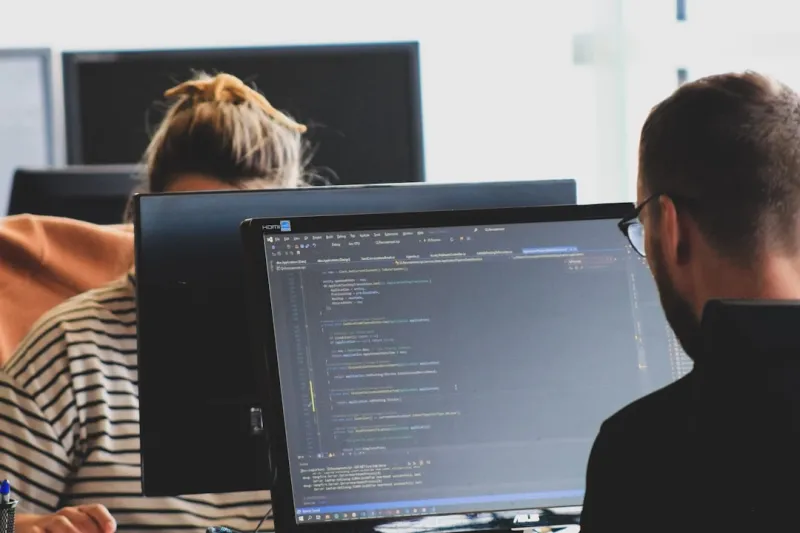
Software development in 2026 feels like watching a high‑speed train sprint through a tunnel of ideas, and I’m lucky enough to be riding in the front car. As a longtime power‑user turned developer, I’ve seen the language stack evolve from monolithic Java to micro‑service‑first Node, and now to AI‑augmented, context‑aware pipelines that write, test, and even refactor code on our behalf. The sheer velocity of change forces us to question every assumption we held a few years ago—are we still writing boilerplate, or are we curating prompts for intelligent assistants? Are we optimizing for raw CPU cycles, or for the latency of a cloud function that spins up in milliseconds? My perspective is grounded in the reality that every tool we adopt must earn its place in a workflow that demands both speed and reliability; otherwise, it’s just another distraction. In this post, I’ll walk you through the trends shaping our craft, the security challenges we can’t ignore, and the hardware choices that keep our dev rigs humming without hiccups.
AI‑Powered Coding Assistants Are No Longer a Luxury
When I first experimented with code‑completion tools a few years back, they felt like clever autocomplete widgets. Fast‑forward to 2026, and they’ve matured into full‑blown collaborative partners that understand project context, architectural patterns, and even your preferred naming conventions. Platforms like GitHub Copilot X and the new OpenAI Codex extensions can suggest entire functions, generate test suites, and flag potential performance regressions before you hit run. The real magic, however, lies in how these assistants integrate with the tools we already love. For instance, the recent AI upgrades in Microsoft Office now let power users embed live code snippets directly into documentation, turning static specs into interactive, executable guides. If you want a deeper dive, check out Unlocking AI‑Powered Productivity: How Microsoft Office Evolves for Power Users for practical examples of this synergy in action.
The Rise of Low‑Code, No‑Code, and Citizen Developers
While AI assistants are reshaping the core developer experience, a parallel movement is democratizing creation itself. Low‑code platforms like Microsoft Power Apps and OutSystems now support sophisticated backend integrations, letting business analysts spin up APIs that talk to Azure Functions with a few clicks. This surge of citizen developers means that professional engineers must focus on the high‑value layers: designing robust domain models, establishing security baselines, and maintaining the reusable services that power these rapid‑build tools. I’ve found that the best way to stay relevant is to treat these platforms as extensions of our own toolkit rather than competition. By building composable micro‑services that expose clear contracts, we enable non‑technical teammates to assemble applications without risking architectural drift. The result is a collaborative ecosystem where code quality stays high, yet innovation accelerates at a pace that would have been unimaginable just a few years ago.
Security Frontlines: Modern Malware Targets Our Toolchains
With great power comes great responsibility—and increasingly, great exposure. The same AI models that help us code can be weaponized by threat actors to inject malicious payloads into open‑source dependencies or to craft convincing phishing emails that lure us into credential leaks. The silent siege is real: modern malware now scans for popular dev environments, hijacks CI/CD pipelines, and exfiltrates secrets embedded in configuration files. If you think your workstation is safe because you run the latest OS, think again. A recent report highlighted a wave of supply‑chain attacks that specifically target power users with elevated access rights. To stay ahead, you must adopt a DevSecOps mindset—integrate static analysis, secret scanning, and runtime protection into every stage of the development lifecycle. For an in‑depth look at how these threats manifest, read The Silent Siege: How Modern Malware Is Targeting Power Users in 2026.
Infrastructure Evolution: From Bare‑Metal to Cloud‑Native
Even as we write code that lives in the cloud, the hardware we sit in front of still matters. A sluggish laptop can turn a quick iteration into a half‑day slog, especially when dealing with container images that weigh several gigabytes. In 2026, the sweet spot for power‑user developers is a hybrid setup: a high‑performance workstation for local builds and a seamless bridge to cloud‑native resources for scaling. Upgrading to the latest SSDs, leveraging DDR5 RAM, and opting for CPUs with high single‑thread performance can shave seconds off compilation times—a tangible productivity boost. If you’re curious about the exact components that make a difference, the guide Essential PC Upgrades Every Power User Needs in 2026 breaks down the ROI of each upgrade in detail.
Observability and the Quest for Real‑Time Insight
Observability has graduated from a nice‑to‑have to an absolute necessity. Modern applications generate petabytes of telemetry, and without a coherent strategy, you’re essentially flying blind. Distributed tracing tools like OpenTelemetry, combined with AI‑driven anomaly detection, enable us to pinpoint latency spikes the moment they occur. On the developer workstation, tools like VS Code’s Live Share now integrate performance dashboards that surface memory usage, thread contention, and GC pauses as you code. This real‑time feedback loop not only speeds up debugging but also informs design decisions early in the development cycle. I’ve started allocating dedicated “observability sprints” where the team refactors hot paths based on the data we collect, leading to a measurable 20% reduction in production incidents over the last quarter.
Why Windows Remains the Platform of Choice for Power Users
Despite the proliferation of Linux‑based dev environments, Windows continues to dominate the power‑user landscape in 2026. The operating system’s compatibility layer, WSL 2, now offers near‑native Linux kernel performance, allowing developers to run Docker containers, compile Linux binaries, and even test Kubernetes manifests without leaving the comfort of a familiar UI. Moreover, the deep integration with Azure tooling, Visual Studio, and the ever‑improving PowerShell scripting environment creates a cohesive ecosystem that few other platforms can match. If you’re on the fence about your OS strategy, the article Why Windows Remains the Power‑User’s Platform of Choice in 2026 outlines the tangible productivity gains you can expect by staying on Windows while leveraging WSL for cross‑platform needs.
Future‑Proofing Your Codebase: Architecture Over Technology
Technology stacks come and go, but solid architecture endures. In 2026, the buzzwords—service mesh, event‑driven, serverless—are all manifestations of a single principle: decouple concerns and let the infrastructure handle the heavy lifting. When evaluating a new framework, ask yourself whether it enforces clear boundaries, encourages testability, and supports incremental migration. I’ve found that investing time in domain‑driven design (DDD) early on pays dividends when the underlying language or cloud provider changes. By defining bounded contexts and using well‑documented APIs, you create a codebase that can survive the inevitable churn of libraries and platforms while keeping technical debt at bay.
Community, Open Source, and the Power of Collaboration
The open‑source movement remains the lifeblood of modern development. In 2026, contributions are no longer limited to code; they include AI model fine‑tuning, documentation, and even automated issue triage bots. Engaging with communities not only keeps you abreast of emerging patterns but also gives you early access to libraries that solve problems you haven’t even encountered yet. I make it a habit to allocate at least 5% of my sprint capacity to reviewing pull requests in projects I depend on. This reciprocity builds trust, surfaces hidden bugs, and often leads to collaborations that evolve into feature co‑designs. Remember, a healthy ecosystem is a two‑way street—your expertise fuels the community, and the community fuels your productivity.
Closing Thoughts: Embrace the Change, Stay Secure, and Keep Building
We stand at a crossroads where AI, cloud, and security intersect in ways that reshape the very fabric of software development. The key takeaway for power users like us is simple: adopt the tools that amplify our strengths, harden the pipelines that deliver code, and invest in hardware that keeps us moving at the speed of thought. By staying curious, contributing back, and never settling for “good enough,” we’ll continue to push the boundaries of what’s possible. If you’ve found value in any of the insights shared here, consider diving deeper into the linked resources and let’s keep this conversation rolling in the comments. The future is being coded right now—let’s make sure it’s a future we’re proud to build.