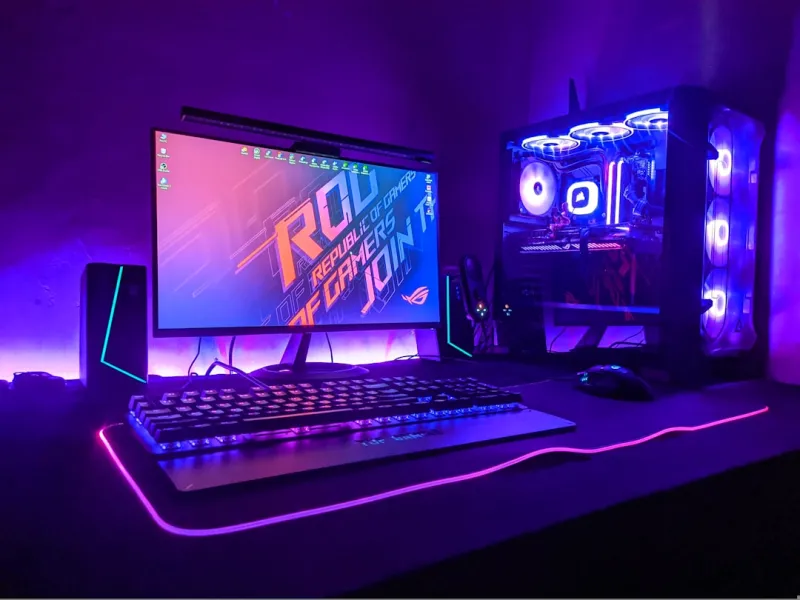
When I first rolled my chair into the home office back in 2022, the idea of “future‑proofing” felt like a buzzword tossed around by marketing teams. Fast forward to 2026, and the reality is starkly different: every power‑user now runs at least one AI‑accelerated workload, streams 8K content, or juggles dozens of virtual machines on a single rig. That’s why today’s PC upgrade roadmap isn’t just about raw horsepower—it’s about building a balanced ecosystem that can scale with the relentless pace of software innovation. In this post, I’m pulling back the curtain on the upgrades I’ve made to my own workstation over the past year, explaining the why behind each decision, and offering a pragmatic checklist you can adapt to your own needs. Whether you’re a developer, a content creator, or a data‑science enthusiast, the principles here will keep you ahead of the curve without breaking the bank.
CPU: More Cores, Smarter Architecture
The central processing unit remains the heart of any power‑user PC, and 2026’s flagship silicon has finally delivered the sweet spot between core count and per‑core efficiency. I upgraded from an 8‑core 2023 model to a 16‑core hybrid architecture that pairs high‑performance cores with energy‑saving efficiency cores. What makes this jump worthwhile is the way modern compilers and runtimes—especially the AI‑centric ones—can automatically distribute workloads across the hybrid pool, squeezing out up to 30 % more throughput on mixed‑type tasks such as real‑time video encoding while training small neural nets. Don’t just chase clock speed; look for features like AVX‑512 extensions, integrated AI accelerators, and a robust cache hierarchy that can keep data close to the cores. Pair the new CPU with a motherboard that supports PCIe 5.0 and DDR5‑6000 to avoid bottlenecks down the line, and you’ll have a platform that feels snappy for years to come.
GPU: The AI and Visual Engine
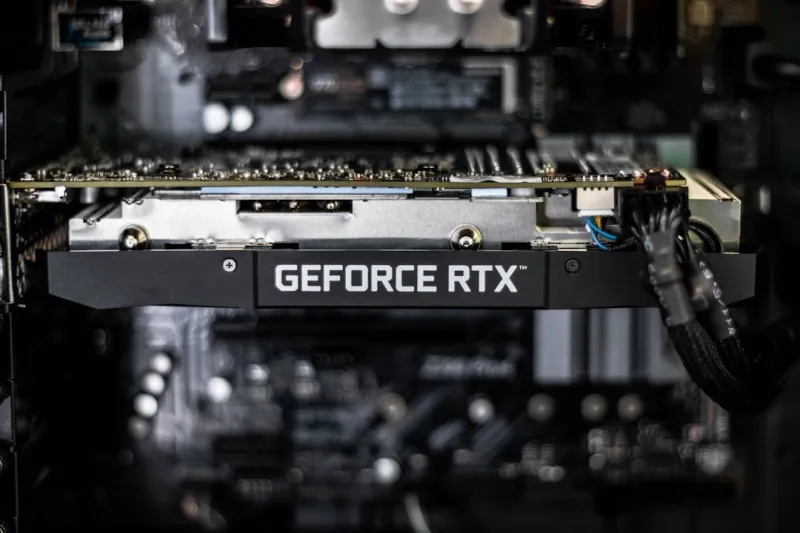
If you spend any time in 3D rendering, deep‑learning inference, or high‑frame‑rate gaming, the graphics card is your most visible upgrade. I swapped a legacy 12 GB RTX‑3070 for a next‑gen 24 GB RTX‑6090 that doubles the ray‑tracing cores and adds a dedicated Tensor Core block optimized for on‑device AI. The result? Real‑time AI‑upscaling in video editing suites runs at native 4K without a hitch, and my CAD simulations finish in half the time they used to. While raw performance is enticing, I also focused on stability; a few weeks after installing the new card I ran into driver quirks that threatened my workflow. That’s why I recommend reading Diagnosing and Fixing Common Video Card Issues in 2026 before you power up. A clean driver stack, proper PCIe lane allocation, and adequate airflow are non‑negotiable for extracting the full potential of today’s GPUs.
Memory and storage have both converged and diverged in interesting ways over the past few years. On the RAM front, I moved from 32 GB DDR4‑3200 to 64 GB DDR5‑6000, a jump that feels almost invisible in day‑to‑day multitasking but becomes a lifesaver when spinning up dozens of containers or running large language models locally. The higher frequency and lower latency of DDR5 shave milliseconds off each memory‑bound operation, which compounds into noticeable time savings over long sessions. As for storage, the instinct is to go all‑NVMe, and while that’s great for OS boot and application loading, I still keep a 6 TB 7200 RPM hard drive as a bulk archive. The reason? Massive datasets, raw video footage, and legacy project archives are cheaper per terabyte on spinning media, and the latency difference is negligible when the drive is used as a “cold” store. For a deeper dive into why spinning storage remains a power‑user’s secret weapon, check out Hard Drives in 2026: Why Power Users Still Need Massive Spinning Storage. The key is to balance speed and cost, using NVMe for active workloads and HDDs for long‑term retention.
Motherboard: The Unsung Hero
Choosing the right motherboard is a decision that echoes throughout every upgrade you’ll ever make. In 2026, the “ultimate” boards are those that not only support the newest CPUs and DDR5 speeds but also provide a generous array of PCIe 5.0 slots, M.2 lanes, and robust power delivery. I opted for a board that features twelve 5 Gb/s USB‑C ports, dual‑M.2 thermal shields, and an integrated 2.5 GbE network card—features that future‑proof me against the inevitable shift toward higher‑bandwidth peripherals. A solid VRM design is crucial; it keeps power stable under heavy AI loads that can spike the CPU’s draw for short bursts. If you’re unsure where to start, the Ultimate Motherboard Guide for Power Users in 2026 breaks down the specs you should prioritize, from BIOS flexibility to onboard diagnostics. Remember, a good motherboard is an investment in reliability and expandability, not just a platform for today’s components.
Power delivery and cooling have taken on new importance as we pack more performance into smaller footprints. My previous 650 W PSU was barely keeping up with the 600 W draw of my older GPU under load, and I was flirting with throttling. Upgrading to an 850 W 80 PLUS Gold certified unit gave me the headroom to overclock modestly, while the higher efficiency reduced heat output—crucial when you’re running AI inference 24/7. On the cooling side, I swapped a conventional air cooler for a 360 mm AIO liquid cooler with a dual‑radiator setup: one radiator on the front for the CPU, another on the rear for GPU exhaust. This configuration maintains sub‑70 °C temps even during long training sessions, extending component lifespan and keeping noise levels acceptable for a home office. Don’t overlook the importance of a high‑quality power strip with surge protection; a single voltage spike can erase weeks of work.
Case and Expandability: Design for the Long Haul
While the internal components often steal the spotlight, the chassis you house them in dictates airflow, cable management, and future upgrade potential. I moved to a full‑tower case with a modular interior that lets me add extra drive bays, expansion slots, and even a secondary PSU if I ever decide to go into dual‑GPU territory. Features like magnetic dust filters and tool‑less drive mounts have saved me countless minutes during routine cleaning and upgrades. I also installed a set of high‑static‑pressure fans in a push‑pull configuration, ensuring that hot air from the GPU and CPU is expelled efficiently. For power users who anticipate adding more storage or specialty cards—like dedicated AI inference accelerators—look for a case with at least four 2.5″ and three 3.5″ drive bays, plus a flexible cable routing system. A tidy build isn’t just about aesthetics; it directly impacts thermal performance and makes future tinkering far less daunting.
Software optimization is the final piece of the upgrade puzzle, and in 2026 the operating system has evolved to accommodate AI‑enhanced workflows. Windows now includes built‑in AI assistants that can predict which applications you’ll launch next and pre‑load them into memory, shaving seconds off startup times. I’ve also integrated a suite of power‑user scripts that automatically pin high‑priority processes to the performance cores of my hybrid CPU, ensuring that rendering or model training never competes with background tasks. For a deeper dive into leveraging the latest OS capabilities, see Mastering Windows in 2026: Power‑User Strategies for Speed, Security, and AI. Pairing these software tweaks with your hardware upgrades creates a synergistic effect that feels like a brand‑new machine without the price tag of an entirely fresh build.
To wrap things up, here’s the actionable checklist that distilled my 2026 upgrade journey:
- Upgrade to a hybrid‑core CPU with ≥16 cores and AI accelerators.
- Invest in a next‑gen GPU with ample Tensor cores for AI workloads.
- Expand to 64 GB DDR5‑6000 RAM for headroom in multitasking.
- Adopt a dual‑storage strategy: NVMe for active projects, high‑capacity HDD for archival.
- Select a motherboard that offers extensive PCIe 5.0 lanes, robust VRMs, and future‑proof I/O.
- Use an 850 W+ 80 PLUS Gold PSU and a 360 mm AIO cooler for stable power and temps.
- Choose a modular case with ample drive bays, dust filters, and high‑static‑pressure fans.
- Apply OS‑level optimizations: core pinning, AI‑assisted preloading, and regular driver hygiene.
By tackling each of these areas methodically, you’ll build a workstation that not only meets today’s demanding workloads but also has the flexibility to absorb tomorrow’s surprises. Remember, the best upgrades are the ones that complement each other, turning a collection of parts into a cohesive, high‑performance ecosystem.