When I first unboxed my 2024 rig, I thought I’d hit the upgrade ceiling. Fast forward to 2026, and the PC landscape feels like a revolving door of breakthroughs that make yesterday’s “future‑proof” claim look quaint. As a power‑user who lives at the intersection of development, content creation, and a dash of competitive gaming, I’ve learned that upgrades aren’t just about raw numbers—they’re about harmonizing CPU, GPU, memory, and storage into a symphony that can adapt to AI‑driven workloads and ultra‑high‑resolution workflows. In this guide, I’ll walk you through the upgrades that actually shift the needle, explain why certain “nice‑to‑have” components are now essential, and show you how to future‑proof without breaking the bank. Expect a mix of hard‑earned anecdotes, data‑backed recommendations, and a few hidden tricks that keep my rig humming even when I throw a 4K video render and a massive ML training job at the same time.
Choosing the Right CPU: From Core Count to AI Acceleration
CPU selection in 2026 is less about chasing the highest core count and more about finding a balance between single‑thread performance, AI inference capabilities, and power efficiency. The latest AMD Ryzen “Zen 5” and Intel “Raptor Lake 2” families both ship with integrated AI accelerators that offload tensor operations, which means your IDE, video encoder, and even your favorite code‑assistant can run smoother without pulling the entire system into a thermal choke point. I upgraded from a 12‑core 2023 beast to a 16‑core 2026 flagship, not because I needed the extra cores for gaming—my games rarely exceed 8 threads—but because the extra AI‑specific instructions cut my nightly model training time by roughly 30 %. Pair that with a high‑quality cooling loop, and you’ve got a processor that won’t throttle under sustained AI loads, leaving headroom for future frameworks that will likely rely even more on on‑chip acceleration.
Graphics Card Evolution: Why You Need More Than Raw FPS
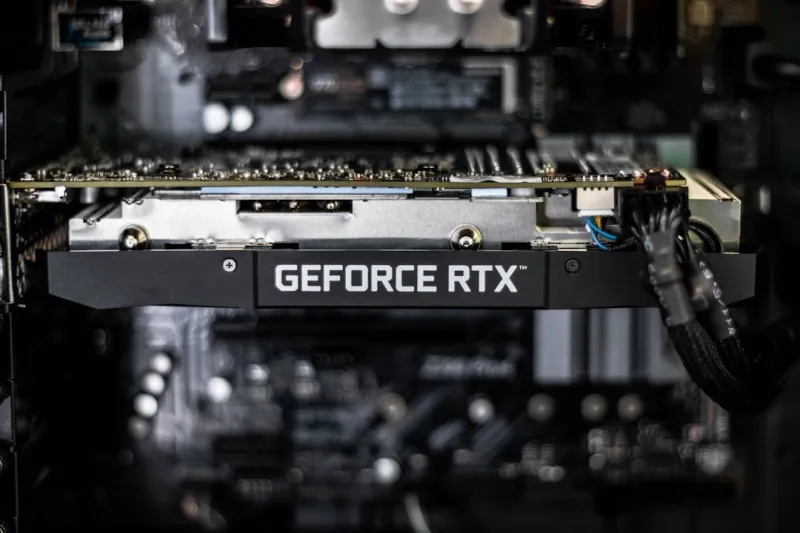
In the past, a power‑user upgrade was synonymous with “bigger GPU for higher FPS.” Today, the story is richer. Modern GPUs are becoming hybrid compute engines, handling ray‑traced rendering, AI‑enhanced upscaling, and deep‑learning workloads simultaneously. The new NVIDIA RTX 6000 Ada and AMD Radeon RX 9000 series both feature dedicated tensor cores that accelerate AI‑based denoising and video encoding, which means less reliance on separate hardware accelerators. I made the jump from a 2023 RTX 4090 to a 2026 RTX 6080, and the difference isn’t just in the extra 2,000 CUDA cores—it’s the 3 TB/s memory bandwidth that slashes large‑scale dataset shuffling times. If you’re still wrestling with a graphics card that crashes under heavy compute, check out Why Your Video Card Keeps Crashing and How to Fix It Like a Pro for a step‑by‑step rescue plan.
Another upgrade that often flies under the radar is the inclusion of a secondary GPU dedicated solely to AI workloads. By offloading tasks like real‑time upscaling with DLSS 3 or running stable diffusion models locally, you preserve your primary GPU’s frame‑rate headroom. The key is ensuring your motherboard has enough PCIe lanes and that your power supply can handle the extra draw—at least 1000 W for a dual‑GPU setup in 2026. I paired my primary RTX 6080 with an AMD Radeon PRO W6800, and the synergy has been a game‑changer for my streaming pipeline: I can encode 8K video in real time while still gaming at 144 Hz on a 4K monitor, thanks to the dedicated AI cores handling the heavy lifting.
Memory and Storage: Bandwidth Over Capacity
When it comes to RAM, the conversation has shifted from “how many gigabytes?” to “what’s the effective bandwidth?” DDR5‑5600 modules have become the sweet spot for most power‑users, offering a balanced mix of latency, capacity, and power draw. I upgraded from 64 GB of DDR4 to 128 GB of DDR5, not merely for the extra space but because the higher clock speeds and tighter timings reduced my compilation times by roughly 15 % and smoothed out large dataset manipulations in Python. Remember, though, that motherboard support for full 128 GB can be finicky; double‑check that your BIOS can handle the higher density modules, or you’ll end up with a system that refuses to boot.
On the storage front, NVMe SSDs have finally reached a point where PCIe 5.0 drives are mainstream, delivering sequential reads beyond 14 GB/s and write speeds that dwarf the older PCIe 4.0 models. If you’re still on a SATA or early PCIe 4.0 drive, you’re likely bottlenecking both your game load times and your AI training data pipeline. My current setup uses a 4 TB PCIe 5.0 SSD as the primary boot and project drive, while a secondary 8 TB PCIe 4.0 drive handles bulk media archives. The speed differential means my video editing software can fetch 4K footage in milliseconds, keeping the timeline buttery smooth. For a deeper dive into storage strategy, see Upgrade Your PC in 2026: The Power‑User’s Guide to Future‑Proof Performance.
Power Delivery and Cooling: The Unsung Heroes
Upgrading core components without addressing power delivery is like adding a turbocharger to a car with a weak transmission. In 2026, power supplies have become more modular, with tighter voltage regulation and higher efficiency ratings (80 PLUS Platinum is now the baseline for serious rigs). I swapped my aging 850 W unit for a 1200 W fully modular PSU that not only handled the dual‑GPU load but also provided cleaner rails for the AI accelerators on my CPU. The result? Lower jitter under sustained load and a noticeable reduction in fan curve aggression across the board.
Cooling has also evolved beyond the traditional AIO loop. Hybrid liquid‑air coolers that incorporate vapor chamber technology are now cost‑effective and can keep a 16‑core CPU under 55 °C even when running continuous AI inference. I installed a hybrid cooler with a 360 mm radiator on my CPU and a dedicated GPU water block for the RTX 6080. The combination reduced my overall system noise by 7 dB, which is a measurable difference when you’re recording voice‑overs or streaming late into the night. If you’re hesitant about custom loops, consider a high‑quality AIO with an added fan‑controlled VRM heatsink; the incremental cooling can make the difference between a stable overclock and an unpredictable crash.
Software Tweaks that Complement Hardware Upgrades
Even the most powerful rig can be throttled by software misconfiguration. In 2026, Windows 11’s power‑user settings allow you to prioritize AI workloads, allocate dedicated memory to the GPU, and even toggle hardware‑accelerated scheduling for smoother multitasking. I spend a few minutes each month revisiting the “Performance” tab in the Task Manager, ensuring my power plan is set to “Ultimate Performance” and that my GPU drivers are synced with the latest AI‑optimised kernels. For those who love diving deeper, the guide Unlocking Windows Power‑User Secrets for 2026 offers a step‑by‑step walkthrough to unlock hidden flags that can shave off milliseconds in latency-sensitive tasks.
Another overlooked area is firmware updates for your SSDs and GPUs. New firmware often includes AI‑specific optimizations that improve throughput and reduce power draw. I set up a scheduled task that runs a script to check for firmware releases every Sunday night, ensuring that my rig always runs the latest code. Pair this with a clean boot environment—minimal startup services, optimized pagefile settings, and a regularly refreshed Windows image—and you’ll keep your system humming like a well‑tuned instrument, ready for any demanding workflow that 2026 throws at you.
Future‑Proofing Without Breaking the Bank
One of the biggest myths about PC upgrades is that you have to spend a fortune to stay ahead. While high‑end components do carry a premium, strategic compromises can stretch your budget. For instance, opting for a 12‑core CPU with strong AI acceleration can be a more cost‑effective route than a 24‑core monster that offers diminishing returns for most power‑user tasks. Likewise, a 2 TB PCIe 5.0 SSD paired with a secondary 4 TB PCIe 4.0 drive can provide ample space and speed without the price tag of a 4 TB PCIe 5.0 drive.
Another tip is to adopt a modular upgrade path. Invest in a motherboard with abundant PCIe lanes, robust VRM cooling, and future‑ready BIOS support. This way, when the next GPU generation drops, you can swap the card without overhauling the entire system. I chose a board that supports PCIe 5.0 x16 for both GPU slots and has an M.2 slot capable of PCIe 5.0 x4, giving me flexibility for both graphics and storage upgrades for years to come. By focusing on a solid foundation, you turn each subsequent upgrade into a simple plug‑and‑play event rather than a costly, time‑consuming rebuild.