When I first installed Windows back in the early 2000s, I never imagined the operating system would evolve into the AI‑infused, security‑centric platform it is today. Fast forward to 2026, and Windows has become a sandbox for power users who demand razor‑sharp performance, bullet‑proof protection, and seamless integration with next‑gen workloads. I’ve spent the last decade fine‑tuning my rigs, chasing every bit of latency, and documenting the shortcuts that turn a good machine into a great one. In this post, I’m pulling back the curtain on the most effective strategies that let you squeeze every ounce of horsepower from Windows while staying ahead of the security curve. Expect a deep dive into registry tweaks, service optimization, AI‑driven productivity boosters, and the hardware‑software dance that defines a truly future‑ready workstation. If you’ve ever felt Windows was a “one‑size‑fits‑all” OS, you’ll discover that, with the right playbook, it can be molded into a bespoke engine that powers your most demanding projects without breaking a sweat.
Performance Mastery: Tweaking Windows for Speed
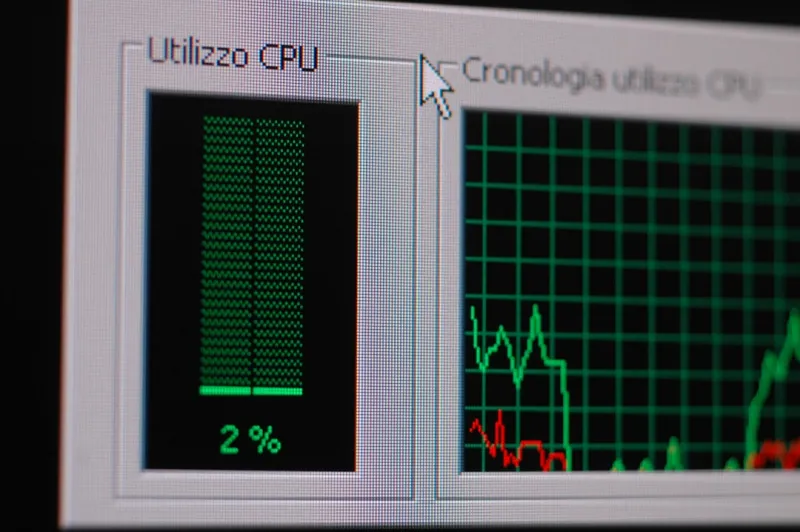
Performance in 2026 isn’t just about raw CPU cycles; it’s about orchestrating the entire stack—from firmware to the user interface. One of my go‑to moves is pruning the Windows startup sequence using the built‑in Task Manager and a third‑party utility that visualizes dependency trees. Disabling nonessential services like Print Spooler (if you rarely print) and Windows Search (when you rely on third‑party indexing) can shave off precious seconds. Next, I dive into the registry to adjust the HKLM\SYSTEM\CurrentControlSet\Control\Session Manager\Memory Management parameters, lowering the “LargeSystemCache” value for systems that prioritize interactive workloads over server‑style caching. Don’t forget the power plan: the “Ultimate Performance” scheme, originally reserved for workstation SKUs, is now unlocked for all editions via a simple bcdedit /set {current} highestavailable command. Pair these tweaks with a modern NVMe SSD, and you’ll notice applications launching in a flash, even under heavy multitasking. The key is a balanced approach—over‑optimizing one area can inadvertently starve another, so always benchmark before and after each change.
Zero‑Trust Security: Windows Defender and Beyond
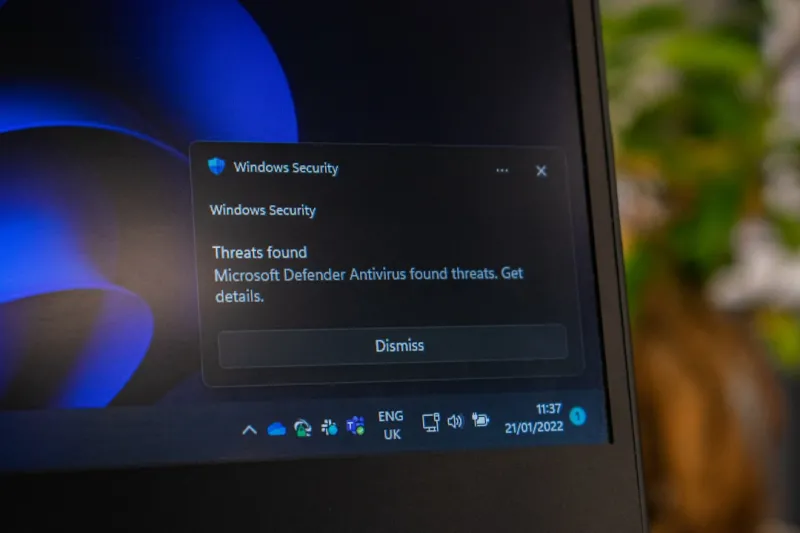
Security in the modern Windows ecosystem has adopted a zero‑trust mindset, meaning every process, file, and network request is treated with suspicion until proven safe. Windows Defender’s real‑time protection now leverages cloud‑based AI to flag anomalous behavior before it becomes a threat, but you still need to fine‑tune its settings. I recommend enabling Controlled Folder Access, which prevents unauthorized apps from writing to critical directories—especially useful when you juggle multiple AI models that generate temporary data. Additionally, configure Exploit Guard’s Attack Surface Reduction rules to block common vectors like Office macro execution and PowerShell script abuse. For those who love a granular view, the Windows Security Center’s “Advanced Threat Protection” dashboard provides a timeline of detections, allowing you to respond swiftly. Don’t overlook credential protection: enable Windows Hello for Business and enforce multi‑factor authentication for all admin accounts. By layering these defenses, you create a resilient fortress that can withstand today’s fast‑evolving malware landscape without sacrificing usability.
AI Integration: Turning Windows into a Copilot for Power Users
One of the most exciting developments in Windows 2026 is the deep integration of AI assistants directly into the OS shell. Microsoft Copilot now sits beside the Start menu, offering context‑aware suggestions that span file organization, app shortcuts, and even code snippets. I’ve trained my Copilot profile to recognize my typical workflow—launching Visual Studio Code, spinning up Docker containers, and opening large GIS datasets with a single voice command. The AI also surfaces performance recommendations, like suggesting you offload a heavy rendering job to your RTX 4090 when GPU utilization spikes above 80%. Coupled with the AI‑enhanced Office suite, you can dictate complex spreadsheets, generate PowerPoint decks from bullet points, and let the system auto‑format citations in real time. To maximize these capabilities, keep your Windows update channel on the “Semi‑Annual Channel (Targeted)” so you receive the latest AI models as soon as they’re vetted. The result is a seamless, predictive environment where the OS anticipates your needs, allowing you to focus on creation rather than configuration.
Hardware Harmony: GPU Health and Proactive Fixes
Even the most powerful GPU can become a bottleneck if its health is neglected, and that’s where proactive maintenance shines. I recently encountered a jittery frame rate in a deep‑learning inference task, only to discover the GPU’s thermal throttling curve had shifted after a firmware update. The solution? A quick read of the event logs followed by a targeted driver rollback and a fresh install of the latest BIOS—steps I detail in Why Your GPU Keeps Crashing and How to Fix It Like a Pro. Beyond firmware, I monitor VRAM usage with MSI Afterburner, setting alerts when consumption exceeds 90%, which often signals memory leaks in AI workloads. Keeping the GPU’s power profile on “Optimal” rather than “Maximum Performance” can also extend its lifespan without noticeable loss in throughput. Pair these practices with regular dust cleaning and a high‑flow case fan configuration, and you’ll keep your graphics engine humming at peak efficiency for years to come.
Networking Strategies for the Modern Power User
In a world where cloud‑native services dominate, a reliable and secure network connection is non‑negotiable. I recently overhauled my home lab’s topology after reading Why Modern Power Users Must Rethink Their Networking Strategy. The key takeaway was to segment workloads using VLANs: one for latency‑critical AI training jobs, another for everyday browsing, and a third for IoT devices that could become attack vectors. Implementing a 2.5 Gbps Ethernet backbone with QoS policies ensures that high‑throughput data pipelines never get throttled by background traffic. On the software side, I enable Windows’ built‑in “Network Isolation” feature for browsers, limiting cookie sharing across domains—a subtle but effective privacy boost. Finally, I leverage DNS over HTTPS (DoH) to encrypt queries, preventing ISP‑level snooping. By treating networking as a layered defense, you safeguard data integrity while maintaining the speed required for demanding workloads.
Future‑Proofing Your Windows Environment
Looking ahead, the most sustainable way to stay ahead of the curve is to build a Windows environment that can adapt to emerging technologies without a complete OS reinstall. I regularly revisit the insights from Unlocking Windows 2026: Power‑User Strategies for Performance, Security, and Future‑Proofing, especially the sections on modular driver stacks and the Windows Subsystem for Linux (WSL) 2 integration. By keeping WSL updated, you can run native Linux containers alongside Windows apps, giving you the flexibility to test new AI frameworks or edge‑computing tools instantly. I also maintain a “golden image” on a separate partition, refreshed quarterly with the latest cumulative updates and a curated set of power‑user tools. This image serves as a safety net, allowing me to spin up a clean environment in minutes if my primary installation ever becomes compromised. Combine these practices with a robust backup strategy—using both cloud snapshots and local Btrfs mirrors—and you’ll have a resilient system ready for whatever Windows throws at you in the coming years.
Conclusion: Take Control and Keep Evolving
The Windows landscape in 2026 is rich with opportunities for power users willing to dig beneath the surface. From aggressive performance tuning and AI‑driven assistance to hardened security postures and meticulous hardware care, each layer adds to a cohesive, high‑performing ecosystem. My advice is simple: start small, measure impact, and iterate. Implement one tweak at a time—perhaps a startup service disable, then a security rule, followed by an AI shortcut—so you can clearly see the benefits and avoid unintended side effects. As the platform continues to evolve, stay curious, keep reading, and share your findings with the community. After all, the true power of Windows lies not just in the code Microsoft writes, but in how we, the power users, shape it to meet our ever‑growing ambitions.