When I first booted up a fresh Windows install back in the early 2010s, I could barely imagine the AI‑driven landscape we now navigate daily. Fast forward to 2026, and Windows has become a living, learning platform that anticipates our workflows, optimizes resource allocation, and even suggests shortcuts before we type them. As a power user, I’ve learned to treat the OS not just as a sandbox for apps but as a co‑pilot that can be tuned, tweaked, and extended. This article is a deep dive into how we can harness those new capabilities—whether you’re building a workstation for AI research, fine‑tuning a gaming rig, or simply demanding rock‑solid reliability for your day‑to‑day tasks. I’ll share the strategies that have kept my own systems humming, the pitfalls I’ve avoided, and the resources you need to stay ahead of the curve. Let’s unpack the layers of Windows in 2026, from the core kernel updates to the peripheral ecosystems that make or break a power‑user setup.
AI at the Core: Windows as an Intelligent Assistant
Microsoft’s integration of AI into the Windows kernel has moved from optional add‑ons to core functionality. Features like “Smart Memory Management” analyze usage patterns in real time, reallocating RAM to the most demanding processes without user intervention. Meanwhile, the new “Contextual Action Center” surfaces relevant shortcuts, file suggestions, and even code snippets based on the apps you have open. I’ve personally leveraged these tools to shave minutes off routine tasks—minutes that add up over weeks and months. If you want to explore the full breadth of these AI enhancements, the guide Unlocking Windows for Power Users: AI, Performance, and Future‑Proof Strategies offers a step‑by‑step walkthrough. The key takeaway? Treat Windows’ AI as a configurable partner: dive into the Settings → AI Hub, enable granular controls, and experiment with “Learning Modes” that let you decide how aggressive the system should be in optimizing background workloads.
Security in an AI‑Powered World
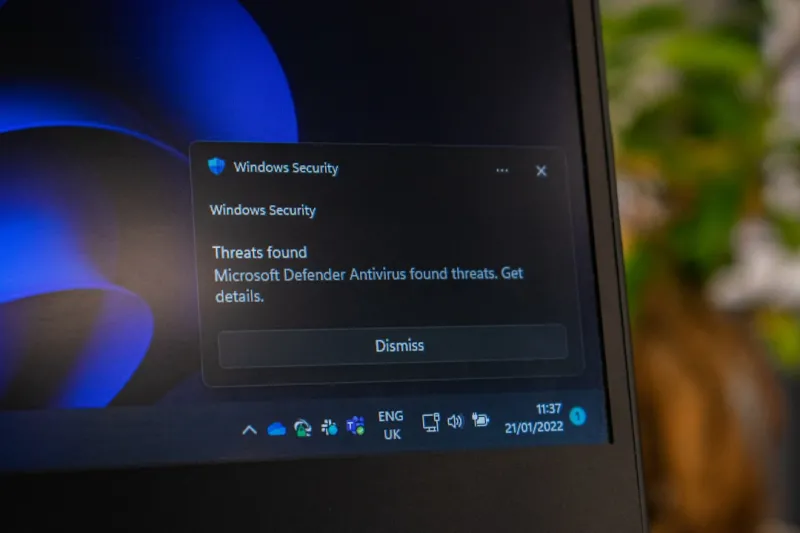
Security in 2026 feels like an arms race against AI‑generated threats. Traditional antivirus signatures are no longer sufficient; we now rely on behavior‑based detection powered by neural networks that can flag anomalous activity within milliseconds. My own rig runs Microsoft Defender Advanced Threat Protection (ATP) in conjunction with a layered approach that includes hardware‑rooted security modules and Zero‑Trust networking. A critical piece of the puzzle is keeping the system’s firmware and driver stack up to date, because a single vulnerable driver can open the door to sophisticated AI‑driven malware. For a comprehensive strategy, see Fortify Your Power‑User PC: Modern Security Strategies for 2026. The article outlines how to configure Secure Boot, enable virtualization‑based security (VBS), and implement credential guard—all of which create a hardened environment where the OS’s own AI can safely monitor and quarantine threats without compromising performance.
Critical Updates: What You Can’t Afford to Miss
Microsoft’s release cadence has become more aggressive, with feature drops every six weeks and cumulative security patches on a monthly basis. While the update model is designed for stability, power users often defer installations to avoid workflow interruptions. That habit can be costly—missing a single kernel patch may expose you to a zero‑day exploit that could compromise sensitive data or AI workloads. The Power‑User Playbook: Critical 2026 Updates You Can’t Ignore breaks down which updates are truly optional and which are mission‑critical. My personal workflow now includes a “Weekend Patch Sprint”: I allocate Saturday night to test new builds on a virtual clone of my primary system, run a battery of benchmarks, and only then roll the changes out to the production machine. This disciplined approach ensures I stay on the cutting edge without sacrificing reliability.
Hardware Harmony: GPUs, AI Accelerators, and Windows
Modern GPUs are no longer just graphics engines; they double as AI accelerators, tensor processors, and even video encoders. Windows 2026 includes native support for the latest DirectX 13 and a unified compute API that abstracts the differences between NVIDIA, AMD, and Intel’s AI cores. I’ve built a workstation that leverages a multi‑GPU configuration where one card handles rasterization for gaming, while another runs TensorFlow workloads in parallel. When something goes wrong—say, a driver conflict or an unexpected throttling event—the Mastering GPU Troubleshooting: A Power User’s Proven Checklist becomes indispensable. By following its systematic diagnostic steps, you can isolate whether the issue stems from the OS scheduler, the GPU firmware, or the AI runtime library. The result is a smoother experience where Windows intelligently balances graphics and compute loads without manual intervention.
Future‑Proof Networking: Low‑Latency, High‑Throughput, AI‑Ready
Networking in 2026 isn’t just about speed; it’s about intelligence. Windows now supports AI‑enhanced traffic shaping that predicts bandwidth spikes and reallocates resources before congestion occurs. For power users who stream 8K content, run large language model inference locally, or host multiplayer sessions, this predictive networking can be a game‑changer. My setup employs a 10 GbE NIC with firmware that communicates directly with Windows’ Network Stack, enabling real‑time QoS adjustments based on the applications in focus. The Future‑Proof Networking Strategies for Power Users guide walks through configuring these settings, from enabling “Smart Queue Management” to leveraging IPv6 address autoconfiguration that reduces latency for AI‑driven cloud services. The overarching principle is to treat the network as an extension of the OS—both should be tuned in concert for optimal performance.
Storage Evolution: The Hard‑Drive Revival
While NVMe SSDs dominate the consumer market, I’ve found that a well‑configured hybrid storage solution still offers the best cost‑performance ratio for large AI datasets. Modern Windows supports tiered storage pools that automatically migrate infrequently accessed files to high‑capacity SATA HDDs while keeping hot data on ultra‑fast SSDs. This approach reduces wear on the SSD and extends its lifespan—an essential consideration when dealing with petabytes of training data. Additionally, Windows’ new “Persistent Memory” feature lets you treat certain SSDs as RAM, dramatically accelerating read‑heavy AI workloads. By combining these technologies, I maintain a fluid workflow where data moves seamlessly between storage tiers without manual intervention. The result is a system that feels both responsive and economical, a balance that many power users strive to achieve.
Productivity Amplified: Microsoft Office in the AI Era
Microsoft Office has undergone a quiet revolution, embedding AI assistants directly into Word, Excel, and PowerPoint. Features like “Co‑authoring Insights” surface data trends as you type, while “Design Suggestions” in PowerPoint auto‑generate slide layouts based on the content you paste. For a power user who spends hours drafting technical documentation, these tools cut down on repetitive tasks and free mental bandwidth for deeper analysis. I’ve integrated Office’s AI capabilities into my daily pipeline by setting up custom macros that pull data from Power BI dashboards directly into Excel spreadsheets, then using Word’s “Smart Summarize” to generate executive briefs. The synergy between Windows’ AI core and Office’s intelligent features creates a unified environment where information flows effortlessly from raw data to polished presentation.
Looking Ahead: Your Roadmap to a Resilient Windows Power‑User Experience
So, where do we go from here? The answer lies in continuous learning and proactive configuration. Keep an eye on Microsoft’s Insider Channel for upcoming kernel improvements, regularly audit your security posture, and treat every update as an opportunity rather than a disruption. Leverage the AI layers built into Windows to automate mundane tasks, but always retain manual overrides for critical workflows. By combining the strategies outlined in this post—AI integration, rigorous security, disciplined update management, hardware‑software harmony, intelligent networking, hybrid storage, and AI‑enhanced Office—you’ll build a Windows environment that not only survives the rapid pace of 2026’s tech evolution but thrives within it. Stay curious, stay patched, and let Windows be the reliable foundation your power‑user ambitions deserve.