Why AI Computing Is the New Power‑User Playground
When I first started tinkering with machine‑learning models back in the early 2020s, the idea of running a transformer on a laptop felt like a sci‑fi fantasy. Fast forward to 2026, and the same notebook can churn out inference results in milliseconds thanks to dedicated AI accelerators that fit on a single PCIe card. For power users, this isn’t just a novelty—it’s a paradigm shift that forces us to rethink every layer of our workflow, from silicon to software. The excitement comes from the fact that the tools we love—custom scripts, deep‑dive debugging, and relentless optimization—now have a whole new domain to dominate. AI workloads demand raw parallelism, massive memory bandwidth, and low‑latency interconnects, which aligns perfectly with the power‑user’s obsession with performance margins. In this article I’ll walk you through the hardware, software, security, and future‑proofing strategies that let us stay ahead of the curve, all while keeping the creative spirit that makes power‑user computing so rewarding.
Hardware That Talks to Neural Networks
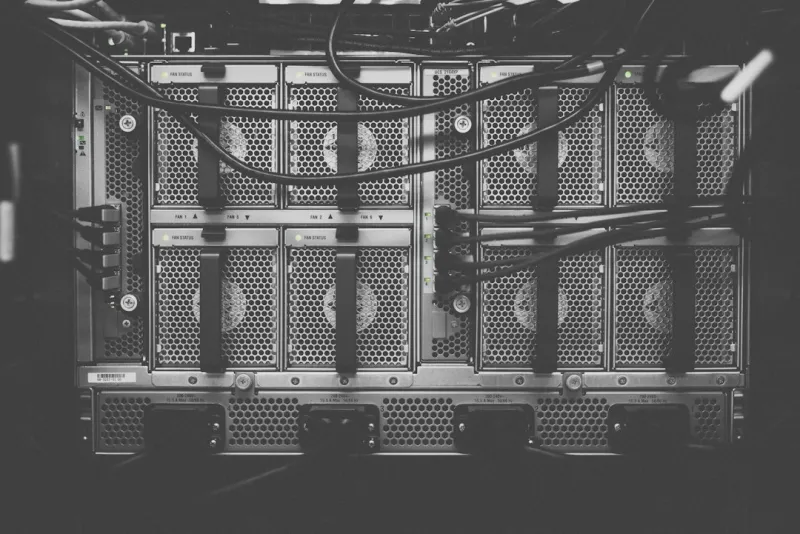
The first place any serious AI enthusiast looks is the silicon. Modern GPUs from Nvidia and AMD have evolved beyond rasterization; they now ship with tensor cores and matrix engines explicitly designed for deep‑learning operations. But the real game‑changer for power users is the emergence of purpose‑built AI accelerators—think Habana, Graphcore, and the rising open‑source RISC‑V AI cores—that can be slotted into a standard PCIe‑x16 slot and deliver teraflops of mixed‑precision performance without the power‑draw of a full‑blown GPU. Pair those cards with DDR5‑4000 memory and a high‑bandwidth PCIe‑5.0 motherboard, and you have a platform that can train a modest transformer in under an hour. For those who love to overclock, many of these accelerators expose voltage and clock controls via vendor SDKs, letting you squeeze every last ounce of performance. If you want a roadmap for selecting the right AI‑centric hardware, check out The AI Computing Playbook Every Power User Needs for a deep dive into component compatibility and future‑proofing considerations.
Software Ecosystems That Keep Up
Hardware is only half the story; without the right software stack, even the most powerful AI accelerator sits idle. In 2026 the landscape is dominated by unified frameworks like PyTorch 2.0 and TensorFlow 3.0, which now expose compiler‑level optimizations that let you target GPUs, TPUs, and custom ASICs from a single codebase. The introduction of torch.compile and TensorFlow’s XLA enhancements means you can generate highly optimized kernels on the fly, dramatically reducing latency for inference workloads. As a power user, you’ll appreciate the ability to drop down to C++ or CUDA kernels when you need that extra tweak, while still leveraging the high‑level ergonomics of Python for rapid prototyping. For those developing in mixed environments—say, a C++ backend with a Python front‑end—consider the advice in Future‑Proofing Your Code: Strategies Every Power‑User Developer Needs to keep your codebase flexible and ready for the next generation of AI hardware.
Storage Strategies for Massive Datasets
AI workloads are hungry for data, and the storage subsystem often becomes the bottleneck. While SSDs dominate the market with lightning‑fast random reads, hard drives still play a vital role in archiving massive training corpora that rarely need immediate access. A tiered storage approach—NVMe‑based primary drives for active datasets and high‑capacity HDD arrays for cold storage—offers the best of both worlds, balancing speed and cost. Moreover, emerging technologies like Intel’s Optane Persistent Memory blur the line between RAM and storage, providing near‑RAM latency for data that exceeds your system’s DRAM capacity. When configuring a power‑user rig for AI, allocate at least 2 TB of NVMe for active work and supplement with a 10 TB or larger HDD pool for the long tail of data. The article Why Hard Drives Remain the Backbone of Modern Power‑User Systems explains why this hybrid model remains optimal even as storage technology advances.
Security in the Age of AI
Running AI models isn’t just a performance challenge; it opens a whole new attack surface. Model theft, data poisoning, and inference‑time attacks can compromise intellectual property and skew results. Power users must adopt a security mindset that extends beyond traditional antivirus solutions. Zero‑trust networking, encrypted model storage, and secure enclave execution (like Intel SGX or AMD SEV) are now essential components of an AI‑ready workflow. Additionally, regular audits of data pipelines for anomalous patterns can catch poisoning attempts before they corrupt training cycles. If you’re unsure where to start, the piece Why Modern Power‑Users Must Rethink Computer Security in 2026 offers a comprehensive checklist tailored for AI‑heavy environments, ensuring your rigs stay both fast and safe.
Balancing Cloud and Edge for AI Workloads
One of the most strategic decisions for a power user today is how to split AI workloads between the cloud and the edge. Public‑cloud providers boast massive GPU clusters that can train models in hours, but the cost per compute hour remains a concern for hobbyists and indie developers. Conversely, a well‑tuned on‑premises rig can handle inference and even modest training workloads at a fraction of the cloud price, especially when you leverage spot‑instance‑like pricing on your own hardware. The sweet spot is a hybrid approach: use the cloud for occasional, large‑scale training sweeps, then deploy the trained models on a local AI accelerator for real‑time inference. This not only reduces latency but also keeps sensitive data under your direct control. When planning your hybrid strategy, consider the network bandwidth between your on‑premises setup and the cloud; a 100 Gbps Ethernet link can eliminate most data transfer bottlenecks, making the hybrid model seamless.
Power‑User Workflow Hacks for AI Integration
Integrating AI into a power‑user workflow is about automation, reproducibility, and speed. Start by containerizing your entire stack with Docker or Podman, embedding the exact versions of CUDA, cuDNN, and your chosen framework. This guarantees that a model that runs on your workstation will also run on a colleague’s rig without version clashes. Next, adopt a version‑controlled data pipeline using tools like DVC (Data Version Control), which tracks dataset changes alongside code. For rapid iteration, set up a JupyterLab environment that launches directly on your AI accelerator, enabling you to experiment with live GPU profiling tools such as Nsight Systems. Finally, implement a CI/CD pipeline that automatically triggers model training when new data lands in your repository—GitHub Actions now supports GPU runners, making this easier than ever. These practices not only streamline development but also embody the power‑user ethos of squeezing maximum efficiency from every component.
Future‑Proofing Your AI‑Ready Rig
Just as gamers build rigs that can handle next‑gen titles, AI enthusiasts must design systems that stay relevant as models grow larger and algorithms evolve. Prioritize a motherboard with PCIe‑5.0 slots and ample lanes to support multiple AI accelerators, and choose a power supply with enough headroom—at least 1000 W—for future expansions. Memory is another critical factor; aim for 128 GB of DDR5 to accommodate massive model parameters without swapping. Finally, keep an eye on emerging interconnects like Compute Express Link (CXL), which promise seamless memory sharing between CPUs and accelerators. For a broader view on building a resilient setup, the guide Building a Future‑Proof Gaming Rig in 2026 offers insights that translate directly to AI workloads, ensuring your investment pays off for years to come.
Wrapping Up: Stay Curious, Stay Fast
The AI revolution has turned power‑user computing into an exhilarating sandbox where hardware, software, and security intersect in new ways. By selecting the right accelerators, mastering modern frameworks, safeguarding your models, and building a future‑proof rig, you can stay at the forefront of this rapidly evolving field. Remember, the best tools are useless without a mindset of continuous learning—so keep experimenting, share your findings with the community, and don’t hesitate to revisit the posts linked throughout this article for deeper dives. The AI wave is only just beginning, and as always, the most rewarding journeys are those taken with curiosity, rigor, and a dash of daring.