Why Your Video Card Is the Heartbeat of a Modern Power‑User PC
When I first built my 2022 workstation, the GPU was the single component that could make or break every task I threw at it—from 4K gaming marathons to AI model training on the side. Fast‑forward to 2026, and the stakes are even higher. High‑bandwidth memory, ray‑tracing cores, and dedicated AI tensor units are now baseline expectations, not luxury add‑ons. Yet, the same old frustrations persist: a black screen after a driver update, sudden artifacting during a render, or random driver crashes that leave Windows in a loop of BSODs. As a power‑user who lives at the intersection of content creation, machine learning, and competitive gaming, I’ve learned that troubleshooting a video card is less about “guess‑and‑check” and more about a systematic, data‑driven approach. In this guide I’ll walk you through the exact steps I take, the tools I trust, and the hidden settings that can resurrect a seemingly dead GPU—all while keeping an eye on future‑proofing your rig for the next wave of software demands.
Diagnosing the Symptoms: From No Signal to Glitchy Frames
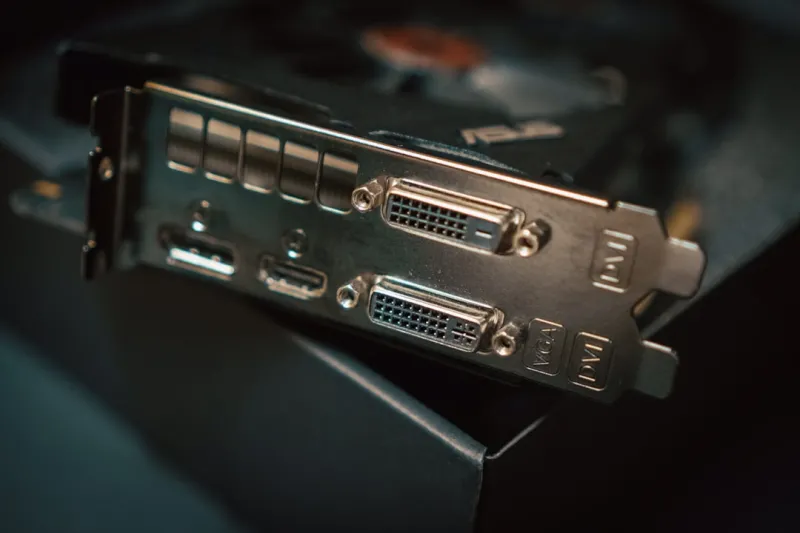
The first rule of any troubleshooting mission is to isolate the symptom. Does the monitor stay black the moment you power on, or does it flicker before going dark? Do you see visual artifacts—those strange lines, blocks, or color shifts—while gaming or during a compute‑heavy AI workload? Or is the system simply rebooting or throwing a driver‑related error code in the Windows Event Viewer? Start by swapping cables and monitors; a faulty DisplayPort or HDMI can masquerade as a GPU failure. Next, test the card in a known‑good PCIe slot or another system if you have one on hand. If the issue follows the GPU, you’ve confirmed the hardware is at fault; if it stays behind, the culprit might be the motherboard’s lane configuration or even the power supply. Recording exact timestamps and error messages will pay dividends later when you search forums or contact support, because a precise symptom description is the passport to a swift fix.
Untangling the Driver Labyrinth
In 2026, driver ecosystems have become more sophisticated—and more volatile—than ever. Nvidia’s Studio Drivers, AMD’s Radeon Software, and Intel’s Arc driver stack each promise performance boosts, but they also introduce subtle regressions that can cripple a system overnight. My go‑to strategy is a clean‑slate install: use Unlocking Windows 11’s Hidden Power for 2026 Power Users as a reference for disabling fast startup and ensuring the OS fully releases the GPU during driver removal. First, uninstall all existing graphics drivers with DDU (Display Driver Uninstaller) in Safe Mode. Then, download the latest stable driver directly from the manufacturer’s website—avoid “Game Ready” beta versions unless you need the bleeding‑edge features. After installing, verify the driver version via Device Manager and run a quick 3DMark stress test to confirm stability. If problems persist, roll back to the previous driver version; often, a recent update may have introduced incompatibility with your specific motherboard BIOS or the AI acceleration libraries you rely on.
BIOS, Firmware, and PCIe Lane Configuration
Even the most powerful GPU can be throttled by an outdated BIOS or misconfigured PCIe lanes. Many modern motherboards, especially those designed for high‑end workstations, offer options to set the PCIe slot to Gen 5, Gen 4, or even force a specific lane width (x16 vs. x8). Open your BIOS and confirm that the slot housing your GPU is set to the highest supported generation—most 2026 platforms default to Gen 5, but a legacy setting can slip in after a firmware flash. Additionally, check for a GPU firmware update; manufacturers occasionally release BIOS patches that improve power delivery or resolve compatibility issues with newer CPUs. While you’re in the BIOS, enable “Above 4G Decoding” and “Resizable BAR” if your GPU and CPU support it—these features can unlock extra bandwidth and reduce latency in both gaming and AI workloads. A quick cross‑reference with the Choosing the Perfect Motherboard for Power‑User Performance in 2026 guide will ensure you’re not missing any hidden settings.
Power Delivery: PSU Sizing and Connector Checks
A GPU that refuses to boot or suddenly powers down under load is often crying out for more juice. Modern high‑performance cards can draw 350 W or more, especially when boost clocks are engaged during AI inference or ray‑traced gaming. Start by confirming that your power supply unit (PSU) meets the manufacturer’s recommended wattage—typically a 750 W or higher unit for a top‑tier RTX 5090‑class card. Verify that the 8‑pin or 12‑pin connectors are fully seated; a loose plug can cause intermittent power loss that manifests as crashes or artifacting. Use a power meter or the BIOS’s power monitoring feature to watch real‑time draw during a stress test; spikes beyond the PSU’s rated capacity are a clear sign you need an upgrade. If you’re already running a high‑efficiency (80 Plus Gold or Platinum) PSU and still see issues, consider checking for voltage ripple with an oscilloscope or a specialized tester—excessive ripple can corrupt GPU memory and trigger driver resets.
Thermal Management: Keeping Temperatures in Check
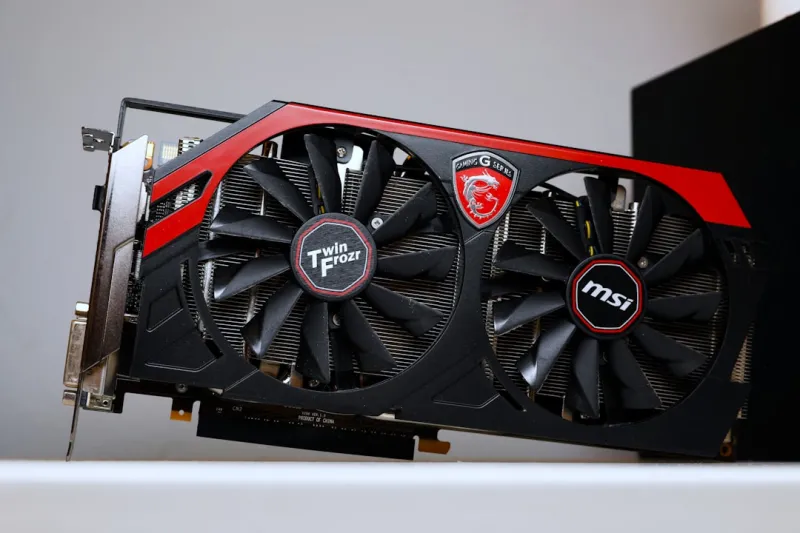
Heat is the silent enemy of any graphics card, and 2026’s high‑density GPUs pack more transistors than ever before. Before you blame the silicon, inspect the cooling solution. Clean dust from the heatsink fins and fan blades; a simple air‑blow can shave off 10–15 °C. Re‑apply high‑quality thermal paste if the card is several years old—many enthusiasts now prefer liquid metal for its superior conductivity, but it requires careful handling. Use software like MSI Afterburner to set a custom fan curve that ramps up aggressively once temperatures breach 70 °C, and keep an eye on the GPU’s load‑line calibration to prevent voltage droop under sustained load. If you’ve maxed out the stock cooler’s capacity, consider an aftermarket air cooler or a hybrid liquid‑cooling kit. Monitoring tools such as HWInfo64 can alert you instantly when temperatures exceed safe thresholds, allowing you to intervene before thermal throttling or hardware damage occurs.
AI Acceleration and Compatibility Pitfalls
Today’s power‑users often run AI workloads on the same machine that powers their gaming sessions. The GPU’s tensor cores accelerate deep‑learning frameworks like TensorFlow and PyTorch, but they also introduce a new class of compatibility issues. Ensure that your CUDA or ROCm drivers match the version required by your AI libraries; mismatched versions can cause cryptic “illegal memory access” errors that surface as driver crashes. I regularly cross‑reference the Mastering AI Computing: A Power‑User’s Blueprint for 2026 guide to keep my software stack aligned with the latest GPU capabilities. Additionally, watch out for power‑limit throttling when running long‑duration training sessions—some GPUs automatically reduce boost clocks to stay within thermal design power (TDP). Using tools like NVIDIA‑SMI, you can manually set a higher power limit (within safe margins) to maintain performance, but always monitor temperatures and stability closely.
Advanced Diagnostics: Stress Tests, Logs, and Monitoring
When the obvious fixes fail, it’s time to bring out the heavy‑weight diagnostics. Begin with a GPU stress test such as FurMark or Unigine Heaven; run it for at least 30 minutes while watching for sudden spikes in temperature, power draw, or clock speeds. Pair this with a real‑time log from the Windows Event Viewer—filter for “Display” or “DriverFramework” errors to pinpoint the exact failure point. GPU‑Z and HWiNFO64 provide granular readouts of voltage, fan speed, and memory usage, which can reveal subtle issues like VRAM overheating or inconsistent clock throttling. If you suspect a hardware fault, a “bench‑only” test (running the GPU with no display output but with a compute workload) can isolate the problem from the monitor subsystem. Document every test result; a well‑kept log often becomes the decisive factor when escalating to manufacturer support or warranty claims.
Future‑Proofing Your GPU Strategy
Finally, think beyond the immediate fix and plan for the next generation of workloads. A common mistake is to replace a struggling GPU with a marginally newer model, only to run into the same bottlenecks a year later. Instead, evaluate your long‑term needs: will you be diving deeper into real‑time ray tracing, or shifting toward AI‑first pipelines? The Future‑Proof PC Upgrades: What Every Power User Needs in 2026 article outlines a balanced approach—pair a high‑bandwidth memory GPU with a robust PSU, a motherboard that supports PCIe 5.0, and a cooling solution that can handle higher TDPs. Consider modular upgrades like a GPU riser or an external GPU enclosure for laptops, and keep firmware updates on a regular schedule. By treating your video card as a living component—one that evolves with software, drivers, and power demands—you’ll spend less time firefighting and more time creating, gaming, and innovating.