When you think about the hardware landscape in 2026, you quickly realize that every component is a conversation starter at the next tech meetup. As a power user who has built everything from a modest home office rig to a multi‑GPU AI workstation, I’ve learned that the devil is truly in the details—thermal paste viscosity, BIOS micro‑code versions, and even the PCB trace layout on a motherboard can make or break a build. Today’s hardware isn’t just about raw specs; it’s about how those specs integrate into an ecosystem that demands AI acceleration, airtight security, and relentless uptime. Whether you’re streaming 8K content, training diffusion models, or simply demanding a buttery‑smooth Windows 2026 experience, the choices you make now will dictate how often you’ll have to revisit the upgrade cycle. In this article, I’ll walk you through the most critical trends, share hard‑won lessons, and give you a roadmap that keeps your rig relevant for years to come.
CPU Evolution and AI Acceleration
The CPU market in 2026 has finally embraced AI as a first‑class citizen rather than an afterthought. Intel’s “Meteor Lake” line and AMD’s “Zen 5” chips now ship with integrated AI accelerators that can offload inference tasks from the GPU, slashing latency for real‑time applications like voice assistants and video upscaling. For a power user, this means you can run a local LLM inference on a laptop without throttling your primary workloads. However, the real trick lies in balancing core count with these AI units. A 12‑core processor with a modest AI engine may outperform a 24‑core beast lacking one when you’re running mixed workloads—think compiling code while simultaneously processing TensorFlow pipelines. My recommendation? Prioritize CPUs that expose configurable AI cores through the BIOS, allowing you to allocate them dynamically based on the task at hand. This flexibility is the secret sauce behind the smooth performance I enjoy on my own workstation.
GPU Landscape: From Gaming to Compute
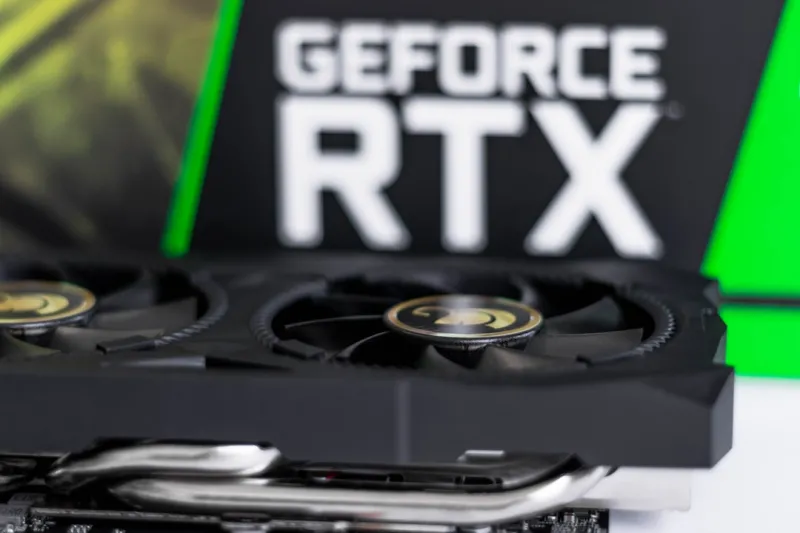
Graphics cards have morphed into universal compute engines, and the distinction between “gaming” and “professional” GPUs has blurred. Nvidia’s RTX 50 series and AMD’s Radeon RX 9000 line both support hardware‑accelerated ray tracing, but they also pack dedicated Tensor cores and Radeon AI Engine blocks that excel at matrix multiplications. As a power user who dabbles in 3D rendering, video editing, and AI model training, I’ve found that a dual‑GPU setup—one RTX card for rendering and a Radeon card for AI workloads—offers the best of both worlds. The key is ensuring your motherboard can handle the PCIe 5.0 bandwidth without bottlenecks; otherwise, you’re paying premium for performance you’ll never see. Don’t forget to check driver ecosystems, too—Nvidia’s Studio drivers are a godsend for creators, while AMD’s ROCm stack is rapidly becoming the go‑to for open‑source AI development.
Memory and Storage: Balancing Speed, Capacity, and Longevity
DDR5‑6000 has become the baseline for high‑end builds, yet the real performance gains come from understanding latency versus bandwidth trade‑offs. In my experience, pairing 32 GB of low‑latency CL‑30 modules with a 64 GB high‑capacity kit for background workloads yields a sweet spot for both gaming and AI inference. On the storage front, NVMe 4.0 drives are still the workhorse, but the emergence of PCIe 5.0 SSDs—offering sequential reads beyond 14 GB/s—has started to shift the paradigm for massive data sets. If you’re handling multi‑terabyte datasets for machine learning, consider a tiered approach: keep the active dataset on a PCIe 5.0 SSD, while archiving older versions on a high‑density SATA or QLC NVMe drive. This strategy not only maximizes performance but also extends the lifespan of your flash memory by reducing write amplification.
Motherboards and Power Delivery: The Unsung Heroes
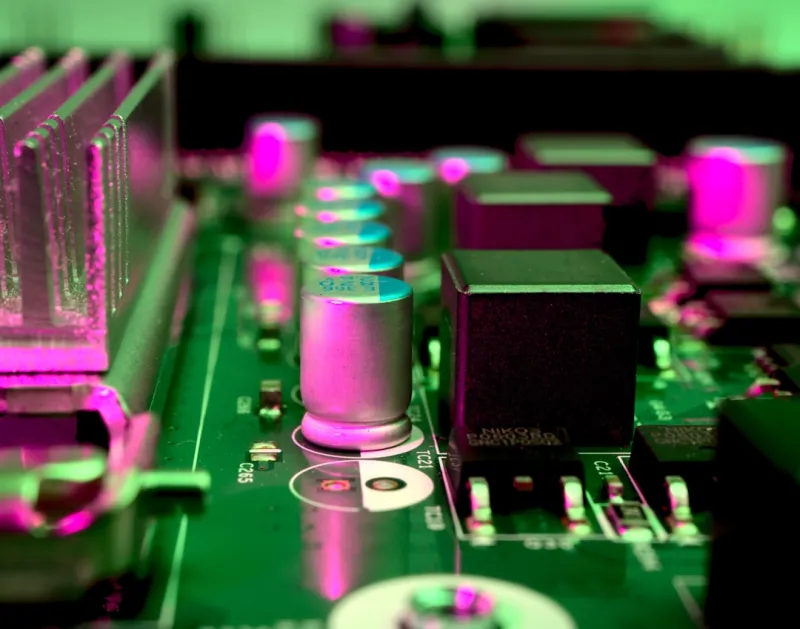
While CPUs and GPUs steal the spotlight, a robust motherboard and clean power delivery system are the unsung heroes of any power‑user rig. In 2026, the shift toward 12‑plus‑phase VRMs on high‑end boards ensures stable overclocks and reliable AI accelerator operation. I gravitate toward boards that feature dual BIOS chips, giving me a safety net in case a firmware update goes sideways. Additionally, look for integrated Thunderbolt 4 ports and 2.5 GbE or 10 GbE Ethernet controllers—these are indispensable when you’re tethering a high‑resolution capture card or a multi‑node AI cluster. The BIOS UI has become more user‑friendly, but don’t overlook the importance of firmware updates; they often include micro‑code patches that improve AI engine efficiency and fix subtle stability bugs that can cause those dreaded blue screens.
Cooling Solutions: Air, Liquid, and the Rise of Hybrid
Thermal management has never been more critical, especially as AI accelerators push silicon to its limits. Traditional high‑static‑pressure air coolers still hold their ground for budget builds, but when you’re running sustained AI inference, I recommend a hybrid solution: a 360 mm AIO liquid cooler for the CPU paired with direct‑mount heat sinks for the GPU’s AI cores. The new “liquid‑metal” thermal interface materials have slashed temperature delta‑V by up to 15 % compared to conventional thermal paste, which translates to higher sustained boost clocks. Don’t forget to plan for airflow pathways—positive pressure setups with filtered intake fans keep dust at bay, preserving the longevity of those expensive components.
Building for Future‑Proofing: Modular Design and Upgradability
Future‑proofing isn’t about buying the most expensive parts today; it’s about designing a system that can evolve without a complete overhaul. One strategy I employ is a modular chassis that supports both ATX and E‑ATX motherboards, giving you the flexibility to upgrade to a larger board when needed. Similarly, opting for a PSU with a 12‑plus‑rail design and headroom of at least 850 W ensures you won’t be constrained when the next GPU generation arrives. For those who love tinkering, I’ve found that keeping a stash of spare M.2 heatsinks and PCIe riser cables pays off when you decide to experiment with GPU mining or external AI accelerators. If you want a deeper dive into a systematic upgrade approach, check out Future‑Proof Your PC: The 2026 Power‑User Upgrade Playbook, which walks you through a step‑by‑step plan to keep your rig ahead of the curve.
Security at the Hardware Level
Hardware security has leapt from an afterthought to a core requirement for power users, especially with AI‑driven malware becoming more sophisticated. Modern CPUs now ship with built‑in Secure Enclave technologies that can isolate cryptographic keys and run attestation checks without exposing them to the OS. Pairing these features with a motherboard that supports TPM 2.2 and Intel’s Platform Trust Technology creates a layered defense you can’t afford to ignore. I also recommend enabling Secure Boot and leveraging hardware‑rooted integrity verification for BIOS updates. For a deeper dive into fortifying your system against emerging threats, read Beyond the Firewall: Advanced Security Strategies for Power Users in 2026—it outlines practical steps that complement the hardware safeguards discussed here.
Practical Upgrade Checklist for Power Users
Before you start swapping out components, run through a concise checklist to avoid common pitfalls. First, verify that your current firmware is up to date; outdated BIOS can limit support for newer CPUs and memory speeds. Second, benchmark your existing setup using tools like AIDA64 or Cinebench to establish a performance baseline. Third, map out your power budget: calculate total wattage and ensure your PSU can handle a 20‑30 % headroom for future upgrades. Fourth, consider networking upgrades—10 GbE or even 25 GbE NICs can dramatically reduce data transfer bottlenecks for AI workloads. For detailed guidance on networking upgrades, the Next‑Level Networking Playbook Every Power User Needs provides a roadmap that aligns perfectly with the hardware strategies outlined above.
Final Thoughts: Staying Agile in a Rapidly Shifting Landscape
The hardware ecosystem in 2026 is a moving target, but the principles of balance, modularity, and proactive security remain timeless. By treating each component as part of an integrated whole—CPU, GPU, memory, storage, and the often‑overlooked motherboard and power delivery—you set the stage for a system that not only meets today’s demanding workloads but also adapts to tomorrow’s innovations. Keep an eye on emerging standards like PCIe 5.0 x8 lane configurations and DDR5 5600 UFS, and never underestimate the value of a well‑documented build process. With the right mindset and a strategic approach, you’ll spend less time troubleshooting and more time pushing the boundaries of what your machine can achieve. Happy building, and may your silicon stay cool and your frames stay high.