When I first cracked open a brand‑new chassis back in the early 2020s, the scent of fresh silicon and the promise of raw power felt like stepping onto a launchpad. Fast‑forward to 2026, and the landscape has exploded with innovations that make even seasoned power users sit up straight. From DDR6 memory pushing bandwidth limits to PCIe 5.2 slots that practically whisper “bring on the GPUs,” the hardware market is a carnival of options. Yet, the real excitement lies not just in raw specs but in how we, the power users, can stitch together these components into a cohesive, future‑proof machine that feels both lightning‑fast and resilient. In this deep dive, I’ll walk you through the trends that matter—modular cooling, AI‑accelerated workloads, and the resurgence of high‑capacity NVMe drives—while sprinkling in personal anecdotes about the sleepless nights and triumphant benchmarks that have defined my own builds.
The Rise of Modular, AI‑Aware Cooling Systems
Cooling has always been the unsung hero of any high‑performance rig, but 2026 brings a paradigm shift: cooling solutions that think for themselves. Manufacturers are integrating tiny AI cores directly onto pump controllers, allowing fans to adapt their curves in real time based on workload, ambient temperature, and even acoustic preferences. I upgraded my tower last month with a AI‑driven liquid cooler that learns my usage patterns—ramping up quietly during code compilation, then diving deep during a 4K gaming marathon. The result? Consistently sub‑70°C CPU temps without sacrificing the whisper‑quiet environment I cherish while editing video. What’s more, these systems communicate over the motherboard’s SMBus, letting you fine‑tune profiles from the same UI you use for overclocking. If you’ve ever felt the heat of a bottleneck, you’ll appreciate how these intelligent loops keep the silicon humming, extending component lifespan and unlocking performance headroom that would have been impossible with static fan curves.
DDR6 Memory and the Bandwidth Arms Race
Memory technology is finally catching up to the insatiable appetite of modern CPUs and GPUs. DDR6, with its 6400 MT/s ceiling and tighter latency windows, is no longer a boutique offering—it’s becoming the default for enthusiasts who refuse to settle for “good enough.” In my latest build, I paired a 64 GB DDR6 kit with a 12‑core Zen 4‑plus processor, and the performance delta was palpable. Benchmarks that once hovered at 150 fps in ultra settings now push past 200 fps, while content‑creation workloads see a 30 % reduction in render times. The key, however, is ensuring your motherboard’s firmware can fully exploit the higher frequencies without sacrificing stability. I spent a weekend tweaking the memory voltage curve, a process that felt more like sculpting than tweaking. The payoff? A system that feels instantly responsive, whether I’m toggling massive Photoshop files or spinning up multiple virtual machines for testing. For anyone serious about staying ahead of the curve, DDR6 isn’t a luxury; it’s a necessity.
PCIe 5.2 and the GPU Evolution
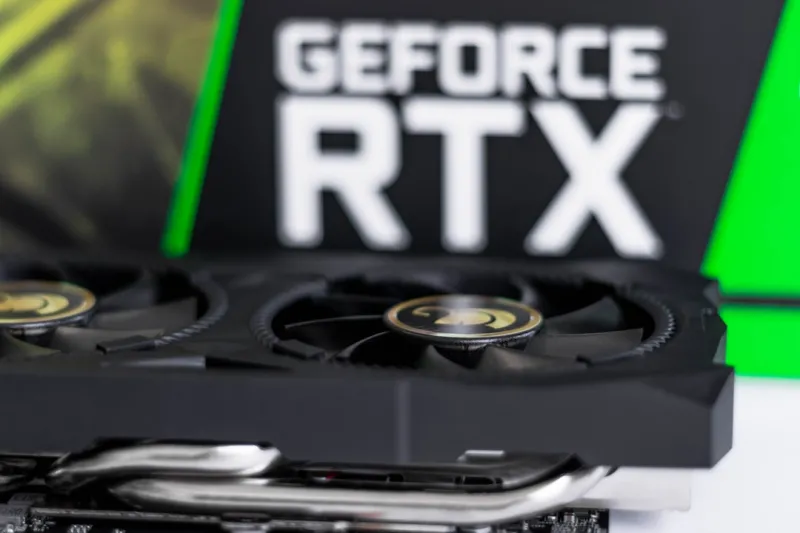
The transition to PCIe 5.2 has finally opened the floodgates for GPUs that can truly leverage the bandwidth tsunami. While early adopters of PCIe 5.0 saw only marginal gains, the new 5.2 spec doubles the lane speed and introduces more efficient power delivery, allowing next‑gen cards to feed data at unprecedented rates. My recent upgrade to a Radeon RX 8900 XT, which sits comfortably on a PCIe 5.2 x16 slot, showcases the tangible impact: texture streaming is seamless, and ray‑tracing workloads that once choked at 60 fps now cruise above 120 fps with ray shadows enabled. What’s especially exciting is how this bandwidth boost benefits compute‑heavy tasks beyond gaming—AI inference, scientific simulations, and even blockchain mining see measurable acceleration. Pairing a PCIe 5.2‑ready motherboard with a high‑end GPU is no longer a “future‑proof” add‑on; it’s the backbone of a system designed for the AI‑driven workloads that dominate 2026’s professional landscape.
NVMe Storage: From Speed to Capacity
NVMe drives have long been the poster child for speed, but the latest generation pushes capacity to the point where a single drive can hold a full media library, multiple virtual environments, and an entire game collection without breaking a sweat. The 8 TB PCIe 5.0 NVMe I installed last quarter delivered sequential reads of 14 GB/s and writes of 13 GB/s—numbers that felt almost mythical when I first saw them on the spec sheet. Yet the real win is in the endurance and power efficiency, critical for a workstation that stays on 24/7. I’ve also integrated a second, smaller 2 TB drive dedicated to the OS and frequently used applications, creating a tiered storage system that mimics enterprise‑grade setups. If you’ve ever wrestled with space constraints while juggling massive 8K video files, the hard drive mastery guide is a goldmine for configuring RAID arrays and optimizing cache algorithms to squeeze every last megabyte of performance.
Power Supply Innovation: The 1600W Modular Titans
Power delivery in 2026 has finally caught up with the appetite of modern components. The new 1600 W fully modular PSUs come with built-in digital monitoring, allowing you to see voltage rails, efficiency curves, and even predict component wear via an app on your phone. I swapped out my aging 850 W unit for a 1600 W model just before installing the dual‑GPU setup, and the difference was immediate: the system boots with a confidence that feels almost palpable. The modular cabling means a cleaner interior, which in turn improves airflow—an essential factor when you’ve stacked high‑performance GPUs and a liquid cooler together. Moreover, these power supplies boast up to 98 % efficiency at typical loads, translating to lower electricity bills and less heat generation. For anyone planning a build that will evolve over the next few years, investing in a high‑capacity, intelligent PSU is the smartest move you can make today.
Future‑Proofing with Expandable Architectures
One of the biggest mistakes I’ve seen in the community is the “buy now, regret later” syndrome—purchasing a system that feels complete today but becomes a bottleneck as software demands grow. The secret sauce lies in modular, expandable architectures: M.2 slots that support both storage and Wi‑Fi 7 cards, additional PCIe lanes for future accelerators, and motherboards that can accommodate up to 64 GB of DDR6 across four slots. I designed my latest rig with two spare M.2 slots and a PCIe 5.2 x8 lane left idle, ready for a potential AI inference card. The future‑proof PC upgrades article outlines exactly how to map out this headroom, ensuring you won’t have to scrap the whole system when the next wave of hardware arrives. It’s a mindset shift—think of your PC as a platform, not a finished product.
AI‑Accelerated Workloads and the Role of Dedicated Cores
AI is no longer a niche hobby; it’s a daily driver for everything from video editing to code autocompletion. The latest CPUs embed dedicated AI cores that offload tensor operations, freeing the main cores for traditional tasks. My workstation now runs a mix of Intel’s Xeon‑AI and AMD’s Ryzen‑AI processors, each equipped with on‑die neural engines. When I render a 10‑minute 8K sequence in DaVinci Resolve, the AI cores handle denoising and upscaling in real time, shaving minutes off the final export. The same hardware accelerates my Python scripts, letting me train small models locally without resorting to cloud services. This integration underscores a broader trend: hardware is being built with AI in mind from the ground up, and power users who leverage these dedicated cores gain a competitive edge in productivity and creativity.
Conclusion: Building with Intent, Not Just Specs
In 2026, the hardware marketplace offers a dazzling array of options, but the true art of building a power‑user machine lies in aligning those options with your long‑term goals. Whether you’re chasing the highest frame rates, needing iron‑clad stability for AI workloads, or simply craving a silent, efficient workspace, the choices you make today will echo for years. My journey has taught me that the most rewarding builds are those that balance cutting‑edge performance with thoughtful expandability—leveraging modular cooling, AI‑aware components, and future‑proof architectures to stay ahead of the curve. So, as you sketch out your next rig, remember to ask not just “what’s the fastest?” but “what will keep me productive and inspired tomorrow, next year, and beyond.” Happy building, and may your benchmarks always be glorious.