When I first started tinkering with AI workloads back in the early 2020s, the hardware felt like a blunt instrument—great for gaming, decent for office tasks, but painfully inadequate for the massive matrix multiplications that modern models demand. Fast forward to 2026, and we’re finally witnessing a convergence where consumer‑grade rigs can actually keep pace with enterprise‑level AI inference. This shift isn’t just about raw teraflops; it’s about how we architect our systems to be both elastic and secure, letting us experiment with large language models, diffusion art generators, and edge‑AI pipelines without constantly hitting a wall. In this post, I’ll walk through the three pillars that define a truly AI‑ready power‑user workstation: compute horsepower, data flow optimization, and a zero‑trust security posture that protects your intellectual property while you push the limits of what AI can create.
Compute Horsepower: Choosing the Right GPU and CPU Balance
The most obvious upgrade for any AI enthusiast is the GPU, but the narrative has grown richer than “just more CUDA cores.” In 2026, the market is dominated by heterogeneous architectures that pair dedicated tensor cores with traditional rasterization units, delivering up to 10× the AI throughput of a generation ago. I’ve swapped my old RTX 4090 for a dual‑slot, 48 GB VRAM AI‑accelerator that supports both FP16 and BF16, letting me fine‑tune models without worrying about out‑of‑memory errors. Yet, a powerful GPU alone isn’t enough; the CPU must feed it data fast enough to avoid bottlenecks. My current setup leverages a 24‑core Zen 4 processor with PCIe 5.0 lanes, ensuring the GPU never stalls waiting for tensors. Pair this with DDR5‑5600 RAM, and you’ve built a pipeline where data moves at memory‑speed, turning what used to be a handful of iterations per day into a near‑real‑time workflow.
Data Flow Optimization: Storage, Bandwidth, and Memory Management
AI workloads are notoriously data‑hungry. Training a 7‑billion‑parameter model can chew through terabytes of dataset snapshots, and inference pipelines often need rapid access to large embedding tables. While NVMe SSDs have become the de‑facto standard for OS and application installs, I still swear by the reliability and sheer capacity of high‑density HDD arrays for archival data. In fact, I’ve integrated a 20 TB RAID‑6 configuration that feeds my GPU via a fast NVMe cache tier, giving me the best of both worlds—massive storage without sacrificing bandwidth. For those who want a deeper dive into storage strategies, check out Hard Drives Still Rule: How Power Users Leverage Massive Storage in 2026. Additionally, efficient memory management—such as gradient checkpointing and off‑loading tensors to host RAM—can dramatically reduce VRAM pressure, letting you squeeze larger models onto the same hardware.
Zero‑Trust Security: Protecting Your Models and Data
Running powerful AI models locally opens a Pandora’s box of security concerns. From model theft to data leakage, a breach can cost you not just money but also your competitive edge. That’s why I’ve adopted a zero‑trust framework across my workstation, treating every component—GPU, CPU, storage, even the network interface—as an untrusted zone until proven otherwise. This involves encrypted boot partitions, TPM‑based attestation, and strict micro‑segmentation of network traffic. For a step‑by‑step guide on hardening your rig, I recommend reading Zero‑Trust Power‑User Strategies for Unbreakable Computer Security. By enforcing least‑privilege policies and continuously verifying the integrity of each subsystem, you can experiment with cutting‑edge AI without leaving a gaping hole for attackers.
One subtle but powerful habit I’ve cultivated is to keep my software stack on the bleeding edge of critical updates. The AI ecosystem moves at breakneck speed, and a single outdated library can cause obscure crashes or, worse, expose vulnerabilities. The community’s “Critical Update Playbook for Power Users in 2026” outlines a systematic approach to patch management that I’ve baked into my own automation scripts. By scheduling nightly builds, validating dependency graphs, and running regression suites on a sandboxed VM, I ensure that my main workstation stays stable while still benefiting from the latest optimizations in frameworks like PyTorch and TensorFlow.
Speaking of frameworks, the shift toward modular, open‑source AI toolchains has made it easier than ever to customize your workflow. I’ve built a container‑based environment where each model runs in an isolated Docker image, complete with its own GPU driver version and Python dependencies. This not only sidesteps the classic “dependency hell” but also provides a clean audit trail—essential when you need to prove compliance for regulated data. The container images pull from a private registry that enforces signed artifacts, aligning perfectly with the zero‑trust posture mentioned earlier. The result is a seamless experience: spin up a new model, train it on the GPU, and tear down the environment without leaving residual files or vulnerable packages lingering on your system.
Another game‑changing development in 2026 is the rise of on‑device inference accelerators that sit between the CPU and GPU, acting as specialized co‑processors for specific neural network kernels. My rig now includes a PCIe‑connected AI inference chip that offloads transformer attention layers, shaving off milliseconds per token and dramatically improving latency for real‑time applications like voice assistants or AI‑driven video editing. The synergy between the main GPU and these inference chips is reminiscent of how modern CPUs delegate tasks to dedicated AI cores, creating a layered performance model that scales with the complexity of your workload. If you’re curious about building a truly future‑proof machine, you’ll find a treasure trove of hardware recommendations in Future‑Proof Your Rig: The PC Upgrades Every Power User Needs in 2026.
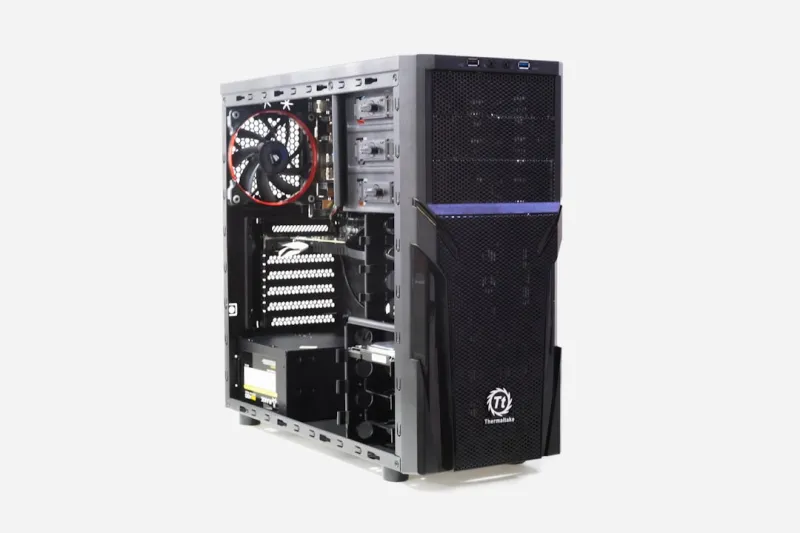
Power users often overlook the importance of a robust cooling solution when running AI workloads for extended periods. Heat is the silent killer of both performance and component lifespan. I’ve migrated from a conventional air cooler to a hybrid liquid‑to‑air system with a 360 mm radiator and dedicated pump for the GPU block. This setup maintains sub‑70 °C temperatures even under full tensor core load, allowing the GPU to sustain boost clocks without throttling. Additionally, I’ve equipped the chassis with smart fans that adjust speed based on real‑time thermal maps, effectively balancing noise and cooling efficiency. Remember, a cool system is a happy system—especially when you’re pushing the envelope with massive models that can otherwise cause thermal runaway.
Finally, let’s talk about the human element: workflow ergonomics. AI development can be mentally exhausting, so the workstation must also support long hours of focus. Dual‑monitor setups with ultrawide panels give you ample real estate for code, data visualizations, and model dashboards. I’ve also integrated a programmable macro keypad that triggers common tasks—like clearing GPU cache, switching between virtual environments, or launching a profiling run—with a single press. Small quality‑of‑life tweaks like these reduce context switching, letting you stay in the creative flow. Pairing a comfortable chair, proper lighting, and a low‑latency keyboard completes the environment, turning a high‑performance rig into a true productivity powerhouse.
In summary, building an AI‑ready power‑user workstation in 2026 is no longer a pipe‑dream; it’s a concrete, reproducible process that blends cutting‑edge hardware, disciplined software practices, and rigorous security. By balancing GPU and CPU capabilities, optimizing data pathways, and embracing a zero‑trust mindset, you can unlock the full potential of modern AI models without compromising stability or safety. The ecosystem is evolving rapidly, but with the right foundation—one that I’ve painstakingly refined over years of trial and error—you’ll be positioned to explore, experiment, and innovate at the very frontier of what machines can create.