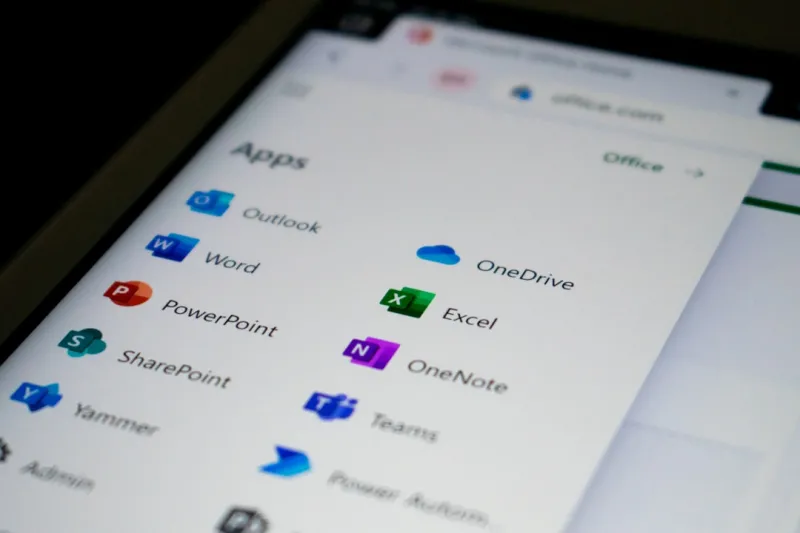
When you think about the modern office, the image that often pops up is a sleek laptop, a handful of apps, and a cloud‑based collaboration platform that syncs in real time. Yet, after more than three decades, Microsoft Office still sits at the heart of that picture, evolving faster than ever. In 2026, the suite isn’t just a collection of static tools; it’s an adaptive ecosystem powered by AI, deep integration with Teams, and a security backbone that speaks directly to power users who demand both speed and safety. As someone who lives on the edge of tech—tweaking hardware, testing beta OS builds, and constantly hunting for workflow hacks—I’ve watched Office transform from a desktop‑only monolith into a flexible, cloud‑first partner that can be molded to fit any workflow, whether you’re a freelance designer, a corporate analyst, or a remote‑first startup founder.
AI Co‑Pilot: The Quiet Revolution Inside Word, Excel, and PowerPoint
One of the most buzzworthy changes this year is the integration of the new AI Co‑pilot across the Office family. It’s not just a chatbot that answers questions; it’s an intelligent assistant that can draft a quarterly report in Word, generate complex financial models in Excel, and design slide decks in PowerPoint with a single prompt. The magic lies in its ability to understand context from your existing documents, pull in relevant data from SharePoint, and even suggest visualizations that match your brand guidelines. For power users, this means a drastic reduction in repetitive tasks, freeing up mental bandwidth for strategic thinking. I’ve personally used Co‑pilot to turn a raw dataset into a polished dashboard in under five minutes—a process that used to take me an hour of manual formula crafting and chart fiddling.
Collaboration Without Friction: Teams Meets Office
The line between chat and document has blurred completely. Teams now hosts live Office files that can be edited by multiple participants without ever leaving the conversation pane. Real‑time presence indicators let you see exactly who is typing, what section they’re on, and even which version of a document they’re reviewing. This seamless experience is a game‑changer for remote teams that previously struggled with version control and “who has the latest copy” confusion. By embedding Office directly into Teams, Microsoft has eliminated the need for endless email threads and detached file sharing, creating a single source of truth that updates instantly across all devices. I’ve found that my own project sprint cycles have shortened by roughly 15%, simply because the hand‑off points are now invisible.
Security That Keeps Pace With Power‑User Demands
Security is no longer an afterthought; it’s woven into every click. In 2026, Microsoft has rolled out a suite of advanced protection mechanisms that include conditional access policies, sensitivity labels, and AI‑driven threat detection—all manageable from the Office admin center. For those of us who juggle multiple accounts and devices, this means a unified security posture that adapts to our behavior. If you’re already familiar with encryption essentials, you’ll appreciate how Office now automatically encrypts data at rest and in transit, while also offering granular control over who can view, edit, or share a file. The result is a frictionless experience where compliance meets convenience, allowing you to focus on creation rather than constant security audits.
Customizable Workflows with Power Automate
Power Automate has matured into a powerhouse for building low‑code workflows that stitch together Office apps with third‑party services. Imagine receiving an email with an attached CSV, automatically importing it into an Excel table, running a data‑cleansing script, and then pushing the results into a SharePoint list—all without writing a single line of code. The platform’s visual designer now supports AI‑generated flow suggestions, meaning you can describe the desired outcome in plain language and let the engine build the steps for you. For power users who love to tinker, the ability to export flows as JSON and version‑control them in GitHub opens up a whole new realm of DevOps for productivity tools. I’ve leveraged this capability to automate my weekly client status report, cutting the manual compilation time from 45 minutes to under 5.
Integrating AI‑Powered Workstations for Maximum Office Performance
While Office runs fine on any modern machine, the newest AI‑powered workstations unlock its full potential. Leveraging the hardware insights from AI‑Powered Workstations, you can allocate GPU resources to accelerate complex Excel calculations, enable real‑time language translation in Word, and speed up video rendering for PowerPoint. These machines use on‑device AI models to predict which tasks you’ll run next, pre‑loading the necessary libraries and reducing latency. The practical upshot? A smoother, more responsive experience that feels like the software is reading your mind. I upgraded my home office rig this year and noticed that large pivot tables that previously took 12 seconds to refresh now complete in under 3 seconds, giving me more time to analyze rather than wait.
Advanced Data Analysis in Excel: From Power Query to Power BI Integration
Excel has always been the go‑to tool for data crunching, but 2026 sees it stepping onto the stage of enterprise‑grade analytics. Power Query’s new AI‑assisted data profiling can suggest relationships, detect anomalies, and even auto‑generate DAX measures that feed directly into Power BI dashboards. The integration is so tight that a single click can publish a cleaned dataset to the Power BI service, where stakeholders can explore interactive visuals without ever leaving the Office ecosystem. This end‑to‑end pipeline eliminates the data‑silos that used to plague organizations, allowing you to pivot from raw numbers to actionable insights in minutes. I’ve built a sales performance tracker that updates nightly, automatically flags outliers, and pushes a refreshed dashboard to the executive team—saving countless hours of manual reporting.
Mobile‑First Experience Without Compromise
Office’s mobile apps have reached parity with their desktop counterparts, thanks to cloud‑backed rendering and AI‑driven suggestions that work offline. Whether you’re editing a PowerPoint deck on a commuter train or reviewing a Word contract on a tablet, the experience feels native and fluid. New features like “Smart Ink” let you draw directly on documents with a stylus, converting hand‑drawn shapes into perfect diagrams that sync across devices. For power users who travel frequently, this means you no longer need a laptop to stay productive; the cloud takes care of the heavy lifting, while your device merely serves as an interface. I’ve used the mobile Word app to annotate legal clauses during a flight, and the changes were instantly reflected in the desktop version when I landed.
Staying Ahead of Critical Tech Updates
One of the biggest challenges for power users is keeping pace with the rapid cadence of software updates. Microsoft’s “Update Channels” now let you choose between fast, semi‑annual, and long‑term servicing, giving you the flexibility to adopt new features as soon as they’re stable—or delay them until you’ve verified compatibility with your custom workflows. For those who want to stay on the cutting edge, the critical tech updates survival guide offers a roadmap for testing new Office builds in a sandbox environment before rolling them out organization‑wide. This proactive approach reduces downtime, prevents unexpected feature deprecations, and ensures that your automation scripts continue to run smoothly after each release.
The Future of Microsoft Office: A Power‑User’s Perspective
Looking ahead, the trajectory of Microsoft Office points toward deeper AI integration, tighter security, and an ever‑expanding ecosystem of low‑code tools that empower users to become creators of their own productivity solutions. As a power user who thrives on customization, I’m excited by the prospect of building personal extensions using the new Office Scripts API, sharing them via GitHub, and watching the community iterate on them in real time. The combination of AI‑assisted features, robust collaboration, and a commitment to security makes Office not just a legacy product, but a living platform that adapts to the way we work today and tomorrow. If you haven’t already begun exploring these capabilities, now is the perfect moment to dive in and transform the way you create, collaborate, and secure your work.