When you’re juggling 3D rendering, AI model training, and a marathon of simultaneous virtual machines, the hardware you choose isn’t just a component—it’s the backbone of every creative sprint you pull off. In 2026, the line between “good enough” and “future‑proof” has sharpened dramatically because the performance gap widens with each new software release. I’ve spent the past decade watching CPUs evolve from monolithic bricks to intelligent hybrids, and I can tell you that the days of “buy the fastest core count you can afford” are over. Today, power users need a balanced ecosystem where the CPU, GPU, memory, storage, and even the motherboard work in concert, delivering low latency and high throughput across all workloads. This article walks through the most critical hardware trends that will keep your rig humming efficiently for years, and it’s built from the gritty, hands‑on perspective that only a power‑user like me can provide.
Hybrid CPUs and the new performance frontier
Intel’s 13th‑generation “Alder Lake” lineage gave us the first taste of performance and efficiency cores working side‑by‑side, but 2026’s releases push that concept even further. AMD’s “Zen 5” architecture now features a dynamic scheduler that reallocates cores on the fly based on thermal headroom, while Intel’s “Meteor Lake” line integrates AI‑accelerated cores directly on the die. What this means for you is a dramatic reduction in idle power draw without sacrificing burst performance when you spin up a heavy compile or launch a massive simulation. The trick is to match your workload profile with the right hybrid balance: creators who spend most of their day in video editing benefit from a higher efficiency‑core ratio, whereas developers who compile massive codebases need more performance cores. The key is to scrutinize the processor’s TDP envelope, cache hierarchy, and the presence of on‑die AI instructions—features that are no longer optional for a future‑ready workstation.
GPU breakthroughs and AI acceleration
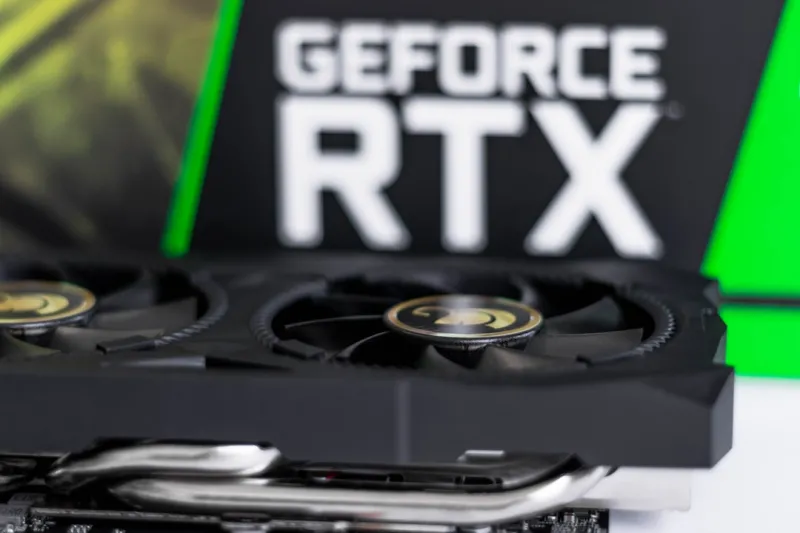
Graphics processing units have become the de‑facto accelerator for more than just gaming. NVIDIA’s “Ada‑Lovelace” series introduced the third generation of Tensor cores, delivering up to 4× the AI inference throughput of their predecessors. Meanwhile, AMD’s “Radeon RX 8000” line has embraced open‑source compute stacks that integrate seamlessly with ROCm, making GPU‑accelerated development more accessible. For a power user, the takeaway is clear: you need a GPU that not only pushes 4K frames at 144 Hz but also slashes AI training times and speeds up real‑time ray tracing. Look for cards with at least 24 GB of GDDR7 memory and PCIe 6.0 support, as the bandwidth bottleneck is disappearing fast. And don’t overlook the emerging “compute‑only” variants that strip away display outputs in favor of raw horsepower—perfect for a dedicated AI rig that sits alongside your primary workstation.
Memory, storage, and the bandwidth race
DDR6 has finally become mainstream in 2026, offering up to 51 GB/s per module, which translates to smoother multitasking and quicker data swaps when you’re juggling large datasets. Pair that with the rapid rollout of PCIe 6.0 NVMe SSDs—now hitting 8 GB/s sequential reads—and you’ve essentially eliminated the traditional I/O choke points that once hampered high‑end builds. However, speed isn’t the only factor; endurance matters too. Enterprise‑grade NVMe drives now come with power‑loss protection and up to 5 DWPD (drive writes per day), ensuring your data integrity even under heavy write cycles from continuous AI training loops. When configuring your system, aim for a minimum of 64 GB of DDR6 with a 2‑channel configuration, and consider a 2 TB or larger PCIe 6.0 SSD as your primary drive, supplemented by a larger SATA‑based HDD for archival storage.
Designing a future‑ready motherboard strategy
The motherboard is the silent conductor of your hardware symphony, and in 2026 it has taken on a far more strategic role. Modern boards now feature multi‑lane PCIe 6.0 slots, integrated Wi‑Fi 7, and even onboard DP‑DP (DisplayPort‑DisplayPort) bridges that can drive multiple 8K displays without a discrete GPU. When you’re planning a power‑user build, you must evaluate not just the socket and chipset, but also the VRM design, power delivery phases, and BIOS flexibility for overclocking and firmware updates. A robust VRM with at least 12 + 2 phases will give you headroom for future CPU upgrades, while a BIOS that supports both Windows 12 and Linux kernel‑latest ensures you won’t be locked out of next‑gen OS features. For a deep dive into crafting a resilient motherboard plan, check out Designing a Future‑Ready Motherboard Strategy for Power Users, which walks through chipset selection, expansion slot planning, and long‑term firmware maintenance.
Networking at the edge: why 10 GbE is becoming baseline
As data moves faster between local workstations and cloud services, the network layer can no longer be an afterthought. In 2026, 10 GbE (and even 25 GbE) Ethernet ports are becoming standard on high‑end motherboards, and Wi‑Fi 7 promises up to 30 Gbps wireless speeds with ultra‑low latency. For power users who stream massive video files, collaborate on large codebases in real time, or train models on remote GPU clusters, a robust network setup is essential. Investing in a managed 10 GbE switch and ensuring your NIC supports SR‑IOV (Single Root I/O Virtualization) can dramatically reduce bottlenecks. To see a step‑by‑step guide on future‑proofing your network, explore Future‑Proof Your Network: A Power‑User Playbook for 2026, which covers cabling, switch selection, and security hardening for high‑throughput environments.
Smart upgrade playbook: making every dollar count
One of the biggest challenges power users face is deciding when to upgrade versus when to stick with a stable configuration. In 2026, the “smart upgrade” philosophy hinges on three pillars: performance ROI, compatibility, and longevity. Start by benchmarking your current system against the workloads you anticipate over the next 24‑36 months. If a component upgrade yields less than a 15 % performance increase, it may be wiser to allocate that budget toward a future‑proofing element like a higher‑capacity SSD or a more robust PSU. Additionally, take advantage of modular designs—choose a PSU with a high efficiency rating (80 PLUS Gold or Platinum) that can handle additional power rails for future GPUs. For a comprehensive guide on orchestrating upgrades without breaking the bank, read Turbocharge Your PC in 2026: The Power‑User’s Guide to Smart Upgrades. This resource breaks down the timing of CPU refresh cycles, GPU launch windows, and the sweet spot for storage upgrades.
Putting it all together: a power‑user checklist
Before you click “Buy” on any component, run through this quick checklist to ensure you’re covering every critical base. CPU: Hybrid architecture with at least 12 performance cores and 8 efficiency cores, supporting AI instructions. GPU: Minimum 24 GB GDDR7, PCIe 6.0, and dedicated Tensor cores for AI workloads. Memory: 64 GB DDR6, 2‑channel, with room to expand to 128 GB. Storage: 2 TB PCIe 6.0 NVMe as primary, plus a high‑capacity SATA HDD for backups. Motherboard: Multi‑lane PCIe 6.0, robust VRM (12 + 2 phases), Wi‑Fi 7, and BIOS that supports both Windows 12 and the latest Linux kernels. Networking: 10 GbE NIC, managed 10 GbE switch, and quality Cat‑7 cabling. Power: 1000 W 80 PLUS Platinum PSU with modular cabling. Finally, consider future‑proofing software tools—keep your BIOS, drivers, and firmware up to date, and regularly audit your thermal and power headroom under load. This holistic approach ensures your rig will stay relevant as new software demands emerge.
Final thoughts: stay curious, stay ahead
The hardware landscape in 2026 is a moving target, but the principles that keep a power‑user rig at the top of its game remain timeless: balance, scalability, and a willingness to invest in forward‑thinking components. By treating each upgrade as a strategic investment rather than a reactionary fix, you’ll not only boost current performance but also preserve the longevity of your system. Keep an eye on upcoming announcements from AMD, Intel, and NVIDIA—early adopters who understand the roadmap can secure the best deals before supply constraints hit. And remember, the most powerful machine is only as good as the knowledge behind it; stay engaged with community forums, follow the latest benchmarks, and never hesitate to experiment. With the right hardware strategy, you’ll be ready to tackle anything 2026 throws at you, from immersive VR worlds to groundbreaking AI breakthroughs.