When I first tore into my old ATX board back in the day, I never imagined the motherboard would evolve into the brain‑like, feature‑rich platform it is in 2026. Yet here we are, with silicon that can juggle AI accelerators, ultra‑fast storage, and power delivery that would make a data center blush. As a power‑user who lives at the intersection of creative workloads and heavy‑duty computing, the motherboard is my first line of defense against bottlenecks and my secret weapon for unlocking raw potential. In this deep dive I’ll walk you through the trends that matter, the specs you can’t afford to ignore, and the strategic choices that keep your rig humming for years. Whether you’re building a new AI‑ready workstation or simply upgrading a gaming beast, understanding the nuances of today’s boards will save you both money and headaches down the line.
Why the Motherboard Still Rules the Roost
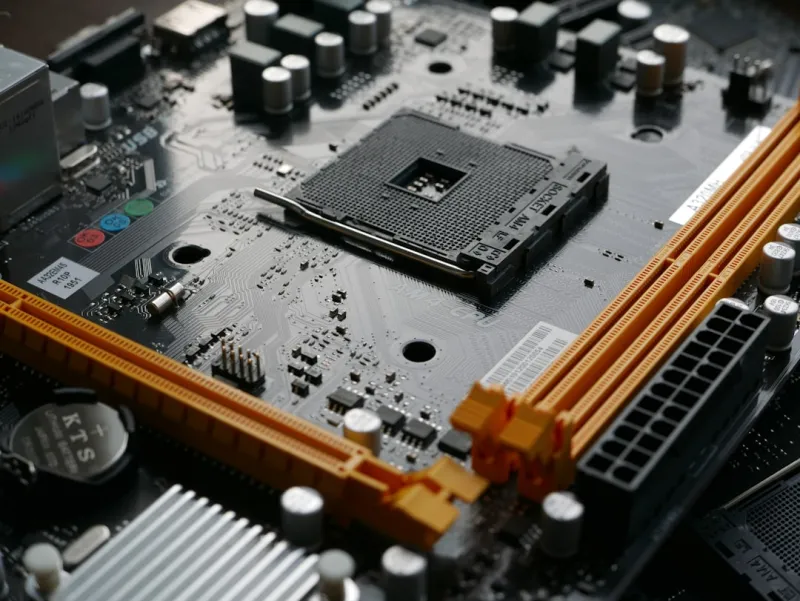
Every component in a PC ultimately answers to the motherboard, making it the unsung hero of system stability and performance. Modern boards act as sophisticated traffic controllers, allocating PCIe lanes, managing power phases, and providing firmware that can adapt to evolving standards without a full hardware swap. This central role means that a well‑chosen motherboard can extend the lifespan of your CPU, RAM, and even your storage solutions, while a cheap, feature‑starved board can cripple otherwise top‑tier parts. For power‑users who demand consistent uptime, especially when running AI inference or 8K video editing, the reliability of VRM design and the quality of onboard capacitors become non‑negotiable. In short, a solid motherboard translates to fewer crashes, smoother overclocking headroom, and a smoother workflow—exactly what we need to stay productive in 2026.
Chipset Evolution: What 2026 Brings to the Table
The chipset landscape has shifted dramatically this year, with Intel’s Raptor Lake‑S and AMD’s Zen 5+ platforms both offering unprecedented lane counts and integrated AI accelerators. What used to be a luxury—hardware‑level support for Tensor cores—is now mainstream, enabling real‑time AI enhancements in photo and video applications without a discrete GPU. When evaluating a board, pay close attention to the chipset’s support for DDR5‑5600 and beyond, as well as native PCIe 5.0 x16 lanes that future‑proof your system for next‑gen GPUs and storage. Additionally, look for motherboards that ship with the latest BIOS updates out‑of‑the‑box; a robust BIOS can mean the difference between seamless AI workload scaling and tedious manual tweaking. In my experience, boards built on the X670E chipset, for example, strike the perfect balance between feature richness and stability for a power‑user workstation.
Form Factor Matters: From Mini‑ITX to E‑ATX
Choosing the right form factor is more than just a matter of case size; it dictates the number of VRM phases, expansion slots, and even cooling options available to you. Mini‑ITX boards, while ultra‑compact, often sacrifice VRM robustness and limit you to a single M.2 slot—acceptable for a portable workstation but risky for high‑end overclocking. Conversely, E‑ATX boards can host up to 20+ power phases, multiple PCIe 5.0 slots, and extensive onboard SATA and M.2 connectivity, making them ideal for AI‑heavy builds that need room to breathe. However, the larger footprint demands a case with excellent airflow and space for larger coolers. As a rule of thumb, match your form factor to your workload: if you’re pushing the limits of GPU compute, lean toward ATX or E‑ATX; if you prioritize mobility, a well‑designed Mini‑ITX with a high‑quality VRM can still deliver impressive performance.
Power Delivery & VRM: The Unsung Hero of Stability
Voltage Regulator Modules (VRMs) are the quiet workhorses that keep your CPU and GPU fed clean, stable power. In 2026, the industry standard has moved toward 12‑plus phase designs with digital PWM controllers that dynamically adjust to load spikes, crucial for workloads that oscillate between idle and full‑throttle AI inference. Look for motherboards that feature premium components like solid‑state electrolytic caps and ferrite core chokes—these parts reduce ripple and heat, extending the life of your board. A robust VRM also enables higher overclocking headroom without compromising system stability, which is essential when you’re squeezing every ounce of performance from a 12‑core processor. As a personal rule, I never settle for a board with fewer than eight phases for a high‑end CPU; the extra cost pays dividends in reliability and future‑proofing.
PCIe Lane Allocation & Future‑Proofing Strategies
The explosion of PCIe 5.0 devices—especially GPUs and NVMe SSDs—means lane allocation has never been more critical. A well‑designed motherboard will prioritize the primary x16 slot for your GPU while offering additional x4 or x8 slots for expansion cards, such as AI inference accelerators or high‑speed networking adapters. Pay attention to the chipset’s total lane count; some boards split lanes between the CPU and chipset, which can affect performance when multiple devices are active. To truly future‑proof, choose a board that supports bifurcation, allowing you to split a single x16 slot into two x8 slots for dual‑GPU setups or GPU‑plus‑NVMe configurations. This flexibility is a hallmark of the best power‑user platforms and aligns perfectly with the recommendations in Future‑Proofing Your Power‑User PC: Hardware Strategies That Actually Work.
Integrated Connectivity: Wi‑Fi 7, Bluetooth 5.3, and USB4
Beyond raw compute, modern motherboards act as connectivity hubs. Wi‑Fi 7, now standard on flagship boards, offers multi‑gigabit speeds and lower latency—perfect for cloud‑based AI workflows where data shuttles between your rig and remote servers. Pair that with Bluetooth 5.3 for seamless peripheral syncing, and you’ve got a wireless ecosystem that rivals wired setups in speed and stability. USB4, delivering up to 40 Gbps, is another game‑changer, especially when connecting external GPUs or high‑throughput storage arrays. When evaluating a board, verify the number of USB4 ports and whether they share bandwidth with M.2 slots, as this can impact performance. I often prioritize boards with dedicated USB4 lanes to avoid bottlenecks during intensive data transfers.
Budget vs. Enthusiast: Where to Draw the Line
It’s tempting to splurge on every shiny feature, but smart budgeting can still yield a high‑performing system. For most power‑users, the sweet spot lies in a mid‑range ATX board with a solid VRM, PCIe 5.0 support, and integrated Wi‑Fi 7. These boards typically cost 20‑30 % less than the top‑tier models but still deliver reliable performance for AI workloads and gaming alike. Reserve premium spending for features you truly need—such as a 10‑phase VRM for extreme overclocking, or dual‑M.2 slots with heatsinks for sustained NVMe writes. The guidance in Upgrade Your Power‑User PC for 2026: A Hands‑On Guide to Future‑Proof Performance reinforces this approach: identify the bottleneck you’re most likely to hit and invest there, rather than chasing every spec on the sheet.
Real‑World Build Example: An AI‑Ready Workstation
Let’s walk through a practical build that illustrates the principles above. I started with an AMD Zen 5+ 16‑core CPU and paired it with an X670E E‑ATX motherboard featuring a 14‑phase VRM, dual PCIe 5.0 x16 slots, and integrated Wi‑Fi 7. The board’s six M.2 slots—four of which are PCIe 5.0—allowed me to install a 4 TB PCIe 5.0 NVMe drive for instant AI model loading, while a secondary 2 TB drive handled project archives. A single high‑end GPU occupied the primary x16 slot, and a low‑profile AI accelerator card sat in the secondary slot, taking advantage of bifurcation for split‑lane usage. With a robust power supply and a case optimized for airflow, the system achieved stable 4.2 GHz boost on the CPU and sustained 12 GB/s sequential reads on the NVMe drive—metrics that directly translate to faster render times and smoother data pipelines.
Final Checklist and Next Steps
Before you click “Add to Cart,” run through this quick checklist: (1) Verify chipset support for DDR5‑5600 or higher and sufficient VRM phases; (2) Confirm the number and type of PCIe 5.0 slots align with your GPU and expansion plans; (3) Ensure integrated Wi‑Fi 7 and USB4 meet your connectivity needs; (4) Check BIOS update policies for long‑term firmware support; (5) Match the form factor to your case’s cooling capabilities. By ticking these boxes, you’ll secure a motherboard that not only meets today’s demands but also adapts to tomorrow’s innovations. Ready to power up? Dive deeper into the build strategies and security hardening tips in our other posts, and let’s keep your PC humming at the peak of performance.