Why Modern Hardware Choices Matter More Than Ever
When I first opened a computer case in the early 2000s, the idea of swapping a single RAM stick felt like wizardry. Fast forward to 2026, and that same act can unleash a cascade of performance gains that ripple through AI workloads, high‑refresh gaming, and even everyday multitasking. Understanding the underlying architecture—from DDR6 memory timing to the nuanced power envelopes of the latest silicon—has become a non‑negotiable skill for anyone who refuses to settle for “good enough.” In my daily grind, I treat each component as a puzzle piece that must align perfectly with my workflow, whether I’m compiling code, training neural nets, or streaming 8K content. The stakes are higher because the software we run is more demanding, and the cost of a bottleneck is measured not just in lag but in lost productivity and missed opportunities. This article walks you through the critical decisions that separate a hobbyist build from a true power‑user rig, spotlighting the hardware trends that will dominate the next few years.
The CPU Landscape: From Core Count to Hybrid Designs
CPU development in 2026 has reached a sweet spot where sheer core count and intelligent hybrid architectures converge. The latest desktop processors blend high‑performance cores (P‑cores) with energy‑efficient efficiency cores (E‑cores), dynamically allocating tasks to the appropriate unit. This means that a single-threaded game can still enjoy maximum clock speeds while background AI inference runs silently on E‑cores. For power users, the key metric isn’t just GHz anymore; it’s the combination of cache size, instruction per cycle (IPC) improvements, and how well the chip’s scheduler handles mixed workloads. I’ve found that pairing a 16‑core hybrid CPU with a motherboard that supports PCIe 5.0 and DDR6 memory creates a harmonious ecosystem where latency drops dramatically. When you’re juggling a virtual machine, a containerized dev environment, and a GPU‑accelerated rendering task, that synergy translates into seconds saved per iteration—seconds that compound over weeks of work.
Memory Evolution: DDR6 vs. Emerging DDR7
Memory speed has always been the unsung hero of system responsiveness, and in 2026 DDR6 has become the baseline for serious builds. With transfer rates surpassing 6400 MT/s and latency trimming down to sub‑15 ns, DDR6 modules provide the bandwidth required for data‑intensive applications like real‑time video editing and large‑scale simulations. However, the industry is already teasing DDR7, promising up to 12,800 MT/s and integrated error‑correcting code (ECC) on consumer‑grade kits. When I upgrade my workstation, I prioritize low CAS latency and a tall heat spreader to maintain stability under sustained loads. The sweet spot for most power users remains a 32 GB kit of dual‑rank modules, striking a balance between capacity and speed without breaking the bank. For those who push the envelope—think massive in‑memory databases—the extra investment in higher‑capacity kits pays dividends in throughput and reduced paging.
Graphics Power: The Rise of AI‑Accelerated GPUs
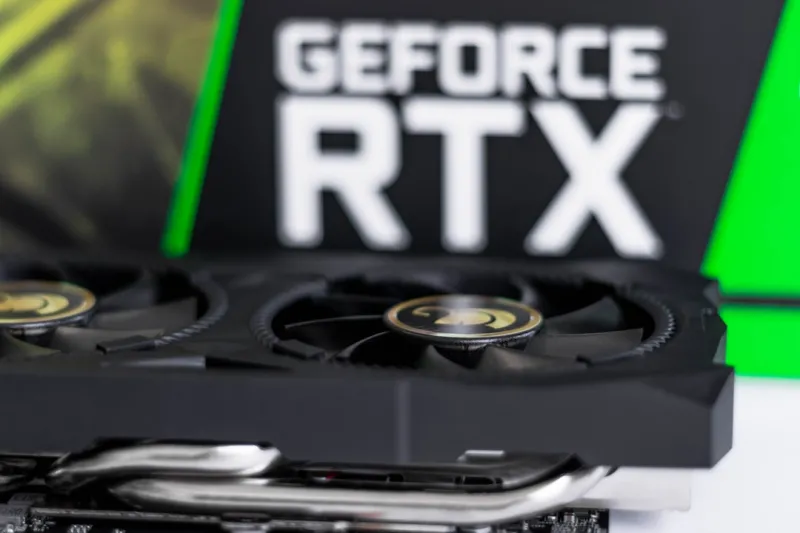
Graphics cards have transcended pure rasterization and now serve as general‑purpose AI accelerators. The newest RTX 5000 series chips integrate dedicated tensor cores that can handle everything from deep‑learning inference to real‑time ray tracing with minimal performance hit. In my own workflow, I offload video transcoding and AI‑driven image upscaling to the GPU, freeing the CPU for compilation and testing. The critical factor here is the balance between VRAM capacity and bandwidth; 24 GB of GDDR7 with 1 TB/s throughput is becoming the sweet spot for creators and developers alike. Moreover, the shift toward PCIe 5.0 ensures that data moves swiftly between the GPU and other system components, eliminating the dreaded bottleneck that plagued earlier generations. Pairing a high‑end GPU with a robust cooling solution—preferably a hybrid liquid‑air loop—keeps thermals in check, allowing sustained boost clocks during marathon rendering sessions.
Storage Strategies: NVMe Dominance and the Role of SATA
Solid‑state storage has solidified its dominance, and the NVMe 2.0 specification now offers read speeds north of 14 GB/s and write speeds that rival traditional DRAM in certain workloads. For power users, a dual‑drive setup—one ultra‑fast NVMe for OS and applications, another high‑capacity NVMe or SATA SSD for bulk data—delivers the best of both worlds. The Hard Drive Mastery: Power‑User Strategies for 2026 and Beyond guide outlines how tiered storage can shave seconds off boot times and dramatically improve large file transfers. I still keep a reliable 4 TB SATA SSD as a fallback for archival projects; its lower cost per gigabyte makes it ideal for storing raw footage or datasets that don’t require instant access. RAID configurations, once the domain of servers, are now accessible via consumer‑grade motherboards, offering redundancy and speed boosts for those who need ironclad data integrity.
Power Delivery and Cooling: The Unsung Heroes
Power supplies and cooling solutions are often overlooked, yet they are the backbone that sustains high‑performance components. In 2026, 80+ Platinum 1000 W units have become the norm for rigs that pack multiple GPUs and a high‑end CPU. The efficiency gains translate directly into lower heat output and quieter operation—a crucial factor when you’re running a workstation in a shared office space. On the cooling front, hybrid liquid‑air coolers that combine a pump‑driven liquid loop for the CPU with high‑static pressure fans for VRM and chipset cooling have proven their worth. I’ve transitioned to a closed‑loop AIO with a 360 mm radiator, pairing it with case fans that support PWM control and low noise curves. The result is a system that remains under 45 °C under full load, ensuring that boost clocks stay active for longer periods without thermal throttling.
Connectivity and Expansion: Harnessing PCIe 5.0 and Beyond
The expansion ecosystem in 2026 revolves around PCIe 5.0, which doubles the bandwidth of its predecessor, delivering up to 32 GT/s per lane. This is a game‑changer for high‑speed network cards, NVMe storage, and external GPU enclosures. I often equip my workstation with a PCIe 5.0 x4 NVMe expansion card to add an additional ultra‑fast storage tier without sacrificing the primary slot for the GPU. Meanwhile, Thunderbolt 4 ports, now ubiquitous on most motherboards, provide a universal gateway for external displays, fast external SSDs, and even eGPUs. For professionals who need to dock multiple high‑resolution monitors and transfer terabytes of data in a single session, these connectivity options eliminate the need for a cluttered cable jungle. The key is to choose a motherboard that offers a balanced distribution of lanes, ensuring that none of your high‑throughput devices are starved for bandwidth.
Future‑Proofing: Planning for the Next Five Years
Investing in a PC today means anticipating the demands of tomorrow’s software and workloads. The best strategy is to adopt a modular approach: select a motherboard with ample PCIe slots, support for up to 64 GB of DDR6 (or DDR7 when it becomes mainstream), and a robust power delivery system that can handle future GPU upgrades. I’ve found that a well‑chosen case with ample drive bays and space for additional radiators can extend the life of a build by several years. Moreover, keeping firmware and BIOS updated is crucial; manufacturers now release yearly micro‑code patches that improve stability and unlock hidden features. Pair this with a regular audit of your software stack—removing legacy bloat and adopting containerization—ensures that your hardware resources are always utilized efficiently. By treating your PC as an evolving platform rather than a static purchase, you safeguard your investment against rapid technological churn.
Security at the Hardware Level: Trusting Your Silicon
Security is no longer just a software concern; the hardware itself must be trusted. Modern CPUs incorporate built‑in mitigations against Spectre, Meltdown, and other side‑channel attacks, but they also offer features like hardware‑rooted TPM 2.0 and secure boot keys that can be locked down to prevent firmware tampering. I integrate a dedicated hardware security module (HSM) for cryptographic workloads and enable BIOS password protection to thwart unauthorized configuration changes. Additionally, leveraging the Fortify Your Digital Life: A Power‑User’s Blueprint for Modern Computer Security guide has helped me implement a layered defense that starts at the silicon level and extends to the operating system. By combining secure boot, encrypted storage, and vigilant driver signing, you create a fortress that protects sensitive data even if the machine falls into the wrong hands.
Putting It All Together: Building Your Ultimate Power‑User Rig
After dissecting each component, the real art lies in harmonizing them into a cohesive system. Start with a motherboard that supports the latest PCIe 5.0, DDR6/DDR7, and offers robust VRM phases. Pair it with a hybrid CPU that balances performance and efficiency cores, then stack 32 GB of low‑latency DDR6 RAM with a 2 TB NVMe primary drive for the OS and apps. Add a secondary 4 TB SSD for bulk storage, and a 24 GB GDDR7 GPU for AI‑accelerated tasks. Top it off with a 1000 W Platinum PSU, a 360 mm AIO cooler, and a case that provides ample airflow and expansion space. Finally, secure the system with hardware‑based security measures and keep firmware up‑to‑date. By following this blueprint, you’ll craft a machine that not only meets today’s demanding workloads but also stands ready for the innovations of the next half‑decade. The result is a workstation that feels responsive, stays cool under pressure, and protects your data—exactly what a modern power user needs.