When I first cracked open a case back in the early 2010s, the motherboard felt like the command center of a spaceship—every LED, socket, and trace whispered possibilities. Fast‑forward to 2026, and that metaphor still holds, but the technology has grown into a sprawling ecosystem of AI‑ready pathways, ultra‑fast interconnects, and power‑management tricks that would make a 2020‑era board look like a child’s toy. For power users like us, the motherboard isn’t just a substrate; it’s the backbone that determines whether we can truly harness the raw horsepower of today’s CPUs and GPUs without choking on latency or heat. In this article, I’ll walk you through the most critical upgrades, design philosophies, and hidden pitfalls that define the modern motherboard landscape, all from my hands‑on, battle‑tested perspective. Whether you’re assembling a new AI development rig or fine‑tuning a legacy workstation for 4K video rendering, understanding the nuances of today’s boards will save you countless hours of troubleshooting and upgrade regret.
Chipset Evolution: The Brain Behind the Brawn
The chipset is the silent conductor that coordinates everything from PCIe lanes to storage controllers, and 2026 has finally delivered a chipset that feels genuinely future‑proof. Intel’s 13th‑Gen “Meteor” and AMD’s “Zen 5” platforms both ship with native PCIe 6.0 support, doubling bandwidth compared to the previous generation and opening the door for next‑gen SSDs that can sustain terabytes per second of sequential reads. Meanwhile, DDR6 memory, still in its early adoption phase, promises latency improvements of up to 15 % over DDR5, giving AI workloads a smoother data pipeline. For a power user, the choice of chipset translates directly into how many high‑speed devices you can run concurrently without bottlenecking. If you plan to stack multiple GPUs, 10 Gb Ethernet, and a couple of NVMe drives, a chipset that offers at least 28 PCIe lanes for the CPU and a robust DMI link to the motherboard is non‑negotiable.
Power Delivery and VRM Mastery
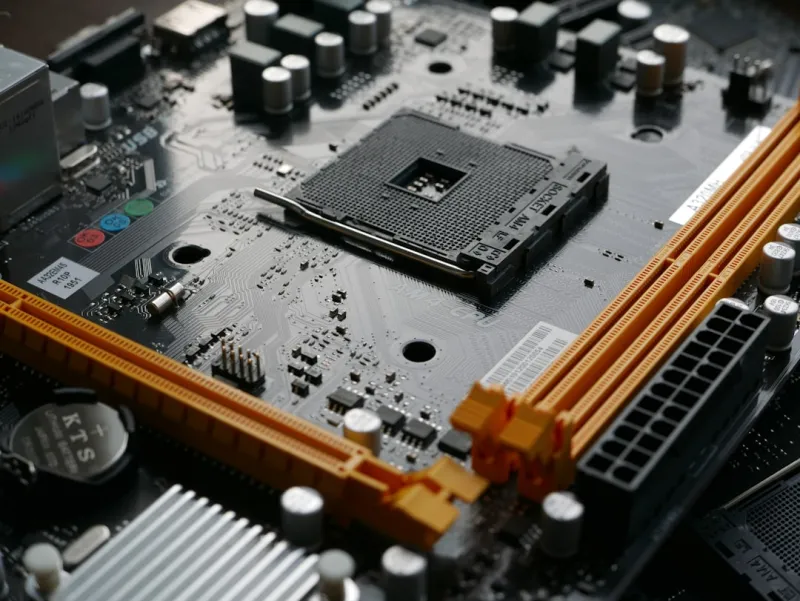
One of the most underrated aspects of a motherboard is its voltage‑regulator module (VRM) design. In the era of 200 W and higher TDP processors, a solid VRM not only ensures stability under load but also dramatically reduces acoustic noise by keeping temperatures low. Look for boards that feature at least a 14‑phase power delivery for the CPU, with high‑quality chokes and low‑ESR capacitors. Premium manufacturers now use digital power control, which allows for per‑core voltage tuning—a boon for overclockers who want to squeeze every last MHz out of their silicon without triggering thermal throttling. Additionally, watch out for boards that support multi‑rail designs and feature dedicated VRMs for the GPU if you’re using an integrated graphics solution or a small‑form‑factor build. Efficient power delivery translates to a longer lifespan for both the CPU and the motherboard itself, a key consideration for anyone who upgrades frequently.
Form Factor Flexibility: From ATX to E‑ATX and Beyond
The classic ATX layout remains the workhorse for most power users, but the rise of multi‑GPU rigs and expansive storage arrays is nudging many toward the larger E‑ATX footprint. E‑ATX boards provide extra space for more VRM phases, additional M.2 slots, and expanded SATA connectors—all without the cramped heat zones that can plague densely populated ATX boards. On the other hand, if desk real‑estate is at a premium, a well‑designed mini‑ITX board can still pack a punch, especially when paired with a high‑efficiency CPU and a single, powerful GPU. The key is to align the form factor with your case’s airflow characteristics and future upgrade path. Remember, a board that physically fits your chassis but leaves no room for additional cooling solutions will quickly become a bottleneck as component power draws climb.
Connectivity: The New Frontier of Speed and Simplicity
Connectivity options have exploded in variety and speed, making the motherboard a hub for everything from peripheral devices to high‑speed networking. USB4 now dominates the front panel, offering up to 40 Gbps and dual‑protocol support for both Thunderbolt 4 and traditional USB‑C devices. For power users who rely on external storage, this means you can plug a 4 TB Thunderbolt‑compatible SSD directly into the chassis without sacrificing bandwidth. Wi‑Fi 7 has also become mainstream, delivering multi‑gigabit wireless speeds with lower latency—a game‑changer for developers who need to sync large datasets on the go. Meanwhile, 10 Gb Ethernet remains the gold standard for wired connections, especially in studio environments where consistent low‑latency networking is critical. When evaluating a board, tally up the total number of high‑speed ports, ensuring you have enough headroom for future expansions like external GPU enclosures or high‑speed capture cards.
BIOS/UEFI: The Firmware Frontier
Modern motherboards ship with UEFI firmware that rivals full‑blown operating systems in terms of feature depth. In 2026, BIOS interfaces have become more intuitive, offering graphical menus, mouse support, and even built‑in diagnostics that can flag potential hardware conflicts before you power on. For power users, the ability to flash BIOS over the internet—so‑called “Internet Flash”—means you can keep your board up‑to‑date without a bootable USB stick, closing security holes that could otherwise be exploited by firmware‑level malware. Look for boards that support Secure Boot and have a dedicated TPM 2.0 header, which are essential components of a zero‑trust security posture. Additionally, many high‑end boards now include a dual‑BIOS setup: a primary firmware and a backup that can be toggled in case the main BIOS becomes corrupted, ensuring you never lose access to critical hardware.
Choosing the Right Motherboard for Power Users in 2026
When the time comes to pick a board, start with the specific workloads you plan to dominate. If AI model training is on your roadmap, prioritize PCIe 6.0 lanes, ample VRM phases, and a chipset that supports high‑bandwidth memory. For content creators, look for multiple M.2 slots with heatsinks, integrated high‑resolution audio, and robust USB‑4 connectivity. My go‑to checklist often references the Choosing the Right Motherboard for Power Users in 2026 guide, which breaks down the decision matrix in a clear, step‑by‑step format. In addition, the Motherboard Playbook offers a curated list of models that excel in thermal performance, firmware stability, and expandability—making the research phase less of a maze and more of a focused sprint toward the perfect match.
Designing a Future‑Proof Workstation That Stays Ahead of the Curve
Even the best motherboard will underperform if the surrounding ecosystem isn’t aligned. In my latest builds, I’ve adopted a modular approach: a high‑capacity 2 TB NVMe drive for OS and applications, a separate 4 TB SATA array for raw data, and a dedicated AI accelerator card that plugs into a PCIe 6.0 x8 slot. The chassis itself features removable dust filters and a liquid‑cooling reservoir that can be re‑purposed for future CPU or GPU upgrades. For those looking for a detailed blueprint, the Designing a Future‑Proof Power‑User Workstation for 2026 article walks through component selection, cable management best practices, and thermal modeling to ensure your rig remains cool, quiet, and upgradeable for years to come.
Testing, Tuning, and Long‑Term Maintenance
Once your motherboard is installed, the real work begins: stress testing, fine‑tuning, and establishing a maintenance routine. I start with a combination of Prime95 for CPU stability, 3DMark for GPU endurance, and CrystalDiskMark to verify that every M.2 slot is hitting its advertised speeds. Monitoring tools like HWInfo64 let me track VRM temperatures in real time, ensuring that even under a 24‑hour rendering marathon the board stays within safe thermal thresholds. Don’t forget firmware updates; a quarterly BIOS check can unlock hidden features, improve power efficiency, and patch security vulnerabilities that could otherwise compromise your system. Finally, keep the board clean—dust can act as an insulator, raising temperatures and accelerating component wear. A gentle air blast and a quick visual inspection every six months go a long way toward preserving performance.
Conclusion: The Motherboard as Your Strategic Advantage
In the fast‑moving world of 2026, where AI workloads, high‑resolution content creation, and massive data transfers are the norm, the motherboard is no longer a passive platform—it’s a strategic advantage. By selecting a board with a robust chipset, efficient VRM design, ample connectivity, and future‑proof form factor, you set the stage for a system that not only meets today’s demands but scales gracefully into tomorrow’s challenges. Pair that hardware foundation with disciplined testing, regular firmware updates, and a well‑planned workstation layout, and you’ll enjoy a computing experience that feels both powerful and resilient. So, roll up your sleeves, dive into the specs, and build a platform that truly reflects the ambitions of a modern power user.