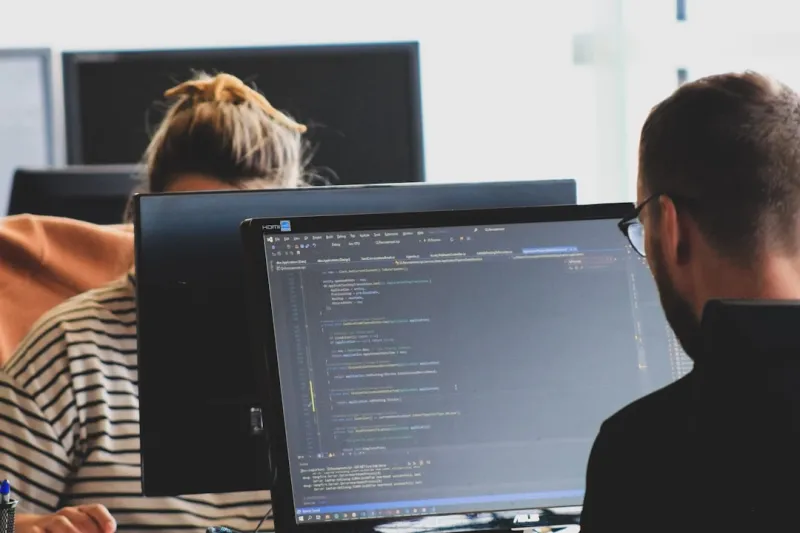
When I first started coding in the early 2010s, I could still remember the thrill of typing “Hello, World!” in a cramped terminal while the world still ran on monolithic architectures. Fast‑forward to 2026, and the same excitement is now powered by AI assistants that suggest whole functions before you even think about them, cloud‑native stacks that spin up in seconds, and a security landscape that feels like a perpetual chess match. The pace is relentless, and the only way to stay relevant is to treat every project as a living organism that must adapt, evolve, and occasionally shed legacy weight. In this post, I’ll walk you through the forces reshaping our craft—AI‑augmented code, the resurgence of low‑code platforms, hyper‑secure pipelines, and the hardware choices that can make or break a developer’s productivity. Buckle up; we’re about to decode the future of software development from the trenches, where every line of code matters more than ever.
The AI‑First Development Paradigm
Artificial intelligence is no longer a buzzword; it’s the engine driving the next wave of productivity. In 2026, large language models sit beside us in IDEs, offering context‑aware suggestions, auto‑generating test suites, and even flagging potential performance regressions before the code runs. This shift has transformed the developer’s role from manual problem‑solver to strategic overseer, where we spend more time validating AI‑generated output than typing every line ourselves. The biggest advantage? Speed. Projects that once took weeks to prototype now launch in days, allowing teams to iterate at a breakneck pace. However, this convenience comes with a responsibility to understand the underlying models, ensuring we don’t blindly trust suggestions that could embed hidden biases or security flaws. The key is to treat AI as a collaborative partner, not a replacement, and to maintain a critical eye that blends human intuition with machine precision.
Low‑Code and No‑Code: Democratizing Development
While AI writes code, low‑code and no‑code platforms are opening the doors to a broader audience. In 2026, businesses are leveraging visual builders to prototype internal tools, dashboards, and even customer‑facing applications without a single line of traditional code. This democratization is reshaping talent pipelines; product managers, marketers, and analysts can now ship functional prototypes that previously required a dedicated engineering squad. For seasoned developers, this means a pivot from pure implementation to orchestration—integrating these rapid‑build solutions into robust, scalable architectures. It also forces us to become fluent in the abstractions these platforms expose, such as data bindings, event‑driven logic, and API gateways. The upside is a dramatic reduction in time‑to‑value, but the downside is a potential fragmentation of codebases if governance isn’t enforced. The sweet spot lies in using low‑code for speed while anchoring critical services in well‑architected, maintainable code.
AI‑Driven DevOps Pipelines
The DevOps landscape has been supercharged by AI, turning static CI/CD pipelines into adaptive, self‑optimizing systems. Modern pipelines now analyze code changes, predict failure points, and automatically adjust resource allocation for test environments. For instance, an AI model can decide to spin up a GPU‑enabled runner only when a change touches a machine‑learning module, saving both time and cloud spend. Moreover, predictive analytics can forecast deployment windows based on historical performance, reducing downtime and aligning releases with user traffic patterns. This level of automation demands a new set of skills: understanding model drift, configuring feedback loops, and ensuring observability across the entire stack. Teams that embrace AI‑enhanced DevOps find themselves delivering features faster while maintaining high reliability, a competitive edge that’s hard to ignore in today’s rapid release cycles.
Security by Design: Encryption and Zero‑Trust
Security is no longer an afterthought; it’s baked into every layer of the development process. With threats growing more sophisticated, 2026 sees a universal adoption of zero‑trust architectures and end‑to‑end encryption as default. Developers now integrate encryption libraries directly into data models, ensuring that sensitive fields are protected at rest and in transit without additional code paths. This proactive stance aligns with the guidance found in Encryption in 2026: Practical Strategies to Stay One Step Ahead, which emphasizes key rotation and hardware‑based security modules as non‑negotiable. Additionally, AI tools are being used to scan codebases for vulnerable patterns, automatically generating patches before exploits surface. The challenge lies in balancing performance with security; over‑encryption can introduce latency, especially in real‑time applications. By adopting a risk‑based approach and leveraging AI‑driven code analysis, teams can maintain a secure posture without sacrificing the user experience.
Hardware Choices That Empower Developers
Even the most sophisticated software stack can be throttled by inadequate hardware. In 2026, the line between developer workstation and high‑performance gaming rig has blurred, with GPUs now serving both AI workloads and UI rendering. Selecting the right motherboard, for instance, influences not just expandability but also power delivery to high‑end components—a point explored in depth in Why Motherboards Matter More Than Ever in 2026. Pairing a modern CPU with sufficient PCIe lanes ensures that you can attach multiple NVMe drives and external GPUs without bottlenecks. Moreover, fast, low‑latency RAM—ideally 32 GB or more—reduces compile times and enables smoother multitasking across IDEs, containers, and local emulators. Investing in a robust cooling solution is also critical; thermal throttling can silently degrade performance during long training sessions for AI models. By treating your workstation as a strategic asset, you’re not just building code—you’re building the foundation for future innovation.
AI‑Powered Productivity Suites
Beyond coding, AI is reshaping how we collaborate and document our work. The latest AI‑augmented Microsoft Office suite, highlighted in AI‑Powered Microsoft Office: Real‑World Hacks for 2026 Productivity, offers context‑aware suggestions for project plans, automated meeting minutes, and intelligent code snippets within Excel. Imagine drafting a technical specification and having the system auto‑populate diagrams based on your text, or generating a sprint backlog directly from a high‑level roadmap. This integration reduces friction between planning and execution, allowing developers to focus on solving problems rather than managing paperwork. However, the reliance on AI also raises concerns about data privacy, especially when sensitive project details are processed in the cloud. The best practice is to leverage on‑premises AI options where possible, or ensure that your organization’s data governance policies cover AI‑driven tools. The payoff is a streamlined workflow that aligns development, documentation, and stakeholder communication in a single, intelligent ecosystem.
Continuous Learning: Staying Ahead of the Curve
The only constant in tech is change, and 2026 is no exception. To thrive, developers must adopt a growth mindset that embraces lifelong learning. Curated newsletters, micro‑credential courses, and community‑driven forums provide bite‑sized knowledge that can be immediately applied. A recent piece, Why 2026 Tech Updates Matter to Every Power User, underscores the importance of staying current with platform updates, language releases, and emerging standards. Setting aside dedicated time each week for reading release notes, experimenting with new frameworks, or contributing to open‑source projects can yield exponential returns in productivity and employability. Moreover, pairing learning with mentorship—both giving and receiving—creates a feedback loop that reinforces new concepts. In an era where AI can automate many routine tasks, the differentiator for developers becomes creativity, strategic thinking, and the ability to synthesize disparate technologies into cohesive solutions.
Community, Open Source, and the Future of Collaboration
Open source remains the lifeblood of modern software development, and its influence has only intensified in 2026. Collaborative platforms now integrate AI bots that can automatically triage issues, suggest pull‑request reviewers, and even generate boilerplate code for new contributors. This democratization lowers the entry barrier, inviting a more diverse set of voices into the development conversation. Engaging with these communities not only accelerates personal skill growth but also amplifies the impact of your work on a global scale. Whether you’re contributing to a widely‑used library or building a niche tool, the open‑source ethos of transparency and shared ownership fosters trust and accelerates innovation. As we look ahead, the convergence of AI, open source, and community‑driven governance will shape a development ecosystem that is more resilient, adaptable, and inclusive than ever before.
Charting Your Path Forward
In summary, the software development landscape of 2026 demands a hybrid skill set: fluency in AI‑augmented tools, a security‑first mindset, strategic hardware choices, and a commitment to continuous learning. By integrating AI responsibly, leveraging low‑code for rapid prototyping, and anchoring your work in robust, open‑source principles, you’ll position yourself not just as a coder, but as an architect of future‑ready solutions. The journey ahead is exciting, and the tools at our disposal have never been more powerful. Embrace the change, experiment boldly, and remember that the best code is the one that solves real problems while staying adaptable for the next wave of innovation.