Why GPU Problems Feel Different in 2026
When I first cracked open my rig back in 2022, troubleshooting a video card meant checking for dusty fans or a bad driver. Fast forward to 2026, and the landscape has mutated into something that feels more like a conversation with an AI‑driven system than a simple hardware check. Modern GPUs now embed dedicated tensor cores, ray‑tracing accelerators, and even on‑board AI inference engines that constantly communicate with the OS and cloud‑based services. That means a single artifact on your screen could be the symptom of a mis‑aligned AI workload, a firmware glitch, or a power‑delivery hiccup caused by a newly introduced dynamic voltage scaling algorithm. As someone who’s spent countless late nights swapping out cards while streaming 4K 144 Hz gameplay, I’ve learned that the “obvious” fixes often miss the underlying AI‑layer interactions. In this article, I’ll walk you through the exact steps I take to isolate the problem, from software sleuthing to hands‑on hardware probing, and I’ll sprinkle in a few links to deeper resources like the comprehensive video card troubleshooting guide for those who crave more detail.
One of the most common complaints I hear on my tech forums is “my GPU is flickering, but the drivers say everything is fine.” In 2026, that flicker could be a sign of an AI‑driven power‑throttling event that only triggers when a specific machine‑learning model runs at full throttle. Other symptoms include sudden driver crashes right after a Windows update that introduced new AI‑enhanced scheduler policies, unexpected black screens during ray‑traced gameplay, and even “ghost” textures that appear only when a deep‑learning upscaler (DLSS 4.0 or its competitors) decides to fall back to a lower‑quality mode. The key is to map each symptom to a possible layer: software (drivers, OS), firmware (VBIOS), hardware (power, cooling), or AI workload scheduling. By breaking the problem into these categories, you stop chasing red herrings and start pinpointing the exact cause. This mindset shift has saved me hours of guesswork and, more importantly, kept my PC ready for the next wave of AI‑centric titles.
Building a Diagnostic Playbook
My first line of defense is always a clean, repeatable diagnostic playbook. I start with the simplest, least invasive checks: verify that Windows 11 (the OS that now ships with AI‑enhanced task scheduling) is fully up to date, and then run the built‑in “Graphics Diagnostics” tool from the Settings app. From there, I pull up GPU‑Z and check the sensor readouts—core clock, memory clock, voltage, and temperature. If any of these values stray from the manufacturer’s spec sheet, it’s a red flag. Next, I glance at the Windows Event Viewer for any “Display Driver” errors that might hint at a crash loop or a driver‑related timeout. In many cases, a fresh driver install solves the problem, but in 2026 I always opt for a “clean install” using DDU (Display Driver Uninstaller) to wipe out any lingering remnants. After the driver is reinstalled, I run a quick benchmark (like 3DMark Time Spy Ultra) to see if the card can sustain its advertised performance without stuttering.
When the software side checks out, I move on to more nuanced tools that understand the AI layers built into modern GPUs. The NVIDIA Control Panel now includes an “AI Workload Monitor” that shows real‑time tensor core utilization. AMD’s Radeon Software has a similar “AI Engine” tab. If you notice that tensor core usage spikes just before a crash, you might be dealing with a buggy AI inference model or an incompatibility with a recent Windows update. At this point, I like to disable any AI‑specific features—turn off DLSS, ray‑tracing, or AMD FidelityFX Super Resolution—to see if stability returns. If the system stabilizes, you’ve isolated the issue to the AI pipeline, and the next step is to either roll back the driver to a version that didn’t introduce the problematic feature or wait for a hotfix from the GPU vendor. This methodical approach, which I’ve refined over years of troubleshooting, cuts down on guesswork and gives you concrete data to share with support if you need to file an RMA.
Sometimes the problem isn’t the GPU at all but the way the OS is handling its power profile. Windows 11 now offers “Dynamic Power Management for GPUs,” an AI‑driven system that learns your usage patterns and adjusts voltage on the fly. While it’s great for battery life on laptops, on a high‑end desktop it can cause sudden undervolting under sustained loads. I always open the Power Options > GPU Power Management and set it to “Maximum Performance” when I’m testing. If the issue disappears, you’ve identified a software‑level power throttling problem, not a hardware defect. This tiny tweak is often overlooked, yet it can be the difference between a card that constantly crashes and one that runs like a champ. Remember, the goal of your diagnostic playbook is to eliminate variables one by one, leaving you with a clear picture of what truly needs fixing.
Hardware‑Level Investigation
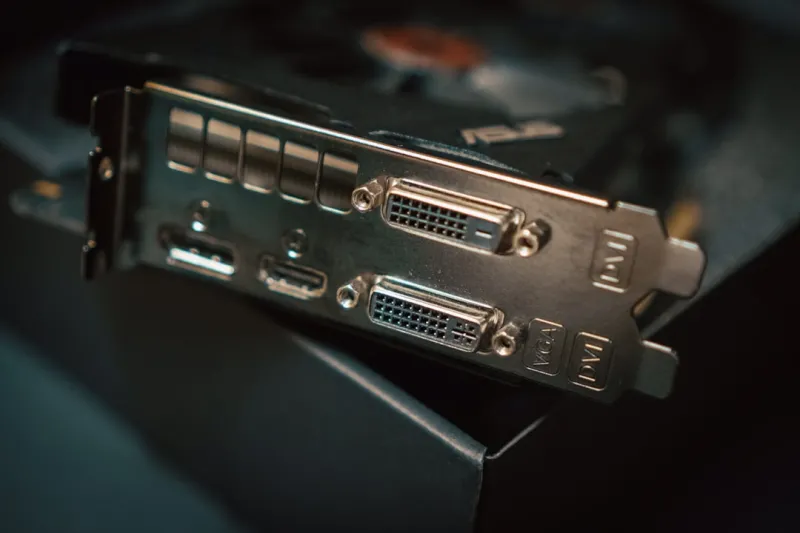
Once the software and AI layers have been cleared, it’s time to roll up your sleeves and inspect the hardware. The first thing I do is power‑down the system, unplug everything, and then physically reseat the GPU. A slightly misaligned PCIe connector can cause intermittent signal loss that shows up as flickering or driver timeouts. While the card is out, I check the power connectors—both the 8‑pin and 6‑pin (or the newer 12‑pin) cables—to ensure they’re fully seated and not frayed. In 2026, many high‑end GPUs draw upwards of 500 W, and a marginally loose connector can trigger a voltage dip that the AI power manager interprets as a “thermal event,” throttling the core abruptly.
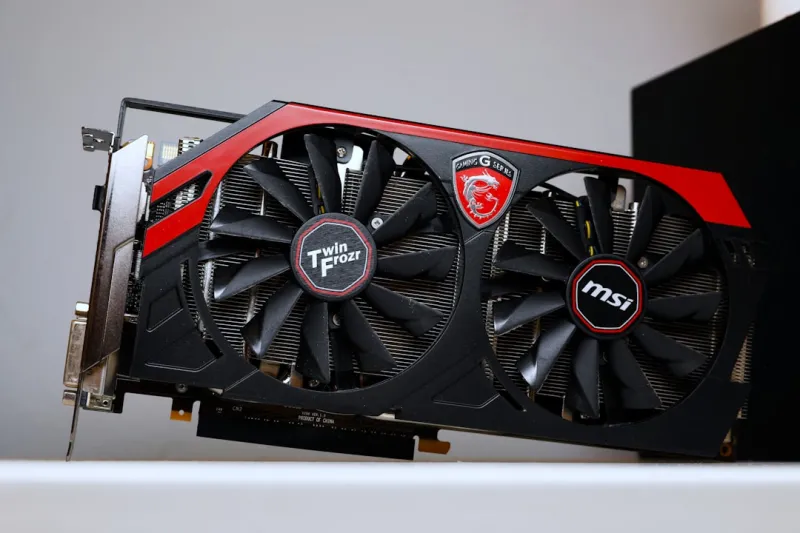
Next, I turn my attention to cooling. Modern GPUs now use hybrid cooling solutions that combine vapor‑chamber fans with liquid‑cool loops. I inspect the fan blades for dust buildup, which can be surprisingly stubborn even after a quick air‑blow. I also verify that the pump (if you have a liquid‑cooled card) is humming at the correct RPM—most manufacturers provide a diagnostic LED or a software readout. If temperatures exceed 85 °C under load, the card will automatically downclock, and you’ll see stuttering or artifacting. In that case, re‑apply a high‑quality thermal paste—something like a carbon‑based compound that can handle the new AI‑core heat densities—and reseat the cooler. Finally, I run a short stress test (such as a 5‑minute run of Unigine Heaven) while monitoring the voltage and power draw through GPU‑Z. If the card can sustain its rated TDP without dips, you’ve likely eliminated the hardware as the culprit.
RMA, Replacement, and Future‑Proofing
If you’ve walked through software, AI, and hardware checks and the GPU still misbehaves, it’s time to consider an RMA. Most manufacturers now offer a 3‑year warranty that covers firmware bugs and hardware failures, but the process can be smoother if you’ve documented every step you’ve taken. Capture screenshots of error logs, sensor readouts, and the results of your stress tests. Include the exact driver version and Windows 11 build number (2026 build 22000.x) in your ticket. This level of detail not only speeds up the approval but also helps the engineering team pinpoint whether the issue is a widespread bug or an isolated defect. When the replacement arrives, repeat the diagnostic playbook to confirm the new card is solid before you start gaming again.
Looking ahead, the best way to avoid future headaches is to choose a GPU that’s built with robust AI support and future‑proof power delivery. Cards that feature a 12‑pin connector, a high‑capacity VRM, and a dedicated AI‑core cooling solution tend to handle the increasingly demanding AI workloads of 2026 titles without breaking a sweat. I also recommend reading the 2026 PC upgrade guide for a broader view of which components will complement your new GPU, especially when it comes to power supplies and motherboards that support PCIe 5.0 and the latest AI‑enhanced BIOS features. By aligning your hardware choices with the evolving AI ecosystem, you’ll spend less time troubleshooting and more time enjoying the buttery‑smooth, ray‑traced worlds that modern games and creative apps are delivering. Stay curious, keep your diagnostics sharp, and remember that every glitch is an opportunity to learn more about the fascinating intersection of AI and graphics hardware.