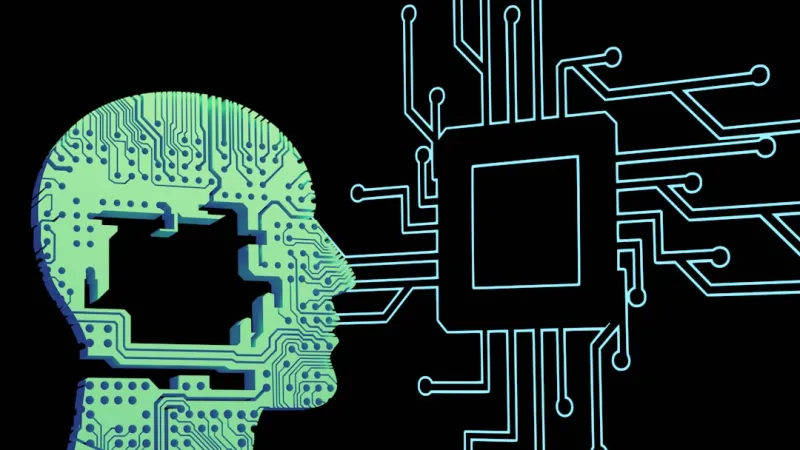
When I first started tinkering with AI‑powered rigs back in the early 2020s, I could barely imagine the tidal wave that would crash over us by 2026. Today, AI is baked into the silicon, the firmware, and even the user‑interface layers we take for granted. It’s not just about adding a neural net on top of a traditional CPU; it’s about re‑architecting the entire computing stack to think, predict, and adapt in real time. This shift is changing the way we design, build, and maintain machines, whether you’re a solo creator streaming from a bedroom studio or a multinational enterprise deploying thousands of edge nodes. In this deep dive, I’ll walk you through the most compelling developments—from the rise of AI‑centric processors to operating systems that learn from your habits—while highlighting the security implications that keep us all awake at night. Strap in, because the era of “smart hardware” is no longer a buzzword; it’s the baseline reality we all have to master.
Hardware Meets AI: CPUs, GPUs, and Beyond
The most visible sign of AI’s hardware takeover is the new generation of CPUs that come pre‑loaded with machine‑learning accelerators. Companies have moved beyond the classic vector units and introduced tensor cores directly on the processor die, enabling sub‑millisecond inference for everyday tasks like image enhancement, voice transcription, and even predictive power management. What’s fascinating is the way these cores are being shared across cores in a heterogeneous fashion—your main thread can offload a pattern‑recognition job to a dedicated AI slice without ever leaving the operating system’s scheduler. This integration reduces latency dramatically and cuts energy consumption by up to 40 % compared with the old “CPU‑plus‑GPU” model we used a few years ago. For power users, the result is smoother multitasking, real‑time AI‑assisted gaming graphics, and a noticeable boost in creative workloads that rely on generative models.
While CPUs get smarter, GPUs are evolving from pure rasterizers to full‑blown AI engines. The latest graphics cards sport multi‑layered AI pipelines that can perform everything from upscaling 4K streams with AI‑driven super‑resolution to dynamically adjusting shading rates based on scene complexity. In 2026, these capabilities are no longer optional add‑ons; they are baked into the driver stack and exposed to developers through standardized APIs like DirectML and Vulkan Compute. The practical upshot is that a game developer can now write a single shader that automatically learns how to allocate resources for the most demanding frames, while a video editor can rely on real‑time AI denoising without a separate workstation. This convergence means the line between “graphics” and “intelligence” is blurring, delivering experiences that feel almost magical to the end user.
Software and OS: AI at the Core
Hardware can only shine if the software beneath it knows how to harness its potential. That’s where operating systems are pulling a dramatic transformation. Modern OS kernels now embed AI modules that continuously monitor system health, predict failures, and proactively allocate resources. For instance, your OS can learn that you typically launch a heavy‑weight AI video encoder at 6 p.m. and pre‑warm the relevant tensor cores minutes in advance, shaving seconds off startup times. This level of anticipatory computing is detailed in Operating Systems in 2026, where the authors describe a future where the OS essentially becomes a personal data scientist, tailoring performance to each user’s unique workflow. The result is a smoother, more responsive experience that feels tailor‑made, and it also opens the door for tighter security integrations, as the OS can flag anomalous behavior before it escalates.
On the development side, AI is no longer just a tool; it’s a co‑author. The rise of Human‑AI Partnerships is reshaping how we write code, test, and deploy applications. In Software Development in 2026, the focus is on collaborative assistants that suggest refactors, auto‑generate boilerplate, and even predict bugs before the code compiles. These assistants are trained on massive codebases and can adapt to a team’s coding style, dramatically cutting the time from concept to production. For developers, this means spending less time on repetitive chores and more time on creative problem‑solving. For businesses, the payoff is faster iteration cycles and a reduction in costly post‑release defects. The synergy between AI‑enhanced hardware and these intelligent development tools is creating an ecosystem where software can evolve almost as quickly as the hardware that runs it.
Security, Threats, and the Human Factor
Every leap forward in capability invites a new class of adversaries, and AI‑driven computing is no exception. Self‑learning malware now exploits the very accelerators that power our productivity tools, using tensor cores to obfuscate payloads and adapt their behavior in real time. The landscape described in AI‑Powered Malware in 2026 shows attackers leveraging generative models to craft phishing emails that bypass traditional filters, while also employing reinforcement learning to evade endpoint detection. The stakes are higher because these threats can spread faster across networks that are themselves optimized for AI workloads. Defending against them requires a shift from signature‑based defenses to behavior‑centric, AI‑enabled security stacks that can recognize the subtle fingerprints of adaptive attacks.
For organizations, the solution lies in embracing a layered defense strategy that mirrors the AI integration in their infrastructure. This means deploying AI‑enhanced intrusion detection systems that learn from baseline traffic patterns, using hardware‑level encryption that is aware of the AI workload’s unique memory access patterns, and maintaining rigorous patch cycles for firmware that now includes AI modules. Yet technology alone isn’t enough; user education remains critical. Even the smartest AI can’t compensate for a click on a malicious link crafted by an AI‑generated spear‑phishing campaign. By fostering a culture of vigilance and pairing it with next‑gen security tools, we can stay a step ahead of threats that are becoming increasingly autonomous.
Looking Ahead: 2027 and Beyond
As we look past the immediate horizon of 2026, the trajectory points toward even tighter integration between AI and every layer of the computing stack. Edge devices are expected to host micro‑AI cores capable of local inference, reducing reliance on cloud latency and opening doors for truly responsive IoT experiences. Quantum‑assisted AI chips are also on the research agenda, promising exponential speedups for complex model training directly on consumer hardware. For creators, this means the ability to render photorealistic scenes in seconds, while gamers will see adaptive AI opponents that learn from each playthrough, delivering endless replayability. Enterprises will benefit from AI‑driven predictive maintenance that can pre‑empt hardware failures before they happen, saving millions in downtime.
From my perspective, the most exciting aspect isn’t just the raw horsepower, but the emergence of a new design philosophy where AI is the lens through which we view every problem. Whether you’re building a next‑gen laptop, a data‑center server, or a simple smartwatch, the question now is: how can AI make this device smarter, safer, and more intuitive? The answers will shape the products we buy, the services we trust, and the way we interact with the digital world. Stay curious, stay informed, and remember that the best way to ride this wave is to become an active participant—experiment with AI‑enhanced tools, contribute to open‑source projects, and keep asking the tough questions that drive innovation forward.