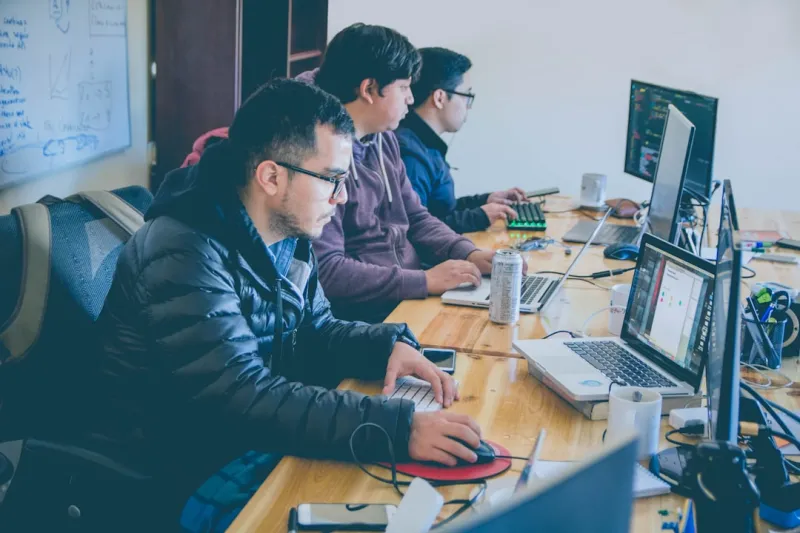
When I look back at the whirlwind that was software development in 2025, I can’t help but feel that 2026 is the moment we finally stopped treating AI as a side‑kick and started treating it as an equal collaborator. The buzz in every developer Slack channel, the headlines on tech newsletters, and the endless demos at conferences all point to one undeniable truth: code is no longer written in isolation. It’s co‑crafted, co‑reviewed, and even co‑debugged by intelligent agents that understand context, suggest patterns, and flag security holes before the first line is committed. This shift has forced us to rethink everything from onboarding junior devs to scaling massive micro‑service ecosystems. In my own projects, I now spend as much time training my AI pair‑programmer as I do writing code, tweaking prompts, and interpreting its suggestions. The result? Faster iteration cycles, fewer regressions, and a team culture that values curiosity over rote memorization. As we navigate this new terrain, the biggest challenge isn’t the technology itself—it’s learning to trust a machine that can both inspire brilliance and, if unchecked, propagate subtle bugs.
The Rise of the Human‑AI Partnership
One of the most transformative trends this year is what I like to call the human‑AI partnership. It’s not just about using an autocomplete that predicts the next token; it’s a deep, contextual relationship where the AI can reason about architecture decisions, refactor legacy codebases, and even suggest test cases that align with business logic. For anyone who missed the deep dive, see the article human‑AI partnership in software development for a thorough breakdown. What’s fascinating is how this partnership changes the role of senior engineers. Instead of being gatekeepers of knowledge, they become curators of AI behavior—crafting prompts, validating outputs, and teaching the model industry‑specific nuances. This shift democratizes expertise, letting newer developers climb the learning curve faster while still preserving the quality standards that seasoned teams demand. Of course, this symbiosis comes with responsibility: we must establish clear guidelines for AI usage, embed ethical guardrails, and continuously audit the suggestions for bias or security flaws.
Low‑Code, No‑Code, and the New Developer Stack
Low‑code and no‑code platforms have been around for years, but 2026 finally sees them mature into genuine extensions of the developer stack rather than isolated silos. Modern platforms now expose SDKs and plugin architectures that let you drop down to raw code when you need fine‑grained control. This hybrid approach empowers product teams to prototype in days while still allowing engineers to inject custom logic, integrate with legacy systems, and enforce compliance policies. The real kicker is the AI‑enhanced UI builders that can automatically generate data models based on natural language descriptions, dramatically reducing the time spent on schema design. From my perspective, the sweet spot lies in using these tools for the “glue” layers—workflow orchestration, dashboard creation, and internal tooling—while reserving traditional development for core services where performance and security are non‑negotiable. By strategically placing AI‑augmented low‑code solutions, organizations can free up senior talent for high‑impact work, accelerate time‑to‑market, and maintain a cohesive codebase that scales alongside business growth.
AI‑Driven Code Generation and Its Hidden Pitfalls
AI‑generated code has become a staple in many CI pipelines, but the technology is still learning to balance creativity with reliability. Tools that can scaffold entire micro‑service architectures in minutes are now commonplace, yet they often overlook nuanced security considerations or generate boilerplate that doesn’t adhere to company style guides. This paradox was highlighted in critical tech updates shaping 2026, where experts warned that AI’s rapid code synthesis can outpace our ability to vet it. In practice, I’ve seen AI suggest third‑party libraries with known vulnerabilities, or produce functions that pass unit tests but fail under real‑world load. To mitigate these risks, I’ve instituted a multi‑layered review process: automated static analysis, AI‑assisted security scans, and a final human sanity check. Moreover, maintaining a curated repository of vetted snippets that the AI can draw from dramatically reduces the chance of introducing unsafe patterns. The takeaway? Embrace AI’s speed, but never sacrifice the rigor of a disciplined review workflow.
DevOps Evolution: From Automation to Autonomous Operations
Automation has long been the cornerstone of DevOps, but 2026 marks the transition to truly autonomous operations powered by AI. Intelligent observability platforms now ingest logs, metrics, and traces, then autonomously recommend scaling actions, cache invalidations, or even rollbacks before a service outage becomes noticeable. In my own CI/CD pipelines, I’ve integrated AI agents that predict the impact of a new feature flag based on historical performance data, automatically adjusting resource allocations in real time. This shift reduces mean time to recovery (MTTR) and frees SREs to focus on strategic reliability initiatives rather than firefighting. However, autonomy introduces a new dependency: the quality of the underlying data. Poor telemetry can lead AI to make detrimental decisions, so investing in robust instrumentation and clear alert thresholds is non‑negotiable. By coupling AI‑driven recommendations with human oversight—think “human‑in‑the‑loop” approvals for high‑risk changes—we strike a balance that maximizes efficiency while preserving accountability.
Collaboration in the AI‑Augmented IDE Era
Remote work is no longer a temporary fix; it’s the default, and AI is reshaping how we collaborate across time zones. Modern IDEs now feature real‑time AI assistants that can summarize pull‑request discussions, highlight potential merge conflicts, and even suggest alternative implementations based on the team’s coding history. I’ve found that pairing these assistants with collaborative platforms like Microsoft Teams or the AI‑enhanced version of Microsoft Office—covered in depth in the post about AI, collaboration, and security—creates a seamless workflow where brainstorming, coding, and documentation happen in a single shared space. The result is a dramatic reduction in context switching: a developer can draft a feature spec, generate initial code snippets, and receive instant feedback without leaving the document. This fluidity not only boosts productivity but also fosters a culture of continuous learning, as junior developers can see AI‑generated explanations for complex patterns directly in their code reviews.
Security First: Modern Encryption as a Development Imperative
With AI becoming a co‑author of code, the attack surface expands in ways we’re only beginning to understand. That’s why encryption is no longer a afterthought but a core part of the development lifecycle. The piece modern encryption defenses explains how end‑to‑end encryption, homomorphic computing, and post‑quantum algorithms are being baked into frameworks from day one. In practice, I now enforce encrypted data pipelines at the API gateway level, use language‑level constructs that automatically encrypt sensitive fields, and integrate AI‑driven threat modeling tools that simulate potential breaches before code ships. Moreover, compliance automation has become essential: AI scans codebases for GDPR, CCPA, and emerging data‑privacy regulations, flagging violations in real time. By making encryption a default, developers can focus on delivering features rather than retrofitting security patches—a shift that aligns perfectly with the rapid development cycles we’re witnessing.
AI‑Powered Testing: From Unit Tests to Intelligent Quality Gates
Testing has always been a bottleneck, but AI is turning that bottleneck into a superhighway. Modern test generation tools can analyze a codebase and automatically produce unit, integration, and even fuzz tests that cover edge cases humans might overlook. In my recent projects, I’ve leveraged AI to create “intelligent quality gates” in the CI pipeline: before a merge is allowed, the AI evaluates not only code coverage but also the semantic relevance of the tests, ensuring they reflect real user scenarios. These gates also incorporate predictive failure analysis, warning developers when a change is likely to cause performance regressions based on historical data. While AI‑generated tests dramatically improve coverage, they’re not a silver bullet. Human reviewers must still validate that the generated scenarios align with business requirements and that no false positives creep in. This collaborative testing approach—AI for breadth, humans for depth—delivers a more resilient product without sacrificing speed.
Looking Ahead: Embracing the Partnership, Not the Tool
As we close out 2026, the most valuable lesson I’ve learned is that AI is a partner, not just a tool. The technology will continue to evolve—think AI‑first operating systems, autonomous debugging agents, and self‑optimizing codebases—but the human element remains the compass that guides these innovations toward real business value. Teams that invest in prompt engineering, establish clear governance around AI usage, and prioritize security from the outset will not only outpace competitors but also set new standards for what software can achieve. The future is bright for developers who are willing to adapt, collaborate, and continuously learn alongside their AI counterparts. So, as you plan your roadmap for the next quarter, ask yourself: how am I empowering my AI partner, and how is it empowering me?