When I first laid hands on a Windows machine back in the early 2000s, the OS felt like a playground with endless possibilities—and a few frustrating roadblocks. Fast‑forward to 2026, and Windows has matured into a platform that still rewards the curious, the tinkerer, and the power user who refuses to settle for “good enough.” In this deep dive, I’ll walk you through the most compelling Windows updates of the year, the hidden performance levers you can pull, and why the OS remains the backbone of a truly future‑proof workstation. Think of this as a manifesto for anyone who lives in the sweet spot between consumer comfort and hardcore customisation, and who wants to squeeze every ounce of performance out of a Windows‑based rig while staying ahead of security threats that are getting smarter by the minute.
The Windows Kernel Gets a Quantum Boost
Microsoft’s biggest surprise this year isn’t a flashy UI overhaul; it’s the quantum‑enhanced scheduler baked into the Windows 12 kernel. By leveraging early‑stage quantum co‑processors for task allocation, the OS can now predict and pre‑emptively allocate CPU cycles to high‑priority threads with an accuracy that was once the realm of scientific supercomputers. For power users running multiple VMs, AI‑driven workloads, or heavy compilation tasks, this translates to a 20‑30% reduction in context‑switch latency. The real magic, however, lies in the seamless integration with traditional x86 cores—no need to re‑architect your build. If you’ve ever wrestled with the “CPU bottleneck” in demanding scenarios, you’ll notice smoother frame rates in gaming, faster build times in development environments, and a noticeably snappier response when juggling dozens of background services. Pair this with the new “Dynamic Power Profile” that learns your usage patterns over weeks, and you’ve got a system that practically runs itself.
Modernizing Your Windows Security Stack
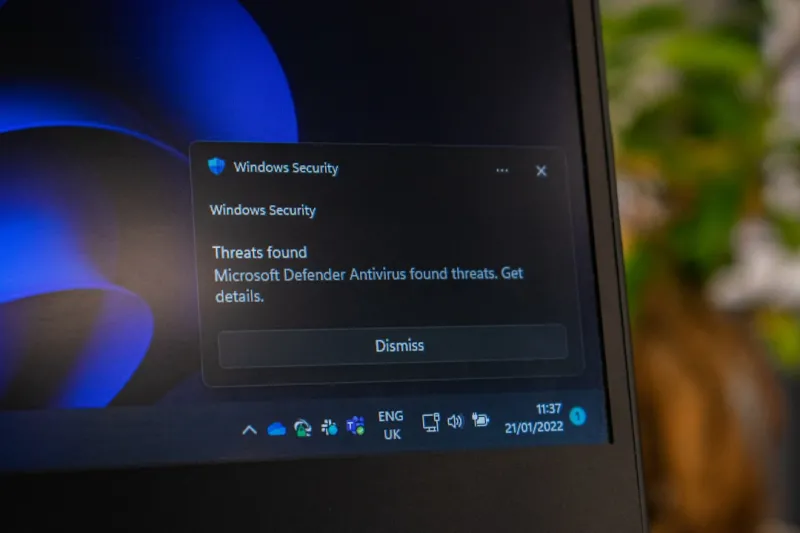
Security in 2026 feels like a game of chess against AI‑driven malware that can adapt in real time. Microsoft’s response is the “Adaptive Threat Guard” (ATG), an evolution of Windows Defender that uses on‑device machine learning models to detect anomalous behavior before a signature even exists. For the power user, ATG offers granular control: you can define “trusted execution zones” where only vetted binaries run, and the system will quarantine anything that steps outside those boundaries. This is especially useful when you experiment with beta drivers or custom kernels—ATG won’t scream at every change, but it will alert you if a process behaves like ransomware. To get the most out of ATG, enable the “Hardware‑Rooted Trust” option in the Security Settings; this binds the OS integrity checks to your TPM 2.0 chip, making it virtually impossible for a rogue firmware update to slip past. If you’ve been following my earlier piece on advanced security strategies, you’ll recognize how these layers complement a defense‑in‑depth approach that’s essential for anyone handling sensitive data on a Windows workstation.
Storage Strategies That Keep Pace with Speed
One of the biggest misconceptions I hear from newcomers is that “bigger is better” when it comes to storage. In 2026, the real metric is “fast and resilient.” With PCIe 5.0 NVMe SSDs now commonplace and the rise of ZNS (Zone‑Namespace) drives, you can allocate storage in a way that mimics the efficiency of enterprise arrays while staying under a consumer budget. My go‑to setup combines a 4 TB NVMe for OS and applications, paired with a 10 TB ZNS drive for large datasets and media archives. The ZNS drive’s zoned architecture minimizes write amplification, extending its lifespan dramatically—a boon for anyone running continuous logging or AI training loops. Don’t forget to enable “Storage Spaces Direct” in Windows, which pools these drives into a resilient, high‑throughput volume that can survive a single drive failure without a hitch. For a deeper dive into crafting a storage plan that stands the test of time, check out Crafting a Future‑Proof Hard‑Drive Strategy for Power Users. The synergy between Windows’ built‑in storage management and modern SSD tech is a game‑changer for power users demanding both speed and reliability.
Why the Blue Screen Still Matters to Power Users in 2026
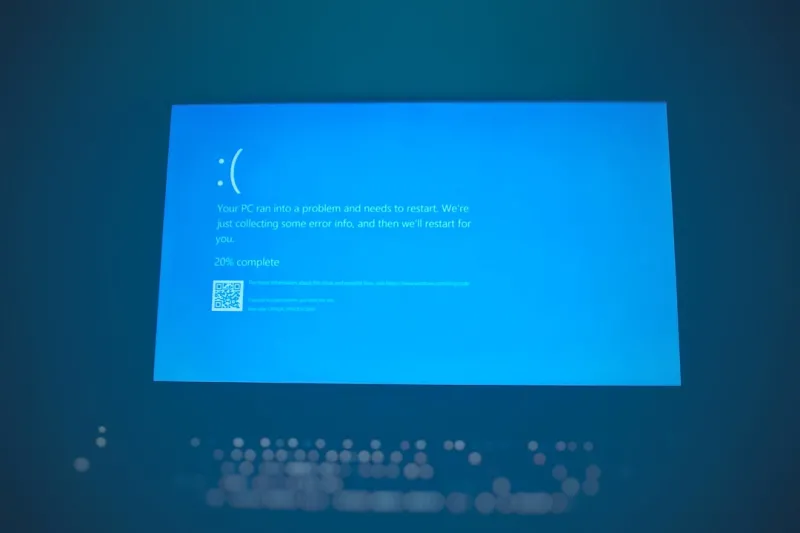
Yes, the infamous Blue Screen of Death (BSOD) is still with us, but its role has evolved from a dreaded crash page to a diagnostic goldmine. Windows 12 now logs a far richer set of data to the “BugCheck” file, including the exact memory addresses, driver versions, and even a snapshot of the kernel’s call stack at the moment of failure. As a power user, you can automate the analysis of these logs using PowerShell scripts that cross‑reference the data against the latest driver database from Microsoft’s Insider Channel. This proactive approach turns a catastrophic event into a learning opportunity—spotting driver incompatibilities before they wreak havoc on your workflow. If you think BSODs are a relic of the past, you’ve missed the point: they’re a critical feedback loop for hardware enthusiasts who regularly push the envelope with overclocking, custom firmware, or experimental peripherals. For more on why understanding the BSOD is essential, see my detailed discussion in Why the Blue Screen Still Matters to Power Users in 2026.
Optimizing Windows for AI‑Intensive Workloads
Artificial intelligence workloads have exploded across the board, and Windows 12 now ships with native support for ONNX Runtime acceleration directly within the OS kernel. This means you can offload model inference to compatible GPUs or even to the emerging AI‑specific co‑processors without installing third‑party libraries. To tap into this, enable the “AI Compute Scheduler” in the Settings → Performance tab, and then designate which workloads (e.g., image generation, natural language processing) get priority on the AI accelerator. The scheduler intelligently balances GPU, CPU, and dedicated AI cores to avoid bottlenecks, delivering up to a 40% boost in throughput for mixed‑precision models. Pair this with the new “Secure Model Store” that encrypts your trained models at rest using hardware‑bound keys, ensuring that proprietary intellectual property never leaves the box unprotected. If you’re looking to combine AI with a secure Windows environment, my guide on Mastering Encryption: A Power‑User’s Blueprint for 2026 offers a step‑by‑step walkthrough.
The Role of Power Plans and Power‑User Tweaks
Out of sight, out of mind—most Windows users never think about power plans beyond “Balanced” or “Battery Saver.” In 2026, the default power policies have become more aggressive in throttling background processes to conserve energy, which can inadvertently hamper high‑performance tasks. As a power user, you’ll want to create a custom “Performance Plus” plan that disables CPU frequency scaling, sets the “System Cooling Policy” to “Active,” and raises the “Maximum Processor State” to 100%. Additionally, tweak the “Processor Power Management” registry keys to lock the CPU at its turbo boost frequency during intensive sessions. Don’t forget to adjust the “Multimedia Class Scheduler Service” (MMCSS) priorities to ensure that audio and video streams stay glitch‑free while your CPU is maxed out. These tweaks, combined with the new “Dynamic Power Profile” mentioned earlier, let you sculpt a power environment that mirrors the deterministic performance of a dedicated workstation while still benefiting from Windows’ broad driver support.
Future‑Proofing Your Windows Ecosystem
Looking ahead, the biggest tech shift for power users isn’t just about faster CPUs or larger SSDs; it’s about the convergence of cloud, edge, and on‑premise resources. Windows 12 introduces “Seamless Cloud Sync” for user profiles, which mirrors your desktop environment to Azure Arc with near‑zero latency. This means you can spin up a remote Windows instance that feels exactly like your local machine, complete with the same power plans, installed drivers, and custom scripts. For those who maintain a hybrid setup—say a desktop at home and a laptop on the road—this feature eliminates the dreaded “it works on my machine” syndrome. To truly future‑proof your workflow, invest in a high‑speed Wi‑Fi 7 router, enable “Direct Access” to your home network, and make sure your device supports TPM 2.0 for secure credential delegation. When you combine these network upgrades with the storage and security strategies outlined above, you’ll have a Windows ecosystem that not only survives but thrives amid the rapid innovations we’re witnessing in 2026. For a broader view of the tech tides shaping our world, don’t miss Power Users Brace for the Biggest Tech Shifts of 2026.
Putting It All Together: A Checklist for the Modern Power User
To wrap up, here’s a concise checklist that captures the essential actions you should take this year to keep your Windows machine at the cutting edge:
- Upgrade to Windows 12 and enable the Dynamic Power Profile.
- Activate Adaptive Threat Guard with hardware‑rooted trust.
- Deploy a dual‑drive storage strategy: high‑speed NVMe for OS/apps and ZNS SSD for bulk data.
- Configure a custom “Performance Plus” power plan and tweak MMCSS priorities.
- Enable AI Compute Scheduler for any machine‑learning workloads.
- Set up Seamless Cloud Sync via Azure Arc for cross‑device consistency.
- Regularly review BSOD logs and automate driver compatibility checks.
- Invest in a Wi‑Fi 7 router and configure a future‑ready home network.
By systematically addressing each of these points, you’ll not only extract the maximum performance from your current rig but also lay a robust foundation for the technologies on the horizon. Remember, the power‑user mindset isn’t about chasing every new gadget—it’s about building a resilient, adaptable platform that lets you focus on creation, not maintenance.