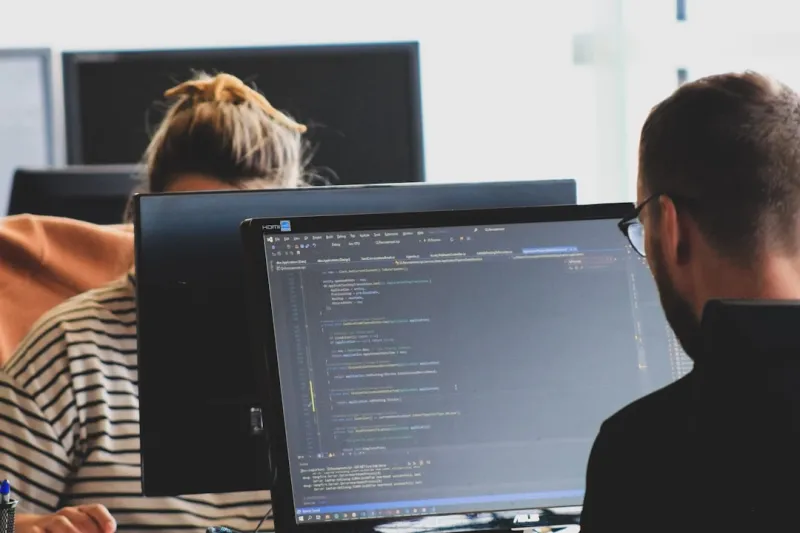
When I first cracked open a freshly‑minted workstation in 2023, the excitement was palpable – the hum of the fans, the promise of raw compute power, and the endless possibilities of code. Fast‑forward to 2026, and that thrill has transformed into a strategic dance between performance, security, and AI‑driven workloads. As a power‑user who lives at the intersection of development and hardware tinkering, I’ve learned that the modern software developer can no longer afford to treat their environment as a static sandbox. Every line of code, every library update, and every peripheral choice ripples through a complex ecosystem where latency, encryption, and fault tolerance are no longer optional add‑ons but foundational pillars. In this post, I’ll walk you through the mindset shifts, tooling upgrades, and workflow hacks that have become essential for staying ahead in a world where a single misstep can cascade into data loss, downtime, or a compromised supply chain.
Embracing AI‑First Development Pipelines
AI isn’t just a buzzword; it’s the engine powering the next generation of development pipelines. In 2026, integrated AI assistants can suggest code completions, flag potential security flaws in real‑time, and even refactor legacy modules with a single command. I’ve woven tools like Codex‑Pro and DeepMerge into my daily workflow, allowing me to offload repetitive scaffolding tasks while focusing on architectural elegance. The key, however, is not to become over‑reliant on AI. Instead, treat these assistants as collaborative partners that augment human insight. By establishing clear prompts and reviewing AI‑generated patches through a rigorous peer‑review process, you retain control over code quality and reduce the risk of hidden vulnerabilities. Moreover, AI can surface performance bottlenecks by analyzing execution traces across multiple runs, enabling you to proactively address issues before they manifest in production. The result is a development loop that is faster, more reliable, and resilient against the ever‑tightening timelines of modern releases.
Re‑architecting Your Toolchain for Parallelism
One of the most overlooked aspects of modern software development is the ability to exploit parallelism at every stage of the toolchain. In my own setup, I’ve shifted from monolithic builds to a micro‑service oriented CI/CD architecture that distributes compilation, testing, and linting across a fleet of containerized workers. This not only slashes build times from minutes to seconds but also isolates failures, making them easier to diagnose. Leveraging technologies such as Bazel’s remote execution and GitHub Actions’ matrix strategies, I can spin up parallel jobs that target different target architectures—ARM, x86, and even specialized AI accelerators—simultaneously. The payoff is tangible: faster feedback loops, higher developer morale, and a reduced chance of “it works on my machine” surprises. Remember, the goal isn’t just speed; it’s to create a resilient pipeline where each component can fail gracefully without bringing the entire process to a halt.
Security as Code: Integrating Encryption Early
Security can no longer be an after‑thought. By embedding encryption primitives directly into the development lifecycle, you safeguard data at rest and in transit from day one. I recommend starting with a zero‑trust model, where every inter‑service call is authenticated and all data payloads are wrapped in modern ciphers like ChaCha20‑Poly1305. To deepen your understanding, check out Beyond the Lock: Mastering Modern Encryption for Power Users, which breaks down the practical steps for integrating these algorithms without sacrificing performance. Additionally, using secret management tools like HashiCorp Vault in combination with automated rotation policies ensures that keys never linger longer than necessary. Embedding these practices into your CI pipeline—through lint rules that reject hard‑coded secrets and pre‑commit hooks that enforce encryption standards—creates a culture where security is woven into the codebase, not bolted on later.
Hardware Choices That Future‑Proof Your Workstation
Choosing the right hardware in 2026 is as strategic as picking the right language stack. Modern GPUs now come with dedicated AI tensor cores, while CPUs are offering hybrid architectures that blend performance and efficiency cores. I’ve built a workstation that pairs an AMD Threadripper Pro with an NVIDIA RTX 7000 series GPU, complemented by DDR5 ECC memory to guard against subtle data corruption. For those concerned about longevity, consider modular designs that let you swap out GPUs or add additional storage bays without a full rebuild. The article Future‑Proofing Your Power‑User Workstation: Hardware Strategies for 2026 dives deeper into selecting components that can handle the next wave of AI workloads, quantum‑ready cryptography, and high‑throughput networking. By investing in a balanced system—where CPU, GPU, and I/O are all sized appropriately—you avoid bottlenecks that could cripple future projects, ensuring your development environment scales alongside emerging technologies.
Network Architecture for AI‑Driven Collaboration
In an era where distributed training and edge inference are the norm, the network layer becomes a critical performance determinant. I’ve migrated from traditional Ethernet to a 100 Gbps RDMA‑enabled fabric that dramatically reduces latency for model synchronization across multiple nodes. Pair this with software‑defined networking (SDN) policies that prioritize AI traffic over mundane background uploads, and you’ll notice a tangible boost in collaborative experiments. For teams that operate across continents, leveraging VPN‑optimized tunnels with built‑in encryption—rather than relying on external solutions—helps maintain both speed and security. The recent piece Redefining Power‑User Networking for an AI‑Driven World outlines how to configure these networks without drowning in complexity, offering practical scripts and configuration snippets that get you up and running in hours rather than days.
Debugging at Scale: From GPU Failures to RAM Corruption
When you push hardware to its limits, failures become inevitable, but they don’t have to be catastrophic. I’ve cultivated a systematic approach that starts with exhaustive logging at the driver level, followed by automated health checks that monitor temperature, voltage, and error‑correcting code (ECC) counters. For GPU-specific issues, tools like Nsight Systems combined with custom watchdog scripts can pinpoint the exact kernel that caused a hang, allowing for rapid rollback. Similarly, RAM anomalies can be caught early using MemTest86+ in a continuous integration step, preventing silent data corruption that only manifests weeks later. By integrating these diagnostics into your CI pipeline, you create a safety net that catches hardware degradation before it jeopardizes critical releases. This proactive stance not only saves time but also extends the lifespan of expensive components, a win‑win for any power‑user juggling tight budgets and demanding workloads.
Outsmarting the 2026 Threat Landscape
The cyber‑threat environment of 2026 is a moving target, with supply‑chain attacks, AI‑generated phishing, and ransomware evolving at breakneck speed. To stay ahead, I adopt a multi‑layered defense strategy that starts with threat modeling during the design phase. By mapping out potential attack vectors—whether they’re malicious dependencies in open‑source packages or compromised container images—you can prioritize mitigations early. Leveraging the insights from How Power Users Can Outsmart the 2026 Threat Landscape, I implement automated SBOM (Software Bill of Materials) generation, continuous vulnerability scanning, and AI‑driven anomaly detection on network traffic. Coupled with regular blue‑team drills and a “kill‑switch” script that isolates compromised workloads within seconds, this approach transforms security from a reactive chore into an integral, automated component of the development lifecycle.
Closing the Loop: Continuous Learning and Community Sharing
Finally, the most sustainable advantage any power‑user can cultivate is a habit of continuous learning and knowledge sharing. I allocate time each week to explore emerging frameworks, attend virtual conferences, and contribute back to the open‑source projects that underpin our daily tools. By writing detailed post‑mortems after each major incident—whether it’s a GPU driver regression or a surprise data breach—I create a living knowledge base that teammates can reference. This practice not only reinforces personal expertise but also elevates the collective competence of the entire team. Remember, the ecosystem thrives when we lift each other up; every tip, blog post, or pull request adds another brick to the fortress of modern software development. Stay curious, stay resilient, and let your workstation be the canvas where innovation meets reliability.