When I first cut my teeth on code back in the early 2010s, the idea of an AI‑augmented development workflow seemed like sci‑fi hype. Fast‑forward to 2026, and that hype has solidified into a daily reality for anyone who calls themselves a software engineer. The landscape now feels like a living, breathing organism that learns from every commit, every test run, and every production incident. In my current role, I’m constantly juggling the excitement of new possibilities with the pragmatic need to ship reliable products on time. This tension shapes my perspective: I’m as eager to experiment with generative models that can suggest boilerplate as I am to put rigorous monitoring in place for the AI‑driven pipelines they spawn. The modern dev stack is no longer a static collection of tools; it’s a dynamic ecosystem where the line between developer and platform blurs. As we navigate this terrain together, I’ll share the trends that are reshaping software development, the pitfalls you should avoid, and the strategies that help keep your codebase both innovative and stable.
AI at the Core of the Development Cycle
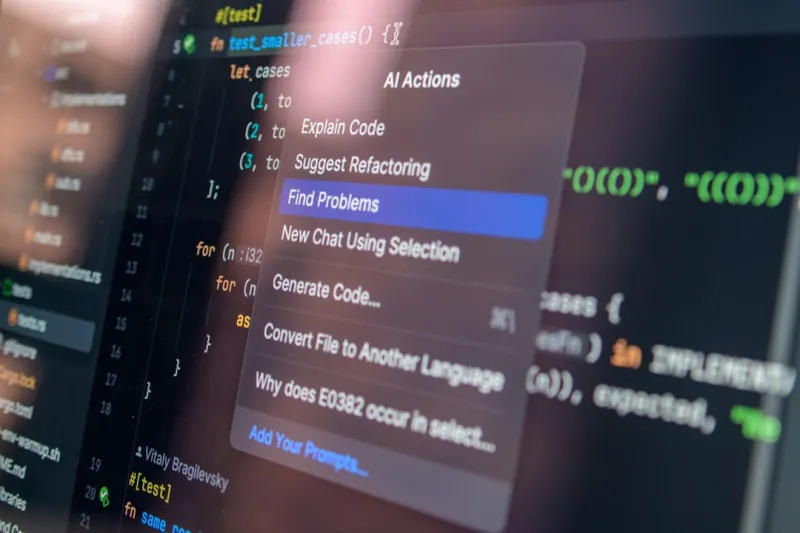
Artificial intelligence has moved from being a peripheral add‑on to the very heart of the software development lifecycle. Today, large language models are embedded directly into IDEs, providing context‑aware code suggestions, automatic refactoring, and even real‑time security analysis. What used to take hours of manual code review can now be handled in seconds, freeing up engineers to focus on higher‑level architecture decisions. However, this power comes with responsibility. Trusting an AI to generate code means you must also trust it to respect your project’s conventions, performance constraints, and security policies. That’s why I’m a strong advocate for integrating AI‑driven linting tools into CI pipelines, so every AI‑suggested change is automatically vetted before it reaches production. For a deeper dive into how AI is reshaping the development process, check out Navigating the AI‑Driven, Edge‑First Era of Software Development. Understanding these tools—and their limitations—will be the difference between a smoother workflow and a cascade of subtle bugs.
Edge Computing and the New DevOps Paradigm
The rise of edge computing has forced a fundamental rethink of how we design, test, and deploy applications. In 2026, the edge isn’t just a buzzword; it’s a requirement for latency‑sensitive workloads like autonomous vehicles, AR/VR experiences, and real‑time analytics. This shift demands a DevOps model that can orchestrate micro‑services across a heterogeneous mesh of devices, from powerful data‑center servers to tiny IoT nodes. Infrastructure‑as‑code tools now support declarative edge configurations, allowing teams to push updates to thousands of endpoints with a single command. Yet, the complexity of managing divergent hardware capabilities and network conditions means observability must be baked into every layer. Distributed tracing, edge‑specific logging, and AI‑enhanced anomaly detection become indispensable. By embracing an edge‑first mindset early, you future‑proof your applications against the inevitable drift toward more distributed architectures, ensuring they remain performant and reliable regardless of where they run.
Security in an AI‑Powered World
Security has always been a cornerstone of software development, but the AI boom introduces new attack surfaces that require fresh defensive tactics. Generative models, while helpful, can inadvertently suggest insecure code patterns or expose sensitive data if they’re trained on proprietary repositories. To mitigate these risks, I recommend a layered encryption strategy that combines end‑to‑end data protection with AI‑aware threat modeling. A practical guide on this approach can be found in Unlocking the Future of Data Protection: Practical Encryption Strategies for 2026. Beyond encryption, integrating AI‑driven security scanners into the CI/CD pipeline helps catch vulnerabilities before they slip into production. These scanners learn from past incidents, constantly refining their detection algorithms. Coupled with regular red‑team exercises that simulate AI‑generated attack vectors, you can stay a step ahead of adversaries who are equally eager to exploit the same technologies you rely on.
Tooling, Automation, and the Rise of Intelligent CI/CD
The CI/CD pipelines of 2026 have evolved from simple script runners to intelligent orchestration engines that make decisions on the fly. Modern pipelines leverage machine learning to predict build failures, prioritize test suites based on code change impact, and even auto‑scale resources to meet demand spikes. This predictive capability reduces mean time to recovery (MTTR) and improves developer productivity. For instance, an AI‑augmented pipeline can detect that a recent commit touches a performance‑critical module and automatically trigger a more exhaustive benchmark suite, preventing regressions that might otherwise go unnoticed. Moreover, the integration of low‑code workflow designers allows non‑engineers to contribute to automation scripts, democratizing DevOps responsibilities across the organization. While the automation benefits are clear, it’s essential to maintain visibility; dashboards enriched with AI‑derived insights provide the transparency needed to trust these autonomous decisions.
Programming Language Evolution and Low‑Code Momentum
Programming languages themselves are not immune to the AI surge. In 2026, we see a blend of traditional compiled languages, like Rust and Go, co‑existing with AI‑enhanced scripting environments that can auto‑generate boilerplate and suggest idiomatic patterns. Low‑code platforms have matured to the point where they can produce production‑grade backends, especially for CRUD‑heavy applications. However, they’re not a silver bullet; complex business logic still benefits from handcrafted code, and the interoperability between low‑code outputs and custom modules is a critical factor. I’ve found that pairing a low‑code UI builder with a robust API layer written in a language optimized for concurrency yields the best of both worlds: rapid prototyping without sacrificing performance. This hybrid approach also eases the onboarding curve for new developers, allowing them to contribute meaningfully sooner while they climb the learning curve of more intricate system components.
Hardware Considerations: Storage, Performance, and Future‑Proofing
Even as software becomes more abstracted, the underlying hardware remains a decisive factor in application performance. In 2026, the balance between speed, capacity, and longevity in storage solutions is more nuanced than ever. Solid‑state drives have become ubiquitous, but emerging NVMe‑over‑Fabric technologies are pushing latency down to sub‑microsecond levels, which is critical for real‑time edge workloads. When planning a new project, it’s wise to evaluate storage options through the lens of your application’s access patterns. For data‑intensive AI workloads, tiered storage—combining high‑speed NVMe for active datasets and cost‑effective SATA for archival data—offers a pragmatic compromise. A recent deep dive into storage trends can be found in Hard Drives in 2026: Balancing Speed, Capacity, and Longevity. Aligning your hardware choices with your software architecture not only improves performance but also extends the lifespan of your infrastructure, reducing total cost of ownership.
The Road Ahead: AI‑Driven Operating Systems and the Edge‑First Future
Looking forward, operating systems themselves are becoming AI‑augmented platforms that anticipate resource needs, auto‑tune performance parameters, and enforce security policies without human intervention. This evolution is captured in the insightful piece Operating Systems in 2026: How AI Is Redefining the Core of Computing. As developers, we’ll increasingly write code that interacts directly with these intelligent kernels, leveraging APIs that expose predictive scheduling, self‑healing services, and adaptive power management. Embracing this shift means rethinking traditional design patterns—moving away from static resource allocation toward dynamic, context‑aware architectures. The convergence of AI, edge computing, and next‑gen operating systems promises applications that are not only faster and more secure but also capable of evolving autonomously in response to changing user demands and environmental conditions. By staying informed and adopting these emerging paradigms early, we position ourselves to lead the next wave of innovation rather than simply react to it.