When I first started tearing apart boards in my cramped garage lab back in the early 2020s, motherboards felt like static canvases—just rows of pins waiting for a hobbyist’s imagination. Fast‑forward to 2026, and those canvases have transformed into intelligent command centers, packed with AI‑assisted firmware, ultra‑dense power phases, and connectivity that would make a 2020‑era enthusiast blush. In this piece, I’m pulling back the curtain on the trends that are reshaping the motherboard market right now. Whether you’re a seasoned overclocker, a creator building a workstation, or a first‑time builder trying to avoid the dreaded “no boot” nightmare, the decisions you make today will echo for years. Think of the motherboard as the nervous system of your PC: it routes signals, supplies juice, and now even predicts thermal spikes before they happen. I’ll walk you through the hardware shifts, the security implications, and the practical tips you need to future‑proof your rig without breaking the bank.
Chipset Evolution: From Incremental to Intelligent
The heart of every modern board is its chipset, and 2026’s releases are nothing short of a paradigm shift. Intel’s 14th‑gen “Aether” and AMD’s “Zen 4‑Plus” platforms have moved beyond raw core counts, embedding machine‑learning cores that dynamically allocate PCIe lanes based on workload patterns. This means a GPU can claim a full‑x16 lane for gaming, then gracefully shrink to x8 when a high‑speed NVMe drive needs bandwidth for large‑scale video rendering. Meanwhile, DDR6 memory, which just entered the mainstream market, offers up to 6400 MT/s with tighter timings, demanding motherboards with robust memory traces and integrated ECC support for creators who can’t afford a single bit of corruption. The jump to PCIe 6.0 also introduces a new lane encoding scheme that halves latency compared to PCIe 5.0, but it comes with stricter signal integrity requirements. If you’ve been following the essential tech updates, you’ll recognize that these chipset upgrades aren’t just incremental—they’re laying the groundwork for AI‑driven workloads that will dominate the next decade.
Power Delivery: The Rise of Ultra‑Dense VRM Architectures
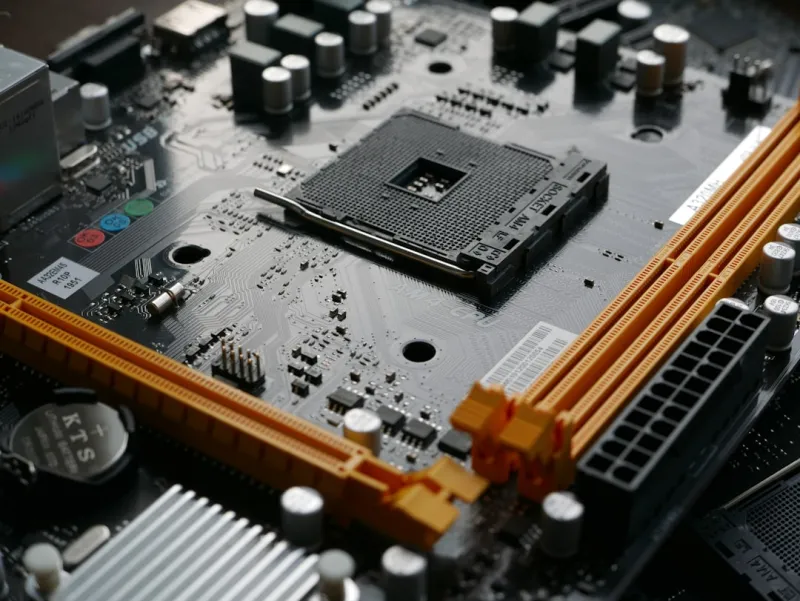
Power delivery has always been the silent hero of high‑performance builds, and 2026 is finally rewarding that heroism with ultra‑dense VRM (Voltage Regulator Module) designs. Traditional 8‑phase setups are giving way to 16‑phase and even 20‑phase configurations on mainstream ATX boards, thanks to advances in GaN (gallium nitride) switching technology. GaN transistors operate at higher frequencies with lower on‑resistance, translating into cleaner, more efficient power for the CPU and GPU. This matters because modern processors now feature boost clocks that can linger at 5.5 GHz for extended periods, demanding stable voltage rails under heavy load. Moreover, manufacturers are integrating digital VRM controllers that allow for real‑time monitoring via companion apps, letting you tweak phase timing on the fly. The practical upshot? You can push higher overclocks without fearing thermal runaway, and your board’s power budget will stay within the 80 PLUS Gold or Platinum efficiency envelopes, reducing heat and extending component lifespan.
Form Factor Flexibility: From Tower Titans to Compact Powerhouses
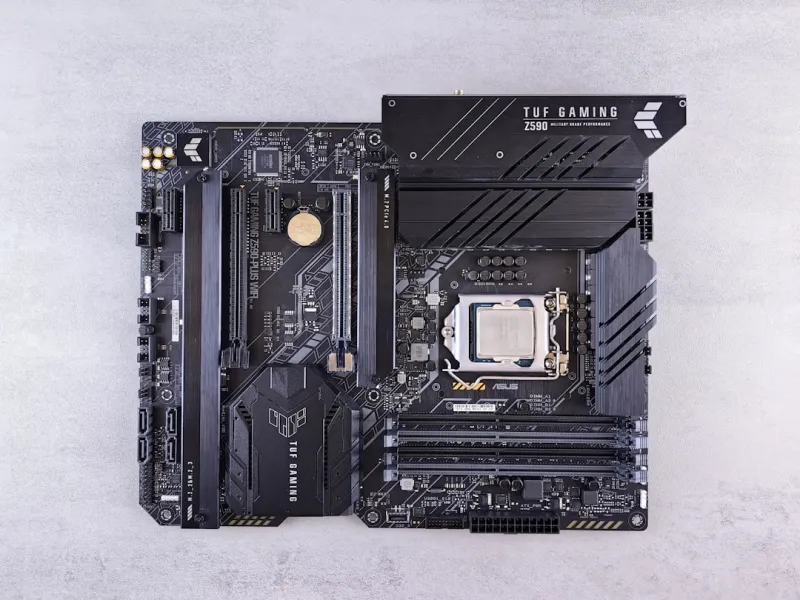
The once‑rigid hierarchy of ATX, micro‑ATX, and mini‑ITX has become a playground of hybrid designs. In 2026, you’ll find “ATX‑Lite” boards that retain full VRM density and PCIe 6.0 slots while trimming the footprint to 9 × 12 inches, perfect for small‑form‑factor (SFF) cases that still demand high‑end performance. Meanwhile, premium mini‑ITX models now sport up to three M.2 slots with heat‑pipe cooling and a full suite of USB‑4 ports, erasing the myth that size limits expandability. This shift is driven by the growing popularity of portable workstation rigs for architects and video editors who need workstation‑grade GPUs but prefer a desk‑friendly footprint. When choosing a form factor, consider your chassis’s airflow capabilities, the number of expansion cards you truly need, and the future‑proofing of additional M.2 storage lanes. Remember, a cramped layout can negate even the most advanced VRM design, so balance size with thermal headroom for optimal results.
BIOS/UEFI and AI Integration: Smarter Firmware for Smarter Builds
BIOS is no longer a static, cryptic menu; it’s an evolving AI‑assisted ecosystem. Modern UEFI interfaces now include predictive tuning algorithms that analyze your hardware configuration during the first boot and suggest optimal memory timings, fan curves, and power limits. Some manufacturers even offer cloud‑linked profiles that sync across multiple rigs, allowing you to pull your favorite overclock settings onto a new board with a single click. Security patches are delivered via encrypted OTA (over‑the‑air) updates, reducing the need for manual flashing—a boon for users wary of bricking their hardware. These AI features also extend to power management: the firmware can detect when a workload transitions from CPU‑bound to GPU‑bound and reallocate VRM phases accordingly, smoothing out power spikes that would otherwise trigger throttling. If you’re comfortable diving into the settings, you’ll discover hidden “Performance Boost” modes that leverage the board’s integrated neural cores to accelerate compression tasks, making your workstation feel a few frames ahead in real‑time editing suites.
Security at the Silicon Level: Protecting the Core of Your System
In a world where firmware attacks have become as common as phishing scams, motherboard manufacturers are stepping up with hardware‑rooted security measures. TPM 2.2 modules are now standard on most boards, providing a secure enclave for encryption keys, while dedicated secure‑boot chips verify every component’s firmware signature before the OS loads. Some high‑end models even integrate a “Zero‑Trust” microcontroller that monitors I/O traffic for anomalous patterns, effectively acting as a firewall for the silicon layer. This shift is essential because attackers increasingly target the firmware to gain persistent footholds, bypassing traditional antivirus defenses. For a deeper dive into why these threats matter, check out the new security playbook. Pairing a motherboard with robust hardware security not only safeguards your data but also ensures compliance with enterprise‑grade standards, a critical consideration for freelancers handling sensitive client information.
Integrated Cooling Solutions: From Passive Heatsinks to Active Liquid Loops
Effective thermal management has transcended the realm of aftermarket coolers; today’s boards often come equipped with built-in cooling ecosystems. Hybrid heat‑pipe arrays, combined with vapor‑chamber VRM coolers, are now standard on performance‑oriented ATX models, dissipating heat from power phases without relying solely on case airflow. Some manufacturers have taken a step further, embedding micro‑fluidic channels directly into the PCB that circulate a low‑viscosity coolant, effectively turning the motherboard into a miniature liquid‑cooling loop. These innovations reduce hotspot temperatures by up to 15 °C under load, translating to higher stable boost clocks and longer component lifespan. When pairing a board with an aftermarket AIO (All‑In‑One) cooler, ensure the integrated solution doesn’t clash with your radiator placement—conflicts can lead to uneven cooling and acoustic issues. In practice, a well‑designed board with native cooling can let you push the CPU’s boost clocks deeper without adding extra fans, keeping your build whisper‑quiet.
Strategic Upgrades: Matching Motherboard Choice to Your Use‑Case
Choosing the right motherboard is less about chasing the highest spec and more about aligning features with your primary workloads. Gamers will gravitate toward boards with reinforced PCIe 6.0 slots, robust VRM for high‑frequency overclocks, and ultra‑fast networking—think 10 Gb Ethernet or Wi‑Fi 7 for low‑latency online play. Content creators, on the other hand, benefit from multiple M.2 slots with PCIe 5.0 support, native Thunderbolt 4, and ample USB‑4 ports to handle high‑throughput external drives. For workstation builds that run AI inference or heavy rendering, prioritize boards with built-in AI accelerators and ECC memory support. If you’re still unsure, the strategic upgrades for 2026 guide offers a decision matrix that maps feature sets to real‑world tasks, helping you avoid over‑paying for capabilities you’ll never use. Remember, the motherboard you pick today sets the ceiling for future expansions, so think two generations ahead before sealing the deal.
Future Outlook: What’s Next for Motherboard Innovation?
Looking ahead, the next wave of motherboard innovation will likely revolve around tighter integration with AI and edge computing. Expect to see more boards featuring built‑in tensor cores that offload machine‑learning inference from the CPU, enabling real‑time AI enhancements in games and professional software without a dedicated GPU. Additionally, the rise of silicon photonics could usher in optical interconnects on the PCB, dramatically boosting data throughput while slashing power consumption—an evolution that would make today’s PCIe 6.0 feel like dial‑up in comparison. As the industry leans into sustainability, manufacturers are also exploring recyclable substrate materials and lower‑voltage operation modes to reduce environmental impact. For enthusiasts, this means an exciting frontier where performance, intelligence, and responsibility converge on a single board. Stay tuned, keep experimenting, and let your motherboard be the foundation that adapts to whatever the tech horizon throws at you.