When you’ve spent the last decade tearing apart rigs, soldering custom cables, and chasing the bleeding‑edge of performance, motherboards become more than just a slab of fiberglass—they’re the nervous system of your entire workstation. In 2026 the market is saturated with “gaming” labels and “budget” tags, but a true power‑user knows that the board you choose dictates how well you’ll leverage next‑gen CPUs, AI accelerators, and high‑bandwidth storage. I’ve been building systems for the kind of workloads that demand raw compute, low latency, and rock‑solid stability, and I’ve learned that the subtle trade‑offs—like VRM phase count, BIOS flexibility, and chipset feature set—can make or break a build. This article walks through the critical criteria I use when selecting a motherboard, explains why certain specs matter more than ever, and ties those decisions into the larger ecosystem of future‑proof upgrades and AI‑centric computing.
CPU Socket and Chipset: The Foundation of Performance
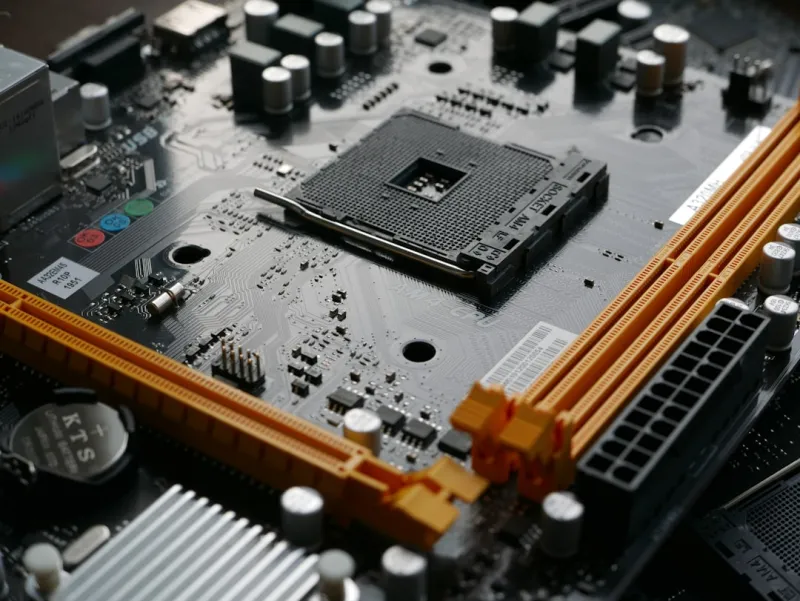
First things first: your socket and chipset must match the processor you intend to run, but the nuance goes deeper than a simple compatibility check. In 2026 Intel’s 14‑core “Meteor” line sits on LGA 1851, while AMD’s “Zen 5” 16‑core chips use the new sTRX4‑2 socket. The chipsets that accompany these sockets differ dramatically in PCIe lane allocation, memory controller capabilities, and overclocking support. I always start by mapping the CPU’s native PCIe 6.0 lanes against the motherboard’s distribution; a board that relegates essential lanes to legacy PCIe 3.0 can bottleneck a high‑end GPU or an AI accelerator card. Additionally, look for BIOS updates that unlock hidden performance states—many manufacturers release microcode patches well after launch, and a board with a robust BIOS will let you push the CPU’s boost clocks safely. This attention to socket‑chipset synergy is the first pillar of a power‑user‑grade platform.
PCIe 6.0 and Lane Allocation: Feeding the GPU and AI Workloads
PCIe 6.0 is finally mainstream in 2026, offering 64 GT/s per lane—enough to keep up with the newest RTX 5090 and the rising tide of dedicated AI inference cards. A power‑user’s motherboard must not only support the standard but also intelligently allocate lanes to prevent bandwidth starvation. I favor boards that dedicate at least two x16 slots running at full PCIe 6.0 speed, with additional x8 or x4 slots for NVMe RAID arrays or FPGA add‑ons. Keep an eye on the lane bifurcation settings in the BIOS; being able to split a x16 slot into two x8 slots without losing speed is essential when you want to pair a GPU with a separate AI accelerator. If you’re planning a multi‑GPU rig for deep‑learning training, ensure the board’s PLX switch or native lane distribution can sustain simultaneous full‑speed operation—otherwise you’ll be throttling performance without even realizing it.
Memory Architecture: DDR5 vs DDR6 and the Role of ECC
Memory speed and capacity have become a decisive factor for AI workloads, large data sets, and heavy virtualization. DDR5 is still prevalent, but DDR6 modules are entering the market with 9600 MT/s peaks and lower power draw. The right motherboard will support both standards, offering flexible DIMM slots that can be populated with mixed‑speed kits if you need a phased upgrade path. For mission‑critical tasks, I insist on ECC‑capable boards—many of the higher‑end workstation chipsets now expose ECC support even on consumer‑grade CPUs. This can catch subtle bit‑flips that would otherwise corrupt training data or cause hard‑to‑trace crashes. When sizing RAM, aim for at least 64 GB of fast DDR6, and consider quad‑channel configurations to maximize bandwidth. Remember, the memory controller resides on the CPU, but the motherboard’s signal integrity and power delivery to the DIMMs are equally vital for stable operation at high frequencies.
Power Delivery and VRM Design: Stability Under Load
Every overclock, every GPU spike, every AI accelerator burst draws power from the VRM (voltage regulator module). In 2026 we see VRM designs with 18‑phase, 24‑phase, and even 32‑phase configurations, using premium MOSFETs and digital control loops. A board with a robust VRM not only maintains stable voltages under sustained load but also reduces thermal throttling and extends component lifespan. I look for motherboards that feature a large copper or aluminum heatsink array, fan‑controlled VRM cooling, and a digital PWM controller that lets me fine‑tune voltage curves in the BIOS. Additionally, pay attention to the power phases dedicated to the PCIe slots; some high‑end boards allocate separate VRM phases for the GPU slots, ensuring the graphics subsystem never competes with the CPU for power. This separation is crucial when you’re running a dual‑GPU setup for AI inference while the CPU is maxed out on a compute‑heavy task.
Connectivity: USB4, Thunderbolt 4, Wi‑Fi 7, and Ethernet
Modern power‑users demand ultra‑fast peripheral connections, and the motherboard is the hub for all of them. USB4 with 40 Gbps throughput has become the de‑facto standard for external storage enclosures and high‑speed docks, while Thunderbolt 4 retains its 40 Gbps lane for video and data. In 2026, Wi‑Fi 7 routers are delivering multi‑gigabit wireless speeds, so a board with Wi‑Fi 7 (802.11be) and integrated Bluetooth 5.3 is a must for a clean, cable‑light setup. However, for latency‑sensitive applications—like real‑time AI inference or low‑latency trading—wired 10 GbE or even 25 GbE Ethernet ports on the motherboard are non‑negotiable. Look for boards that include a dedicated Intel i225‑V or a Marvell AQtion 25GbE controller, and verify that the Ethernet ports are directly wired to the chipset rather than routed through a third‑party hub, which can introduce jitter.
Expansion and Future‑Proofing: The Long‑Term View
Future‑proofing isn’t just about adding more slots; it’s about ensuring the board can evolve with your needs. In 2026, the rise of PCIe 6.0 M.2 drives means that a good motherboard will provide at least three M.2 slots, each with a dedicated PCIe 6.0 lane pair, and robust thermal solutions to keep those drives cool under sustained write loads. I also value boards that support BIOS flashback via a dedicated USB port—this allows you to recover a bricked BIOS even if the system won’t POST. Another often‑overlooked feature is a secondary BIOS or a “dual‑BIOS” setup, which can be a lifesaver when testing aggressive overclocks. Lastly, consider the board’s physical layout: clearance for large CPU coolers, space for tall RAM modules, and an accessible M.2 heatsink are all practical concerns that can save you a costly redesign later.
Choosing the Right Motherboard: A Guided Decision Path
When I’m ready to narrow down my options, I turn to a focused checklist that blends the technical criteria above with real‑world testing. For a deep dive on the exact decision matrix I use, see Choosing the Perfect Motherboard for Power‑User Performance in 2026. That guide walks you through evaluating BIOS features, VRM heat‑pipe configurations, and chipset‑level security features—like TPM 2.2 and Secure Boot enhancements. I also cross‑reference the Future‑Proof PC Upgrades article to ensure the board I pick can accommodate the next wave of CPUs and GPUs without needing a full‑system overhaul. Finally, because AI workloads dominate my build strategy, the insights from Mastering AI Computing: A Power‑User’s Blueprint for 2026 help me align the motherboard’s PCIe layout with the bandwidth demands of tensor cores and inference accelerators.
Final Checklist and Real‑World Tips
Before you click “Add to Cart,” run through this concise checklist: 1) Verify socket‑CPU compatibility and BIOS version; 2) Confirm the board offers at least two full‑speed PCIe 6.0 x16 slots; 3) Ensure DDR6 support with ECC if needed; 4) Inspect VRM phase count, heatsink design, and dedicated GPU power phases; 5) Check for USB4/Thunderbolt 4, Wi‑Fi 7, and 10‑/25‑GbE Ethernet; 6) Confirm at least three PCIe 6.0 M.2 slots with thermal solutions; 7) Look for dual‑BIOS or BIOS flashback capability; 8) Review the board’s layout for clearance with your cooling solution. By methodically evaluating each of these points, you’ll avoid the common pitfalls that leave power‑users stuck with bottlenecks or compatibility headaches. Remember, the motherboard is the platform on which every other component shines—choose wisely, and your system will stay fast, stable, and adaptable for years to come.