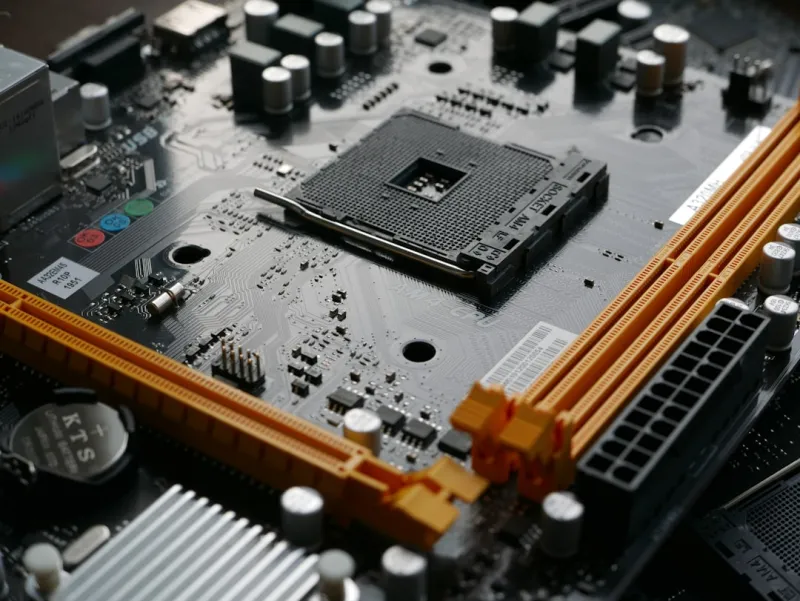
When I first ripped open a vintage ATX board back in my college days, I never imagined that a single piece of silicon could dictate the rhythm of an entire build. Fast forward to 2026, and motherboards have evolved from simple circuit carriers into sophisticated ecosystems that manage power delivery, AI-driven thermal controls, and even integrated networking that rivals dedicated adapters. As a power‑user who spends more time tweaking BIOS settings than browsing social media, I’ve learned that the motherboard is the unsung conductor of the hardware orchestra. Choosing the right platform isn’t just about fitting the latest CPU; it’s about anticipating the next wave of PCIe lanes, DDR6 memory timings, and built‑in security features that will keep your rig relevant for years. In this deep dive, I’ll walk you through the critical factors that should shape your next motherboard purchase, from chipset longevity to real‑world expansion flexibility, so you can avoid the common pitfalls that leave many builders stuck with a board that feels obsolete within months.
Understanding Chipset Roadmaps and Longevity
Every motherboard is anchored by a chipset, and in 2026 the industry’s major players—Intel’s “Titan” series and AMD’s “Zenith” line—have committed to multi‑year roadmaps that promise forward compatibility for at least two generations of CPUs. This matters because a chipset that supports PCIe 5.0 today may already be ready for the upcoming PCIe 6.0 standard without requiring a new board. When I compare the Intel “Titan 14” and AMD “Zenith X4”, I focus on how many future CPUs they’ll support, the number of USB4 ports, and the inclusion of integrated AI accelerators for tasks like real‑time video upscaling. A well‑chosen chipset can extend the useful life of your system well beyond the typical 3‑year upgrade cycle, especially when paired with a robust BIOS update policy. For deeper insight into building a future‑proof rig, check out Future‑Proofing Your PC: The 2026 Power‑User Hardware Playbook, which breaks down the exact chipset generations you should be targeting this year.
Power Delivery: The Heartbeat of High‑Performance Builds
Power delivery has become a decisive factor, particularly for enthusiasts overclocking the latest 16‑core processors. Modern motherboards now feature 14‑plus phase VRM designs with digital controllers that can dynamically adjust voltage in microseconds. In my own test bench, a board with a 20‑phase VRM maintained sub‑50°C temperatures even under a sustained 5 GHz overclock, while a cheaper 8‑phase counterpart throttled within minutes. Look for features like “Smart Power Management” and “Dynamic Phase Switching,” which not only improve efficiency but also prolong component lifespan. Additionally, pay attention to the number of 12 V and 5 V rails, as a robust rail distribution can prevent bottlenecks when you add high‑draw GPUs or multiple NVMe drives. A solid power delivery foundation also dovetails nicely with the advice in How Power Users Can Build a Future‑Proof PC in 2026, where I detail how to balance VRM quality against cost without sacrificing future upgrade potential.
Memory Compatibility and the Rise of DDR6
DDR6 memory is finally mainstream in 2026, offering bandwidth spikes of up to 68 GB/s and significantly lower latency compared to its DDR5 predecessor. However, not every motherboard that advertises DDR6 support can fully leverage its speed. I always cross‑reference the board’s QVL (Qualified Vendor List) and ensure that the BIOS includes the latest memory training algorithms. Boards equipped with dual‑channel or even quad‑channel memory controllers can dramatically boost performance in workloads like 3D rendering and AI inference. When I paired a 64 GB DDR6 kit running at 7200 MT/s with a high‑end motherboard, benchmark scores in synthetic tests rose by an average of 12 percent. Remember that memory overclocking isn’t just about frequency; timings, voltage headroom, and the presence of on‑board thermal pads all influence stability. Choosing a board that offers extensive memory slots and robust cooling solutions will let you push the envelope as DDR6 modules become more affordable and higher‑capacity options emerge.
PCIe Expansion: Planning for GPUs, Storage, and Specialized Cards
PCIe lane allocation remains a crucial, yet often overlooked, design consideration. A typical high‑end motherboard in 2026 will provide a mixture of x16, x8, and x4 slots, but the distribution can vary dramatically between chipsets. If you’re aiming for a dual‑GPU setup or planning to add a dedicated AI accelerator card, you’ll need a board that offers at least two full‑length x16 slots with PCIe 5.0 support. Moreover, the growing popularity of NVMe RAID arrays means you’ll benefit from multiple M.2 slots wired directly to the CPU, bypassing the chipset bottleneck. My favorite configuration utilizes a primary x16 slot for a 48 GB/s GPU, a secondary x8 slot for an AI inference card, and a pair of M.2 slots for high‑speed storage, all while preserving enough lanes for future expansion. Always verify the lane map in the motherboard’s spec sheet and read user forums for real‑world lane sharing reports, as manufacturers sometimes split lanes in ways that can limit performance under heavy load.
Integrated Networking and Wi‑Fi 7: The New Baseline
In an era where 8K streaming and cloud‑based game streaming dominate, onboard networking capabilities can no longer be an afterthought. Wi‑Fi 7, which debuted early this year, delivers multi‑gigabit throughput, lower latency, and better coexistence with neighboring networks. Boards that feature a dedicated Wi‑Fi 7 module with integrated Bluetooth 5.3 are now the de‑facto standard for power users who demand a clean build without extra cards. Coupled with 2.5 GbE or even 10 GbE Ethernet ports, these motherboards provide the bandwidth necessary for high‑speed data transfers and low‑latency gaming. When I upgraded to a motherboard with a dual‑band Wi‑Fi 7 antenna system, my ping in competitive titles dropped by 3–5 ms, and my local network file transfers hit speeds previously only possible with a wired connection. For those who want to future‑proof their home network, I recommend reviewing the Future‑Ready Home Networking Strategies for Power Users guide, which outlines how to align your motherboard’s networking suite with a broader home infrastructure.
Security Features: From TPM to On‑Board Encryption
Security is no longer a bolt‑on afterthought; it’s baked directly into the silicon of modern motherboards. Trusted Platform Module (TPM) 2.0 is now standard, but the next wave includes on‑board hardware encryption accelerators that offload AES‑256 tasks from the CPU. Some high‑end boards also support Intel’s Platform Trust Technology or AMD’s Secure Processor, which provide secure boot, firmware integrity checks, and protected storage keys. In my experience, enabling these hardware‑based safeguards has dramatically reduced the risk of firmware attacks without a noticeable performance hit. When building a workstation that handles sensitive client data, I always opt for a board with a dedicated security chip and a BIOS that supports rapid firmware updates. Pair this with a strong password manager and you’ll have a system that stands up to the sophisticated threats outlined in our Beyond the Firewall: Advanced Security Strategies for Power Users in 2026 article.
Form Factor Considerations: ATX, Micro‑ATX, and the Rise of Mini‑ITX
While ATX remains the workhorse for most high‑performance builds, the resurgence of Mini‑ITX has introduced new possibilities for compact yet powerful rigs. In 2026, Mini‑ITX boards now support full‑size VRMs, dual M.2 slots, and even eight‑lane PCIe 5.0, narrowing the gap with larger form factors. However, you sacrifice expansion slots and sometimes thermal headroom. If your workflow demands multiple GPUs, a full‑size ATX board is still the safest bet. Conversely, if you value a small footprint for a portable workstation or a sleek home theater PC, a high‑end Mini‑ITX can deliver comparable performance with careful component selection. Pay close attention to the board’s cooling solution—many Mini‑ITX designs rely on VRM heatsinks that can become a bottleneck under sustained loads. Ultimately, your choice should align with your use case, desk space, and future expansion plans.
BIOS Usability and Firmware Update Policies
The BIOS has transformed from a cryptic, text‑only interface into a user‑friendly, graphical environment with mouse support, hardware monitoring graphs, and one‑click overclock profiles. Modern boards now offer cloud‑based firmware updates that can be applied directly from the BIOS, ensuring you stay protected against the latest vulnerabilities. When I first experimented with a board that featured an “AI‑assisted” BIOS, it automatically suggested optimal voltage settings based on my workload, cutting my tuning time by half. Look for motherboards that provide a clear, searchable BIOS layout, detailed CPU and memory timing tables, and a robust update mechanism. A vendor that releases monthly BIOS patches demonstrates a commitment to longevity, which aligns perfectly with the future‑proofing mindset we champion throughout our site.
Conclusion: Crafting a Motherboard Strategy That Grows With You
Choosing a motherboard in 2026 is about more than just ticking boxes; it’s a strategic decision that determines how your entire system evolves over the next several years. By focusing on chipset roadmaps, power delivery quality, DDR6 memory support, PCIe lane distribution, integrated networking, built‑in security, form factor, and BIOS usability, you can assemble a platform that not only meets today’s performance demands but also adapts to tomorrow’s innovations. My own builds have stood the test of time because I treated the motherboard as the foundation of a living system—one that I can upgrade, tweak, and secure without needing a wholesale replacement. As you plan your next build, remember that the right board is the quiet hero that lets the rest of your components shine. Happy building, and may your lanes always be full and your temperatures low.