When I first cracked open a bootable floppy back in the late ’90s, the idea of an operating system that could think for itself was pure science‑fiction. Fast‑forward to 2026, and that fantasy has become the baseline expectation for anyone building, buying, or simply using a computer. As a longtime tinkerer and systems architect, I’ve watched the OS landscape morph from static, monolithic kernels into dynamic, AI‑infused platforms that anticipate workloads, reallocate resources on the fly, and even rewrite portions of themselves to stay ahead of emerging threats. This isn’t just a nice‑to‑have upgrade; it’s a fundamental shift that redefines what we consider “core” computing. In today’s post I’ll unpack how AI is weaving itself into every layer of modern operating systems, why that matters for the edge‑first world we now inhabit, and what practical steps you can take to stay on the right side of this rapid evolution.
The AI‑Enhanced Kernel: Learning on the Fly
At the heart of any OS lies the kernel, the low‑level manager of CPU cycles, memory, and I/O. In 2026, kernels are no longer static codebases; they embed lightweight neural nets that monitor system telemetry, predict bottlenecks, and adjust scheduling policies before a lag even registers. For example, when a video editor opens a 4K project, the kernel’s AI model instantly reallocates GPU memory and prioritizes disk I/O, delivering a buttery‑smooth experience without the user ever touching a setting. This predictive behavior is powered by continuous training loops that ingest anonymized usage data across millions of devices, turning the OS into a collective learning organism. If you want a deeper dive into how AI is redefining the core of computing, check out Operating Systems in 2026: How AI Is Redefining the Core of Computing. The result? A system that feels alive, responsive, and remarkably resilient to the chaotic demands of modern workloads.
Edge‑First Architecture: Bringing the Cloud to the Device
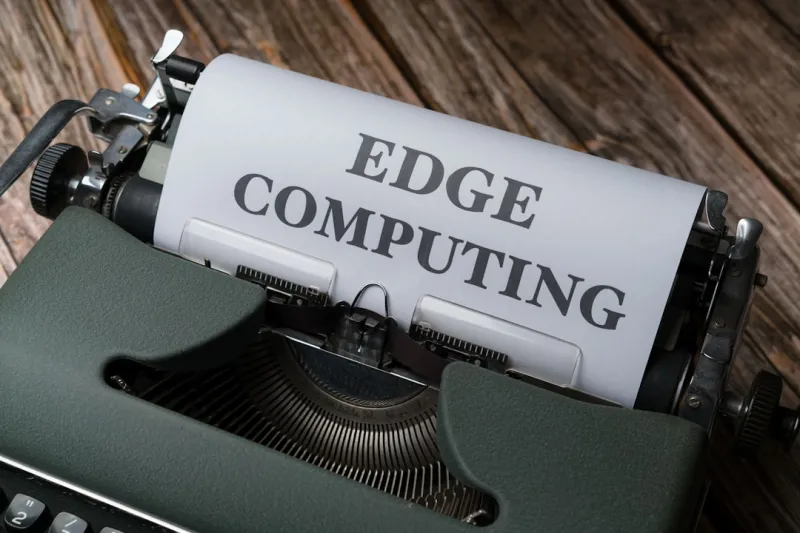
The rise of edge computing has forced operating systems to rethink where processing happens. No longer can an OS assume that heavy lifting will always occur in a distant data center; instead, it must intelligently distribute tasks between on‑device AI accelerators, nearby edge nodes, and the cloud. Modern OS schedulers now include “edge‑awareness” modules that assess latency, bandwidth, and security posture before offloading a computation. This is especially critical for real‑time applications like autonomous drones or augmented reality glasses, where milliseconds matter. By integrating AI‑driven decision engines, the OS can decide on the fly whether to run a neural inference locally on a dedicated TPU or stream it to a nearby edge server for additional horsepower. This fluid, context‑aware orchestration blurs the line between device and cloud, delivering the performance of a server farm while preserving the immediacy of local processing.
AI‑Powered Security: Anticipating Threats Before They Strike
Security in 2026 is no longer reactive; it’s proactive, and AI is the sentinel at the gate. Modern operating systems embed behavior‑analysis engines that learn the normal patterns of every process, user, and peripheral. When a deviation—such as a sudden spike in file‑system writes from a trusted app—occurs, the OS can quarantine the activity, alert the user, and even roll back the offending changes automatically. This approach dramatically reduces the window of exposure for ransomware and zero‑day exploits. For a broader view of how AI is shaping secure edge operating systems, see Operating Systems in 2026: The AI‑Driven, Secure Edge Revolution. The integration of AI doesn’t just add a layer of defense; it creates a living, adaptive shield that evolves with each new threat, keeping both enterprise and consumer devices safer than ever before.
Developer Experience: Coding for an AI‑Aware OS
From a developer’s perspective, the AI‑augmented OS is both a blessing and a new frontier of complexity. Traditional APIs are being supplemented with “intent‑based” interfaces, where you describe what you want—like low‑latency video rendering—and the OS decides how to achieve it, leveraging AI to pick the optimal hardware path. This shift encourages developers to focus on high‑level functionality rather than low‑level performance tuning, accelerating time‑to‑market. However, it also demands a new skill set: understanding AI model footprints, data‑privacy implications, and how to provide meaningful feedback to the OS when its autonomous decisions don’t align with business goals. The modern developer toolkit now includes profiling suites that visualize AI‑driven resource allocation, helping you fine‑tune the balance between performance and power consumption without diving into kernel code.
Hardware Synergy: AI‑Ready Motherboards and Beyond
The software revolution is impossible without hardware that can keep pace. In 2026, the term “AI‑ready motherboard” has moved from marketing fluff to a concrete specification. These boards feature built‑in neural processing units (NPUs), high‑bandwidth memory channels, and firmware that exposes AI inference capabilities directly to the OS kernel. When paired with an AI‑enhanced OS, the result is a seamless feedback loop: the OS directs workloads to the optimal accelerator, and the hardware reports real‑time performance metrics back to the OS’s learning models. If you haven’t yet considered the hardware side of this equation, take a look at Why Your Next PC Build Needs an AI‑Ready Motherboard for practical guidance. This hardware‑software co‑design is the cornerstone of the edge‑first era, ensuring that every watt of power is used where it matters most.
Staying Future‑Proof: The Importance of Continuous Updates
One of the biggest misconceptions about AI‑driven operating systems is that they are “set‑and‑forget” solutions. On the contrary, the AI models embedded in the OS require regular retraining to adapt to new workloads, hardware revisions, and emerging security threats. Vendors are now delivering OS updates that include not just patches, but entire model bundles that can be swapped in as a service. This model‑as‑a‑update paradigm means your device can stay at the cutting edge without a full OS overhaul. As a power user, you should enable automatic update channels, monitor the health dashboards that many OSes now provide, and be ready to roll back if a model update introduces unforeseen regressions. Embracing this continuous‑learning mindset is the best defense against obsolescence in a world where AI evolves faster than silicon.
Practical Steps for the Everyday User
If you’re not a sysadmin or a developer, you might wonder how much of this AI‑driven OS magic touches your daily workflow. The answer: a lot, but in ways that feel invisible. First, keep your operating system set to receive both security and AI model updates automatically. Second, enable power‑profile optimizations that let the OS decide when to use integrated graphics versus a discrete GPU, especially on laptops. Third, be mindful of the permissions you grant to apps; the OS’s AI security engine uses this data to build a baseline of trusted behavior. Lastly, explore the new “smart settings” panels that many OSes now include—these let you prioritize performance for gaming, creativity, or battery life with a single toggle, and the AI does the heavy lifting behind the scenes.
Ecosystem Impact: Community, Open Source, and Standards
The rapid adoption of AI within operating systems has sparked a resurgence in community‑driven innovation. Open‑source projects are now collaborating on standardized AI model formats, allowing different OS vendors to share and improve upon each other’s learning algorithms. This collaborative spirit is fostering a healthier ecosystem where security patches, performance tweaks, and even AI ethics guidelines are co‑developed. Industry consortia are also defining baseline requirements for AI‑enabled OSes, ensuring interoperability across devices—from smartphones to industrial IoT gateways. By participating in these communities—whether by contributing code, reporting edge cases, or simply staying informed—you become part of the feedback loop that keeps the OS intelligent, secure, and adaptable.
Looking Ahead: The Next Frontier of AI‑Integrated OSes
As we look beyond 2026, the convergence of quantum‑ready processors, federated learning, and ultra‑low‑latency networking promises to push AI‑enhanced operating systems into realms we can barely imagine today. Imagine an OS that can run distributed quantum‑inspired algorithms across a mesh of edge devices, or one that negotiates resource contracts with neighboring devices in real time, all while maintaining a user‑friendly interface. The foundation we’re building now—AI kernels, edge‑aware schedulers, and continuous model updates—will be the scaffolding for those future breakthroughs. For anyone eager to stay ahead of the curve, the best strategy is simple: keep experimenting, stay curious, and let the operating system do the heavy lifting while you focus on what truly matters—creating, connecting, and innovating.