Why AI Computing Is the New Power‑User Frontier
When I first started tinkering with GPUs for deep‑learning experiments, I never imagined that AI would become the backbone of every power‑user workflow in 2026. The landscape has shifted from isolated model training rigs to ubiquitous AI‑enhanced tools that sit right alongside our favorite productivity suites. Today, a single AI inference can accelerate video encoding, automate spreadsheet insights, and even anticipate network bottlenecks before they happen. For someone who lives at the intersection of hardware and software, this convergence feels like the ultimate playground—a place where raw compute power meets intelligent orchestration. The excitement isn’t just about raw speed; it’s about how AI democratizes tasks that used to demand hours of manual tweaking. As I dive deeper, I’m constantly reminded that the same principles that guided my early PC builds—efficiency, scalability, and future‑proofing—now apply to AI pipelines. Embracing AI isn’t a fad; it’s a strategic upgrade that mirrors the evolution of our hardware, and it demands a fresh playbook for every power user who wants to stay ahead of the curve.
The Hardware Backbone: GPUs, TPUs, and Emerging ASICs
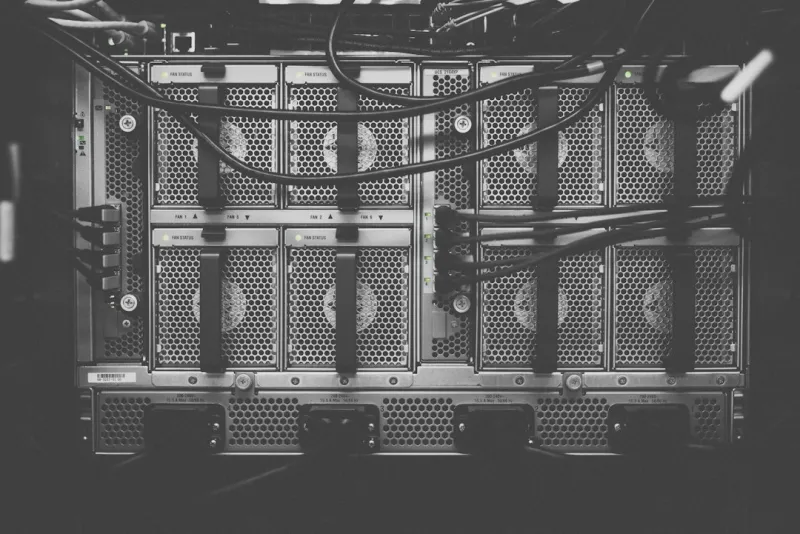
The heart of AI computing still beats strongest in specialized silicon. In 2026, the latest generation of GPUs from both NVIDIA and AMD deliver unprecedented tensor performance, while Google’s custom TPUs are now accessible via cloud‑native APIs that integrate seamlessly with local development environments. What’s more, a handful of boutique ASIC manufacturers have released low‑power, high‑throughput chips designed for edge inference—think real‑time video analysis on a laptop without draining the battery. As a power user, the key is to balance raw horsepower with thermal and power constraints. I’ve found that pairing a high‑end GPU with a secondary AI‑accelerator can offload specific workloads, freeing the primary processor for latency‑critical tasks. This hybrid approach mirrors the classic “dual‑CPU” strategy of the early 2000s, but with a modern twist: one chip handles matrix multiplications while the other optimizes sparse data structures. Understanding these nuances lets you build a system that scales gracefully as AI models grow larger and more complex.
Software Stacks That Turn Raw Power Into Real Results
Hardware is only half the story; the software stack translates silicon potential into usable outcomes. Frameworks like PyTorch and TensorFlow have matured into production‑ready ecosystems, complete with auto‑tuning compilers that squeeze every ounce of performance from your GPU. Meanwhile, emerging runtimes such as ONNX Runtime and Apache TVM provide cross‑platform portability, allowing you to run the same model on a desktop, a server, or an edge device without rewriting code. I’ve personally integrated these runtimes into my home lab, using Critical 2026 Updates as a reference point for driver compatibility and security patches. The result is a fluid pipeline where model training, quantization, and deployment happen in a single, automated workflow. For power users who value speed and reliability, mastering these toolchains is as essential as mastering the BIOS settings that unlock hardware potential.
AI‑Enhanced Productivity: From Office Suites to Creative Workflows
One of the most visible impacts of AI computing is the transformation of everyday productivity tools. Microsoft’s latest Office suite, now tightly integrated with AI, can suggest data visualizations, draft emails, and even generate code snippets based on natural‑language prompts. I recently explored Supercharge Your Microsoft Office Workflow with AI, Security, and Windows 12 to see how these capabilities mesh with the new OS security model. The synergy is striking: AI assists in real time while Windows 12’s hardened kernel ensures that no malicious script can hijack the process. This blend of intelligence and security turns a simple spreadsheet into a decision‑making engine, and it does so without sacrificing the control power users crave. The takeaway? AI is no longer a peripheral add‑on; it’s a core component of the modern productivity stack, and leveraging it effectively can shave minutes—if not hours—off routine tasks.
Security Implications of AI‑Driven Environments
With great power comes great responsibility, and AI introduces a fresh set of security challenges. Models can be poisoned, data can be exfiltrated through side‑channel attacks, and adversarial inputs can cause unexpected behavior in critical systems. As a power user, I treat AI security with the same rigor I apply to traditional malware defenses. Regularly updating model libraries, employing sandboxed execution environments, and encrypting training data at rest are non‑negotiable practices. The recent rise of “model‑stealing” attacks, where attackers replicate proprietary models by querying APIs, underscores the need for rate limiting and robust authentication. Incorporating a layered security playbook—similar to what’s outlined in the power‑user security guides—helps mitigate these risks. In practice, I’ve combined hardware‑based attestation with software‑level anomaly detection to ensure that any deviation from expected model behavior triggers an immediate alert, preserving both data integrity and system stability.
Data Management: The Unsung Hero of AI Success
Behind every high‑performing AI system lies a meticulously curated dataset. In 2026, the cost of storage has plummeted, but the complexity of managing multi‑petabyte data lakes has risen. Effective data versioning, provenance tracking, and automated backup strategies are essential for reproducibility and compliance. I still keep a few hard‑drive arrays in my workshop—yes, those reliable spinning disks remain a power‑user’s secret weapon for archival storage, as highlighted in the article about hard drives. By storing raw training data on these drives and linking them to faster NVMe caches for active processing, I achieve a balance between speed and cost. Additionally, employing modern encryption techniques, such as those described in the “Mastering Modern Encryption” guide, ensures that sensitive datasets remain protected both at rest and in transit. The discipline of treating data as a first‑class citizen, rather than an afterthought, is what separates hobbyist tinkering from enterprise‑grade AI deployments.
Edge AI: Bringing Intelligence Closer to the User
Edge computing has matured from a buzzword to a practical necessity, especially as latency‑sensitive applications like AR/VR and real‑time analytics proliferate. Modern AI accelerators designed for the edge—think Coral, Jetson, and emerging RISC‑V AI cores—allow inference to happen directly on the device, bypassing the cloud and reducing bandwidth costs. For power users, this opens a world of DIY projects: from home security cameras that detect intruders without sending video to a server, to personal assistants that understand context without relying on external APIs. The key to success lies in model optimization: pruning, quantization, and knowledge distillation shrink models to fit the limited compute budget while preserving accuracy. I’ve built a prototype smart mirror that uses a compact vision model to display personalized reminders, all processed locally. This hands‑on experience reinforces the principle that edge AI isn’t just about hardware; it’s about designing efficient models that respect the constraints of the device they run on.
Future‑Proofing Your AI Setup: Upgrade Paths and Modular Design
Planning for tomorrow’s breakthroughs starts with today’s architecture. A modular approach—separating compute, storage, and networking into interchangeable blocks—ensures that you can upgrade one component without overhauling the entire system. In my own lab, I’ve adopted a “future‑proof PC” mindset: a PCIe 5.0 chassis that can accommodate the next generation of GPUs, an expandable M.2 slot for ultra‑fast NVMe drives, and a high‑bandwidth Ethernet backbone that can handle 100 Gbps traffic for distributed training. When a new AI accelerator hits the market, I simply slot it in, update the driver stack, and my workloads instantly benefit from the performance uplift. This strategy mirrors the advice given in the ultimate PC upgrade playbook and aligns perfectly with the rapid cadence of AI hardware releases. By thinking ahead and designing for flexibility, you protect your investment and stay ready for the next wave of AI innovation.
Community and Knowledge Sharing: The Power‑User’s Advantage
One of the most rewarding aspects of being a power user in the AI space is the vibrant community that surrounds it. Forums, GitHub repos, and Discord channels serve as living libraries of troubleshooting tips, performance benchmarks, and novel use cases. I often reference community‑driven guides when I hit a roadblock—whether it’s a cryptic driver conflict or an obscure bug in a custom kernel module. The collaborative spirit extends beyond troubleshooting; it fuels open‑source projects that push the envelope of what AI can achieve on consumer hardware. By contributing back—sharing optimized model configs, publishing benchmark results, or writing blog posts—you help raise the collective knowledge base. This reciprocity not only accelerates personal growth but also ensures that the broader ecosystem remains robust, secure, and innovative, keeping us all a step ahead of the rapidly evolving AI landscape.
Conclusion: Embrace AI Computing as the Next Power‑User Evolution
In 2026, AI computing isn’t a niche hobby; it’s the logical next step for any power user who wants to extract maximum value from their hardware. From selecting the right accelerators and mastering modern software stacks, to safeguarding models against emerging threats and building edge solutions that respect latency constraints, the journey is as complex as it is rewarding. By adopting a modular, future‑proof mindset and staying engaged with the community, you’ll turn your rig into a versatile AI workstation capable of tackling anything from deep‑learning research to daily productivity hacks. Remember, the principles that made your last PC upgrade a success—careful planning, diligent security, and a dash of curiosity—apply just as well to AI. So power up, experiment boldly, and let the intelligence you unleash become the engine that drives your next big breakthrough.