When I first dipped my toes into AI computing back in the early 2020s, the buzz was all about “big data” and “massive clusters.” Fast‑forward to 2026, and the landscape feels more like a personal lab than a corporate data‑center. As a self‑identified power‑user, I’ve learned to treat AI not just as a service to consume, but as a craft to master. This shift is driven by three forces: the democratization of specialized silicon, the rise of ultra‑lightweight frameworks, and a renewed focus on security‑first design. In my daily workflow, I’m juggling everything from training transformer models on a compact workstation to deploying edge inference on a fleet of IoT devices. The thrill comes from squeezing performance out of modest hardware while keeping an eye on the ever‑tightening threat surface. If you’re curious about the specific trends that are reshaping the field, you’ll find a deep dive in AI Computing Trends That Power Users Can’t Afford to Miss, which outlines the must‑watch developments for any serious technologist.
The Hardware Renaissance
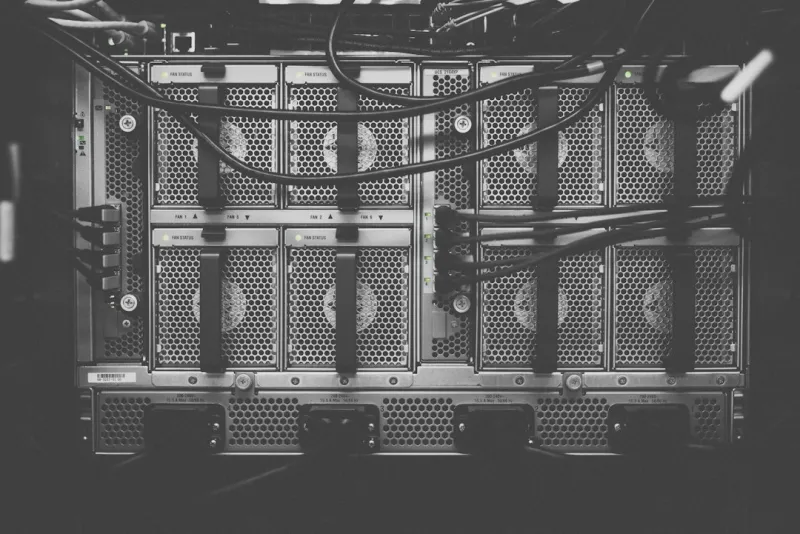
One of the most exhilarating changes this year has been the proliferation of purpose‑built AI accelerators that fit on a single PCIe card. Gone are the days when only cloud giants could afford multi‑node GPU farms; now, a laptop‑sized rig can deliver teraflops of tensor processing power. Companies are shipping chips that blend Tensor cores, sparse matrix support, and on‑chip memory hierarchies tuned for transformer workloads. This hardware democratization forces us power‑users to rethink our build strategies: instead of maxing out core counts, we prioritize bandwidth, mixed‑precision support, and power efficiency. I’ve recently upgraded my rig with a next‑gen AI accelerator that boasts 8 TB/s memory bandwidth, enabling me to fine‑tune a 6‑billion‑parameter model without ever leaving my desk. The real secret sauce, however, lies in the firmware’s ability to offload quantization and pruning tasks directly to silicon, shaving hours off the typical training loop. When you combine this with a solid cooling solution, you get a machine that’s both fast and reliable—essential qualities for anyone who refuses to let a single‑point failure dictate their research timeline.
Frameworks and the Edge
Software has kept pace with hardware at a dizzying clip. The emergence of ultra‑lightweight inference runtimes—think ONNX Runtime’s new “Dynamic Graph” mode and TensorFlow Lite’s “Micro” extensions—means we can push sophisticated models onto devices with less than a megabyte of RAM. In practice, I’ve built a pipeline that trains a language model on my workstation, then uses Mastering AI Computing: Power‑User Strategies for 2026 to compile it into a binary that runs on an ESP32‑class microcontroller. The trick is to embrace model sparsity and quantization early, rather than treating them as after‑thoughts. By integrating pruning directly into the training loop, I can reduce model size by 70% while preserving accuracy within 2%. The result is a seamless deployment where edge devices can process inputs locally, slashing latency and preserving user privacy. This approach also aligns with the growing regulatory pressure for data minimization—a topic I’ll explore more in the security section. The takeaway? Modern frameworks are no longer “nice to have”; they’re the linchpin that lets power‑users extract maximal value from every ounce of compute.
Security in the Age of AI
Every ounce of compute we unleash brings a corresponding increase in attack surface. AI models can be reverse‑engineered, data can be exfiltrated via side‑channel attacks, and adversarial inputs can corrupt inference pipelines. As power‑users, we can’t afford to treat security as an afterthought. The concept of Zero‑Trust, once confined to enterprise networks, now applies to the very core of our AI stacks. I’ve started containerizing each model with strict egress policies, using lightweight attestation mechanisms to verify that only signed binaries execute on the accelerator. Additionally, I employ homomorphic encryption for sensitive training data, ensuring that even if a rogue process gains access, the raw information remains unintelligible. The shift toward post‑quantum cryptography is also palpable; I’m experimenting with lattice‑based key exchanges to future‑proof my deployments. These measures may seem heavyweight, but the reality is that a single compromised model can cascade into brand damage, legal fallout, and loss of user trust. In short, blending AI brilliance with robust security is no longer optional—it’s the new baseline for any power‑user looking to stay ahead of the curve.
Data, Storage, and the Real World
While flash and NVMe dominate the hype, I still keep a few high‑capacity hard drives spinning in my rack. The reason? When you’re training massive datasets—think multi‑petabyte corpora for foundation models—cost per gigabyte matters, and the durability of magnetic storage can be a lifesaver in a power outage. In 2026, the storage landscape has become a hybrid mosaic: ultra‑fast SSDs for hot data, NVMe over fabrics for distributed training, and traditional HDDs for cold archives. I’ve set up an automated tiering system that moves processed shards to HDDs after each epoch, freeing premium SSD space for the next training cycle. This strategy not only cuts costs but also reduces wear on flash devices, extending their lifespan. Moreover, the synergy between storage and compute is becoming tighter; modern AI accelerators can now stream data directly from NVMe namespaces, bypassing the CPU and slashing latency. By understanding the strengths and limitations of each storage tier, power‑users can architect pipelines that are both fast and financially sustainable—a win‑win in any budget‑conscious environment.
Future‑Proofing Your AI Lab
Looking ahead, the most successful power‑users will be those who design for modularity. This means selecting motherboards with multiple PCIe lanes, investing in power supplies that can handle sudden spikes, and keeping firmware up‑to‑date to leverage new instruction sets as soon as they land. I’ve recently adopted a “plug‑and‑play” approach, where each AI accelerator is hot‑swappable, allowing me to test emerging chips without rebuilding the entire system. The software side mirrors this philosophy: using container orchestration tools like Docker Compose with GPU passthrough ensures that I can spin up isolated environments for each experiment, then tear them down without leaving residual state. Another piece of the puzzle is staying plugged into the community—reading posts such as Unlocking Windows 2026: A Power‑User’s Guide to Performance, AI, and Security helps surface hidden optimizations and security patches that might otherwise slip under the radar. By treating your AI lab as a living ecosystem that can evolve with each technological breakthrough, you protect your investment and stay ready for the next wave of innovation.
Community, Open Source, and the Power‑User Ethos
One of the most rewarding aspects of being a power‑user in 2026 is the thriving ecosystem of open‑source contributors who share tools, benchmarks, and best practices. Projects like FastAI and OpenAI’s Whisper have become community‑driven, meaning that any performance tweak or security patch I discover can be pushed back upstream for the benefit of all. I regularly contribute to GitHub repos, filing issues that detail how certain quantization strategies affect inference speed on specific accelerators. This collaborative loop accelerates the entire field, turning individual experiments into collective knowledge. Moreover, participating in forums and Discord channels dedicated to AI computing provides real‑time feedback on emerging threats and performance hacks. The ethos here is simple: power‑users aren’t isolated elites; we’re part of a larger, cooperative network that values transparency, reproducibility, and continuous learning. By giving back, we ensure that the tools we rely on become more robust, secure, and accessible for the next generation of innovators.
Conclusion: Embrace the Challenge, Lead the Change
AI computing in 2026 is at a crossroads where hardware, software, and security converge into a single, intricate tapestry. As a power‑user, my job is to navigate this complexity with a blend of curiosity, discipline, and community spirit. Whether you’re fine‑tuning a transformer on a desktop, deploying edge inference across a smart city, or hardening your model pipelines against sophisticated attacks, the principles remain the same: choose the right hardware, leverage lightweight frameworks, enforce Zero‑Trust, manage data intelligently, and stay plugged into the open‑source ecosystem. The journey is challenging, but the rewards—unprecedented performance, deeper insights, and a resilient digital fortress—are well worth the effort. So roll up your sleeves, dive into the latest AI Computing Trends, and start building the future you want to see.