2026 feels like the year the cyber‑war front finally went mainstream. Every day, I’m bombarded with alerts that sound more like sci‑fi plot twists than routine IT notices—AI‑generated phishing that mimics a colleague’s voice, ransomware that morphs its code on the fly, and supply‑chain attacks that exploit the very hardware we just bought. The old perimeter‑based defenses that kept the “outside world” at bay are now as porous as a sieve. What’s changed isn’t just the threat actors; it’s the technology they wield, and the expectations of users who demand instant, seamless experiences. That’s why I’m championing a zero‑trust, AI‑first security model: a philosophy that assumes every connection, device, and user could be compromised until proven otherwise, and leverages machine intelligence to verify that trust in real time. In this post, I’ll walk you through how to re‑architect your defenses for this new reality, why you can’t ignore encryption any longer, and what practical steps you can take right now to stay ahead of the curve.
Zero‑Trust: From Buzzword to Baseline
Zero‑trust isn’t just a checklist; it’s a mindset that permeates every layer of your infrastructure. At its core, it demands continuous verification—never assuming that a device inside the corporate network is safe just because it’s “internal.” This means enforcing least‑privilege access, micro‑segmentation of network zones, and strict identity verification for every request, whether it originates from a laptop, a cloud VM, or an IoT sensor embedded in a production line. In 2026, the technology stack supporting zero‑trust has matured: identity‑as‑a‑service platforms now integrate biometric factors, while software‑defined perimeters automatically adjust policies based on contextual risk signals. The result is a dynamic security posture that reacts, not just reacts, to threats. As someone who’s spent countless nights wrestling with legacy VPNs that barely keep up with modern workloads, I can tell you that moving to a zero‑trust framework not only reduces the attack surface but also simplifies compliance reporting—a win‑win for both security teams and auditors.
AI‑Driven Threat Detection: The New Sentinel
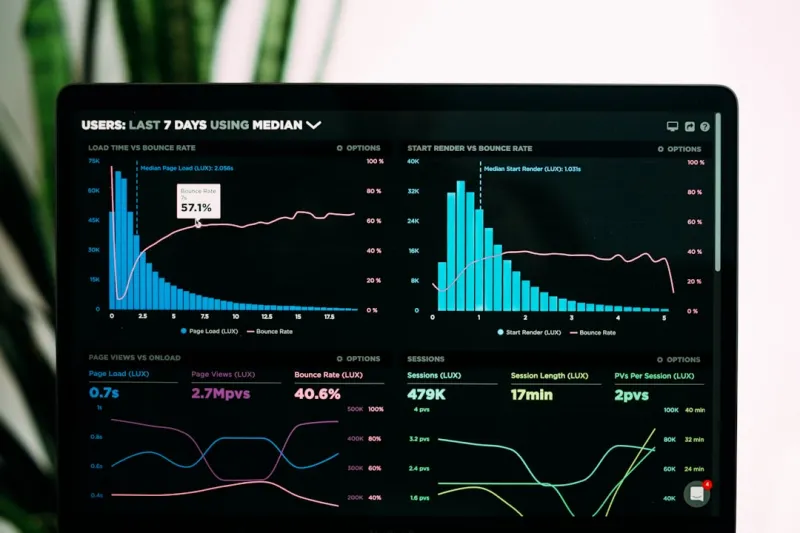
Artificial intelligence has transitioned from a novelty to a necessity in threat detection. Traditional signature‑based antiviruses falter against polymorphic malware that reshapes its code with each execution. In contrast, AI models can analyze behavior patterns across billions of events, flagging anomalies that would slip past human eyes. Think of an AI engine that notices a user suddenly pulling massive data transfers from an unusual endpoint at 3 a.m.—it can quarantine that activity before any data exfiltration completes. The key is feeding these models high‑quality, real‑time telemetry: logs, network flows, endpoint telemetry, and even user‑behavior analytics. In my own labs, I’ve deployed an open‑source AI platform that correlates endpoint alerts with network micro‑segmentation policies, automatically tightening access when suspicious activity is detected. This synergy between AI and zero‑trust creates a feedback loop where the system continuously learns and adapts, turning what used to be reactive defense into proactive protection.
Marrying Zero‑Trust with AI: A Practical Playbook
Putting zero‑trust and AI together sounds like a massive project, but you can start small and scale. First, inventory every asset—users, devices, services—and tag them with identity attributes. Next, implement micro‑segmentation using a software‑defined perimeter that can enforce policies at the workload level. Then, introduce an AI‑driven analytics engine that ingests logs from your identity provider, firewall, and endpoint detection platform. Configure the engine to generate risk scores for each session; any score above a defined threshold triggers an automated policy change, such as forcing multi‑factor authentication or isolating the endpoint. Finally, close the loop with continuous monitoring: review false positives, fine‑tune thresholds, and expand coverage to new cloud services as they appear. The beauty of this approach is that each component reinforces the other—AI sharpens the granularity of zero‑trust policies, while zero‑trust provides the rich context AI needs to make accurate predictions.
Encryption: The Unsung Hero of Zero‑Trust
If you think zero‑trust is only about network controls, you’re overlooking a critical layer: data at rest and in motion. Modern attackers increasingly target unencrypted data stores, exploiting misconfigurations to harvest sensitive information. That’s why I often point readers to Why Strong Encryption Is No Longer a Luxury—It’s a Necessity. In 2026, strong encryption has become non‑negotiable, not optional. Leveraging post‑quantum cryptographic algorithms, hardware‑based key storage, and automated key rotation ensures that even if an adversary breaches a perimeter, the data remains indecipherable. Moreover, integrating encryption with zero‑trust policies means that decryption keys are only released after identity verification and contextual risk assessment. This creates a “cryptographic gate” that aligns perfectly with the principle of “never trust, always verify.” In practice, enable full‑disk encryption on laptops, enforce TLS 1.3 everywhere, and adopt secret‑management solutions that store keys in isolated hardware security modules (HSMs). The payoff is a dramatically reduced attack surface and compliance with emerging data‑privacy regulations.
Hardware Roots: Secure Enclaves and the Motherboard Revolution
The hardware layer is the foundation on which zero‑trust and AI defenses are built. Modern motherboards now embed secure enclaves—isolated execution environments that protect cryptographic keys and run critical security workloads without exposure to the main OS. This hardware‑rooted trust enables AI models to process telemetry locally, reducing latency and limiting the blast radius of a breach. In my recent build, I leveraged a motherboard that supports Intel’s Trusted Execution Technology (TXT) and AMD’s Secure Processor, which allowed me to offload initial threat‑scoring to the chipset before transmitting only aggregated risk data to the cloud. The result? Faster detection, lower bandwidth consumption, and a hardened chain of trust from silicon to software. As we continue to integrate AI accelerators directly onto the board, the line between compute and security blurs—in the best possible way. Embracing these innovations means you’re not just buying a faster PC; you’re investing in a platform that inherently resists tampering and provides a trusted base for zero‑trust policies.
The Evolving Malware Landscape
Malware authors have become as sophisticated as the defenders they target. In 2026, we’re seeing “adaptive ransomware” that leverages AI to choose the most lucrative victim profile, and “fileless” payloads that reside entirely in memory, evading traditional scanners. For a deep dive, see Inside the Malware War: Why 2026 Threats Need a New Defense Playbook. The takeaway? Static defenses are obsolete. You need a dynamic, behavior‑based approach that can recognize malicious intent even when the code changes on the fly. Deploying endpoint detection and response (EDR) tools powered by machine learning, combined with zero‑trust network access (ZTNA), creates multiple, overlapping layers of scrutiny. When a suspicious process attempts lateral movement, the AI engine can instantly quarantine it, and the zero‑trust policy can block any further network calls from that endpoint. This coordinated response dramatically cuts dwell time—often to minutes instead of days—making it far harder for attackers to achieve their objectives.
User Hygiene: The Human Factor in a Zero‑Trust World
No amount of technology can fully compensate for lax user behavior. In 2026, the average employee interacts with ten different cloud services daily, each presenting a potential attack vector. Encouraging a culture of security starts with regular, bite‑sized training that emphasizes phishing awareness, the importance of device updates, and the principle of “verify before you click.” Automate patch management wherever possible—Windows 2026 now offers seamless, AI‑driven rollout of critical updates that prioritize security patches based on known exploit activity. Additionally, enforce device compliance checks before granting network access; if a laptop’s OS version falls behind, the zero‑trust controller should deny access until it’s updated. By aligning user incentives—such as faster access to approved apps—with security requirements, you turn compliance from a chore into a benefit. Remember, a well‑educated user is the first line of defense, and in a zero‑trust model, that line is constantly reinforced by technology.
Looking Ahead: The Next Frontier of Secure Computing
As we look toward the next five years, the convergence of AI, zero‑trust, and hardware‑based security will define the baseline for safe computing. Emerging standards like decentralized identity and homomorphic encryption promise to let us process data without ever exposing the raw content, further reducing risk. For now, the practical steps I’ve outlined—adopt zero‑trust micro‑segmentation, embed AI‑driven analytics, enforce strong encryption, and leverage secure hardware—form a robust playbook that any organization can start executing today. The threat landscape will keep evolving, but with a layered, adaptive defense strategy, you’ll stay one step ahead. If you’re ready to transform your security posture, begin by auditing your current access policies, integrate an AI analytics platform, and lock down your data with modern encryption. The future of computer security isn’t a distant horizon; it’s a set of actions you can take right now.