When I first started tinkering with PCs back in the early 2010s, memory failures were the occasional, mysterious hiccup that would make a system crash without warning. Fast‑forward to 2026, and RAM has evolved into a hyper‑intelligent partner that talks to AI‑driven cores, powers massive language models on the edge, and still throws tantrums when something is off. As a long‑time tech troubleshooter, I’ve learned that the fundamentals haven’t changed: a bad stick, mismatched timings, or a firmware glitch can still bring a workstation to its knees. What has changed is the sheer volume of data we push through those DIMM slots and the way modern operating systems lean on AI to diagnose problems in real time. In this deep‑dive, I’ll walk you through the most common memory‑related symptoms you’ll see in 2026, the diagnostic tools that actually work, and a step‑by‑step playbook that lets you isolate, fix, or replace faulty RAM before it costs you precious productivity.
Recognizing the Red Flags: Symptoms That Mean Your RAM Is Misbehaving
Every seasoned PC enthusiast can spot the tell‑tale signs of a memory issue before the system even throws a blue screen. Random application crashes, especially in memory‑intensive workloads like AI inference or 4K video rendering, are often the first clue. You might notice sudden slowdowns after a seemingly idle period, or a “stuck” system that refuses to boot past the POST screen. In 2026, the new breed of AI‑ready operating systems even logs “memory latency spikes” in their telemetry dashboards, giving you a pre‑emptive warning that something is amiss. Frequent BSODs with error codes like 0x00000124 (WHEA_UNCORRECTABLE_ERROR) are classic indicators that hardware, not software, is the culprit. If you’re seeing random file corruption, especially in large datasets used for machine learning, that’s another red flag. The key is to correlate these symptoms with recent changes—new RAM modules, BIOS updates, or a shift to a higher‑performance AI workload—to narrow down the root cause before you start swapping parts.
Leveraging Built‑In Diagnostic Tools: From Windows to UEFI
The first line of defense in any troubleshooting routine should be the tools that come pre‑installed with your system. Windows 11 Pro in 2026 ships with an upgraded Memory Diagnostic that can be launched directly from the Start menu. Run it with the “Extended” option to stress the modules for up to three hours—long enough to catch intermittent errors that only appear under sustained AI workloads. If you’re on a Linux distro, the memtester utility provides a quick sanity check, while the stress‑ng suite can push your RAM to its limits. Don’t overlook the UEFI/BIOS memory test; modern firmware now includes a quick boot‑time RAM check that runs before the OS even loads, giving you a clean baseline. For systems that support it, enable the “Memory Guard” feature, which leverages hardware‑level ECC (Error‑Correcting Code) if your DIMMs support it, and logs any corrected errors for later analysis. These native tools are often enough to confirm whether the problem lies in the hardware itself or elsewhere in the software stack.
Understanding the 2026 Memory Landscape: DDR5, DDR6, and AI‑Optimized Modules
Memory technology has leapt forward dramatically over the past few years. DDR5 is now the mainstream standard for most consumer PCs, offering speeds up to 7200 MT/s, while high‑end workstations are already adopting DDR6 modules that push beyond 10 GB/s per pin. What’s truly revolutionary, however, is the emergence of AI‑optimized RAM—DIMMs that incorporate on‑board micro‑controllers capable of dynamically adjusting timing parameters based on the workload’s real‑time demands. These “smart sticks” can lower latency during inference bursts and increase throughput when training models, but they also introduce another layer of complexity. If the AI controller firmware is out of sync with your motherboard’s BIOS, you may experience the very instability you’re trying to avoid. Always verify that your RAM’s firmware version matches the manufacturer’s recommended BIOS version list, especially when you’re running AI‑heavy applications that stress the memory subsystem to its limits.
Matching Speed, Latency, and Capacity: The Triple Threat of Compatibility
When building or upgrading a system in 2026, it’s tempting to grab the fastest‑advertised kit without considering the bigger picture. The speed–latency–capacity triangle is more critical than ever. A 32 GB kit of DDR5‑5600 CL40 might sound impressive, but if your motherboard only supports up to 4800 MT/s or if the CPU’s memory controller is optimized for lower latency, you’ll end up with sub‑optimal performance and potential instability. Conversely, a lower‑speed kit with tighter timings (e.g., DDR5‑4800 CL30) can often deliver smoother operation under AI workloads that demand quick data bursts. Always consult the motherboard’s Qualified Vendor List (QVL) and cross‑reference it with the RAM manufacturer’s compatibility matrix. In many cases, the sweet spot in 2026 is a balanced configuration—say, DDR5‑6000 CL34—paired with a BIOS that supports XMP 3.0 profiles, ensuring the system can automatically apply the optimal timings without manual tweaking.
A Practical Step‑by‑Step Troubleshooting Playbook
Below is the workflow I follow when a system exhibits memory‑related symptoms. First, document the error—take screenshots of crash logs, note the exact workload (e.g., a TensorFlow model inference), and record any recent hardware changes. Second, run the built‑in Windows Memory Diagnostic in extended mode. If errors appear, you’ve got a hardware issue. If not, move to the BIOS and enable the “Memory Test” with the maximum number of passes. Third, reseat the DIMMs: power down, unplug, and carefully remove each stick, cleaning the contacts with an anti‑static brush. Fourth, test each stick individually in the primary DIMM slot while running Why Your RAM Is Acting Up and How to Fix It in 2026. If a particular module fails, replace it. Fifth, update the BIOS and RAM firmware—refer to the motherboard’s release notes and the RAM vendor’s AI‑Driven Hardware Trends Shaping 2026 PC Builds for the latest compatibility guidance. Finally, run a prolonged stress test with MemTest86+ for at least 12 hours to confirm stability before returning the system to production.
Firmware Updates: The Unsung Heroes of Memory Stability
In the age of AI‑ready PCs, firmware updates have become more than a safety net—they’re a performance enhancer. Motherboard manufacturers are releasing BIOS updates that specifically address memory controller bugs introduced with new AI workloads, such as dynamic voltage scaling issues that cause sporadic crashes. Likewise, RAM vendors are pushing firmware that fine‑tunes the on‑board AI controller, improving how the DIMM reacts to rapid frequency changes. Skipping these updates is akin to leaving the oil cap off a high‑performance engine; the system may run, but the wear will be accelerated. When you receive a BIOS notification, verify it against the release notes to ensure it mentions “memory stability” or “AI workload optimization.” Apply the update using the vendor’s flash utility, and reboot into a minimal configuration (single stick, default timings) to confirm the system boots cleanly before re‑enabling XMP profiles.
Physical Checks: Reseating, Cleaning, and the Importance of Good Contact
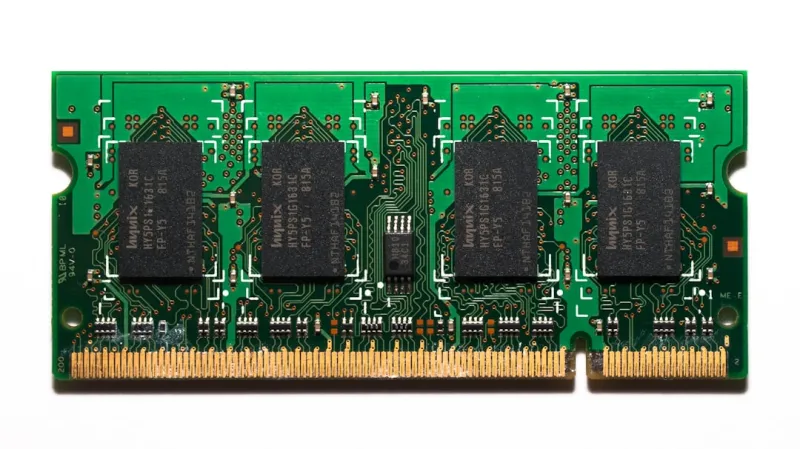
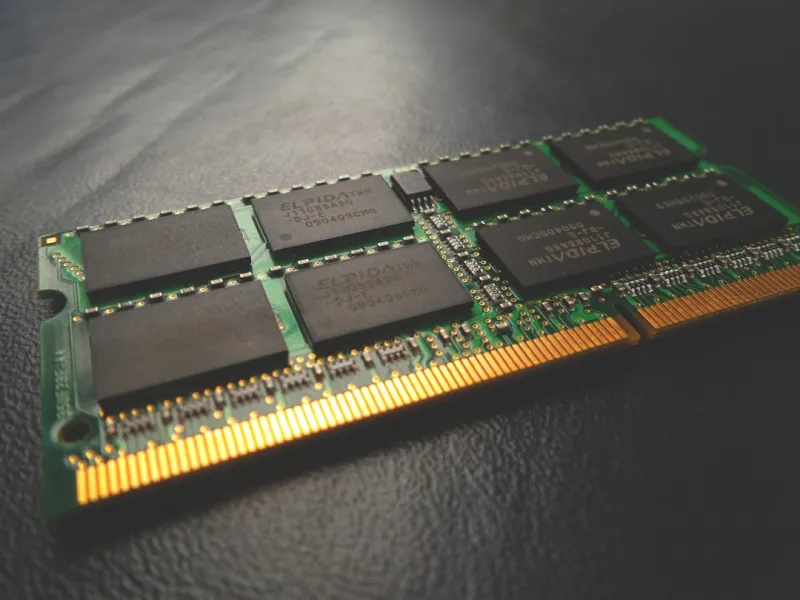
Even in 2026, the simplest physical actions often solve the most vexing memory problems. Dust accumulation on the DIMM slots can create intermittent connections, especially in environments with heavy airflow from high‑end cooling solutions. Use a can of compressed air to blow out any debris, then gently wipe the gold contacts on each module with a lint‑free cloth lightly dampened with isopropyl alcohol. When reseating, align the notch precisely and apply even pressure until the clips click into place—avoid forcing the sticks, which can bend the pins. If you’re using a motherboard with a dual‑channel configuration, always install modules in the correct paired slots as indicated in the manual; mismatched channel placement can degrade performance and cause timing errors. After reseating, power the system and run a quick memory test to verify that the contacts are solid.
Advanced Testing with MemTest86+: Interpreting Results Like a Pro
For the most thorough validation, I rely on MemTest86+, a bootable utility that runs a suite of 13 distinct tests designed to uncover even the rarest memory faults. In 2026, the latest version includes AI‑aware stress patterns that mimic the memory access patterns of modern neural networks, making it ideal for AI‑centric builds. Boot from a USB drive, select the “Full Test” option, and let it run for at least 12 hours—longer if you have the luxury of time. Pay close attention to any “Pass” failures; a single error on a specific address often points to a defective cell on that stick. If errors appear across multiple sticks, the issue may lie in the motherboard’s memory controller or power delivery circuitry. Document the exact test number and address, then cross‑reference with the RAM manufacturer’s error‑code guide to decide whether a warranty claim is warranted.
Future‑Proofing Your Memory: Prevention, Monitoring, and the Road Ahead
Memory problems can be disruptive, but with proactive monitoring and a few best practices, you can stay ahead of the curve. Modern AI‑ready operating systems now include built‑in telemetry dashboards that track memory latency, error correction events, and usage spikes in real time. Enable these dashboards and set alerts for any abnormal patterns. Regularly schedule a quick MemTest86+ run during off‑hours—once a month is a good cadence for high‑performance workstations. When upgrading, prioritize modules that support XMP 3.0 and have a clear firmware update path, as this ensures long‑term compatibility with future BIOS releases. Finally, stay informed by reading the latest tech updates; the article Critical 2026 Tech Updates Every Pro Should Know is a great resource for keeping your knowledge current. By combining diligent monitoring, timely firmware updates, and a disciplined testing routine, you’ll keep your 2026 PC running smooth, stable, and ready for the next wave of AI breakthroughs.