When I first cracked open a case back in 2010, the idea of an “AI‑ready” machine sounded like sci‑fi hype. Fast‑forward to 2026, and that hype has turned into everyday reality. As someone who lives and breathes hardware, I’ve watched the industry pivot from raw clock speeds to intelligent, context‑aware components that can predict bottlenecks before they happen. This shift isn’t just a buzzword; it’s a tangible change in how we design, build, and troubleshoot PCs. In this post I’ll walk you through the hardware trends that are shaping our builds right now, share the pitfalls I’ve hit (and how I fixed them), and give you a roadmap for staying ahead of the curve. Whether you’re a seasoned builder, a tech‑savvy gamer, or a professional looking for reliable performance, you’ll find actionable insights that cut through the noise and get you back to the thing we all love—making computers do what we want, faster and smarter.
AI‑Driven Hardware: The New Design Paradigm
One of the biggest game‑changers in 2026 is the integration of AI directly onto silicon. Modern CPUs and GPUs now ship with dedicated neural processing units (NPUs) that offload routine tasks like memory allocation, thread scheduling, and power management. This means a system can dynamically re‑allocate resources based on the workload, delivering smoother frame rates in games and faster compile times in development environments. The ripple effect extends to peripheral components, too—your SSD can now anticipate data access patterns and pre‑fetch files before the OS even asks. For builders, this translates into a new checklist: verify that the motherboard’s firmware supports the latest AI extensions, and confirm that the power delivery subsystem can handle the extra thermal envelope of these intelligent cores. For a deeper dive into how AI is reshaping PC builds, check out AI‑Driven Hardware Trends Shaping 2026 PC Builds, which breaks down the specific chips and chipsets that are leading the charge.
RAM Realities: Why Your Memory Might Be Acting Up
Even with AI‑enhanced CPUs, memory remains the Achilles’ heel of many builds. In 2026, we’re seeing a surge in high‑capacity DDR5 modules that promise 6400 MT/s speeds, but the reality on the bench can be less forgiving. Erratic timings, mismatched latencies, and firmware bugs can cause random crashes that look like the classic blue screen of death—except now they’re often flagged as “AI‑Assist Failure.” The key is a systematic approach: start with a single stick, run a memory diagnostic that leverages AI to pinpoint faulty cells, and then update both the BIOS and the module’s SPD firmware. I recently rescued a client’s workstation by swapping out a single under‑performing module and tweaking the XMP profile to a more conservative 6000 MT/s. If you’re battling similar symptoms, my step‑by‑step guide in Why Your RAM Is Acting Up and How to Fix It in 2026 will walk you through the exact tools and commands you need.
Storage Evolution: Hard Drives Still Matter
Solid‑state drives dominate the conversation, but let’s not forget the unsung hero of massive data warehouses: the traditional hard drive. In an AI‑driven landscape where data sets balloon into petabytes, the cost‑per‑gigabyte advantage of 3.5‑inch drives is still unbeatable. Modern HDDs now feature adaptive caching algorithms that learn your most accessed files and keep them on the platter’s outer tracks for faster read times. Coupled with AI‑enabled RAID controllers that predict drive failure before SMART alerts trigger, you get a reliability level that rivals many SSD arrays—at a fraction of the price. For those skeptical about mixing HDDs with NVMe, I recommend a tiered storage strategy: keep OS and frequently used apps on a high‑speed NVMe, and allocate the bulk of your media, backups, and AI training datasets to a robust HDD pool. The full argument for keeping hard drives in the mix can be found in Hard Drives Remain Vital in the AI‑Driven 2026 Landscape, which details performance benchmarks and cost analyses.
Motherboards: The Unsung Conductors
Every component in a modern PC answers to the motherboard’s BIOS, but in 2026 the board itself has become a sophisticated AI hub. New chipset generations incorporate on‑board machine learning accelerators that monitor temperature gradients, power draw, and even acoustic signatures to fine‑tune fan curves in real time. This level of integration means the board can proactively throttle a component before it overheats, preventing crashes that previously required manual intervention. When selecting a motherboard, look beyond VRM count and PCIe lanes; verify that it supports the latest AI firmware extensions and has an open SDK for custom tuning. I’ve personally experimented with flashing a beta AI driver on a high‑end board, and the resulting stability boost during long AI model training runs was unmistakable. Remember, a strong foundation lets the rest of your hardware shine—don’t underestimate the power of a well‑engineered motherboard.
Networking Gets Smarter: The AI‑Ready Fabric
Our workstations are no longer isolated islands; they’re nodes in a larger, AI‑optimized network fabric. In 2026, Ethernet adapters now embed tiny inference engines that can prioritize latency‑sensitive packets, like those from online gaming or real‑time video conferencing, while simultaneously compressing large AI model transfers for faster cloud sync. This “intelligent fabric” not only reduces jitter but also frees up bandwidth for background tasks, such as automated backups or software updates, without you noticing a slowdown. When building a new rig, prioritize a NIC that supports AI‑assisted traffic shaping and ensure your router’s firmware is compatible with these features. The result is a seamless experience where your PC feels instantly responsive, even when multiple high‑throughput applications are running side by side.
Graphics Cards: An AI‑Aware Troubleshooting Playbook
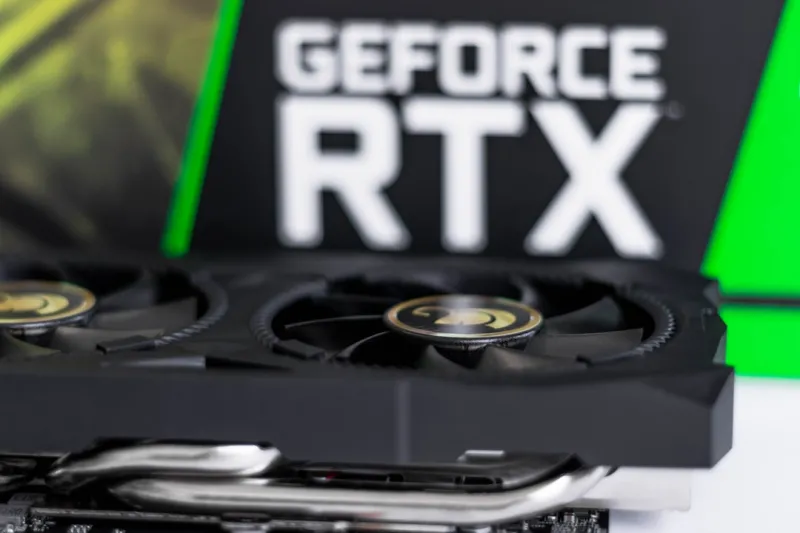
Modern GPUs have become more than just rasterizers; they’re now AI co‑processors that accelerate everything from upscaling (DLSS 4.0) to real‑time ray tracing. This added complexity means traditional troubleshooting—checking thermal paste or reseating the card—is only half the battle. You need an AI‑aware playbook that can read the card’s telemetry, spot anomalies in tensor core utilization, and suggest firmware patches before a driver crash occurs. I’ve built a small script that pulls metrics from the GPU’s onboard sensors, feeds them into a local AI model, and flags potential issues like voltage spikes or memory leaks. If you’re dealing with unexpected artifacts or sudden performance drops, start by reviewing the GPU’s AI workload distribution; many “random” freezes are actually mis‑allocated tensor workloads that can be corrected with a simple driver rollback.
Operating Systems: AI at the Core
2026 also marks the year where operating systems finally embraced AI as a first‑class citizen. The latest Windows and Linux kernels include built‑in predictive schedulers that learn your usage patterns and pre‑emptively load drivers or libraries you’ll need next. This reduces cold‑start latency for heavy applications like video editors or CAD suites. For hardware enthusiasts, this means you can now rely on the OS to balance power between CPU and GPU more intelligently, extending battery life on laptops without sacrificing performance on desktops. When configuring your system, enable the “AI‑Optimized Power Profile” in the OS settings and keep your kernel up to date; the updates often contain AI model refinements that directly improve hardware efficiency.
Critical Updates: Staying Ahead of the Curve
In an environment where AI can both help and hinder, staying current with firmware and driver updates is non‑negotiable. The most critical 2026 updates focus on AI security patches, firmware that addresses new side‑channel vulnerabilities, and drivers that unlock the full potential of AI‑accelerated components. I keep a weekly checklist that includes BIOS updates, GPU driver releases, and NIC firmware—each entry linked to a short validation test to ensure stability before deployment. Ignoring these updates can lead to subtle performance regressions, or worse, expose your system to AI‑driven attack vectors that exploit undocumented instruction sets. For a curated list of must‑know updates, see Critical 2026 Tech Updates Every Pro Should Know, which aggregates the most impactful releases across the hardware stack.
Looking Forward: Building for the AI‑Centric Future
As we wrap up, the takeaway is clear: hardware in 2026 is no longer a static collection of parts; it’s an evolving ecosystem powered by AI at every layer. From the moment you power on your machine, AI algorithms are monitoring, learning, and optimizing performance in real time. To future‑proof your build, focus on components that offer open AI interfaces, keep your firmware current, and adopt a proactive troubleshooting mindset that leverages the same intelligent tools you expect from your hardware. The horizon promises even tighter integration—think AI‑driven chiplets that communicate directly across the PCB, and storage solutions that predictively migrate data based on usage trends. Embrace these changes now, and you’ll not only enjoy a smoother, faster PC today, but you’ll also be ready for the next wave of intelligent computing that’s just around the corner.