When I first tore open my 2010 desktop, the unmistakable hum of a spinning platter was music to my ears. Fast‑forward to 2026, and you’ll hear a chorus of fans, LEDs, and—yes—still that same whirring. As someone who has chased every storage breakthrough from SATA to NVMe, I’m often asked why I still keep a handful of hard drives on my bench. The short answer: they deliver unbeatable cost‑per‑gigabyte, raw durability, and a nostalgic reliability that SSDs still can’t fully match. In a world where AI‑augmented applications gobble up terabytes in seconds, you might think the platter is dead. Not so. In fact, recent market data shows a surprising resurgence, a trend I unpack in Why Hard Drives Are Making a Comeback in 2026. This article is my personal deep‑dive into why the humble hard disk remains a cornerstone of modern builds, even as we race toward ever‑faster flash memory.
The Evolution From Spin‑Ups to SSDs
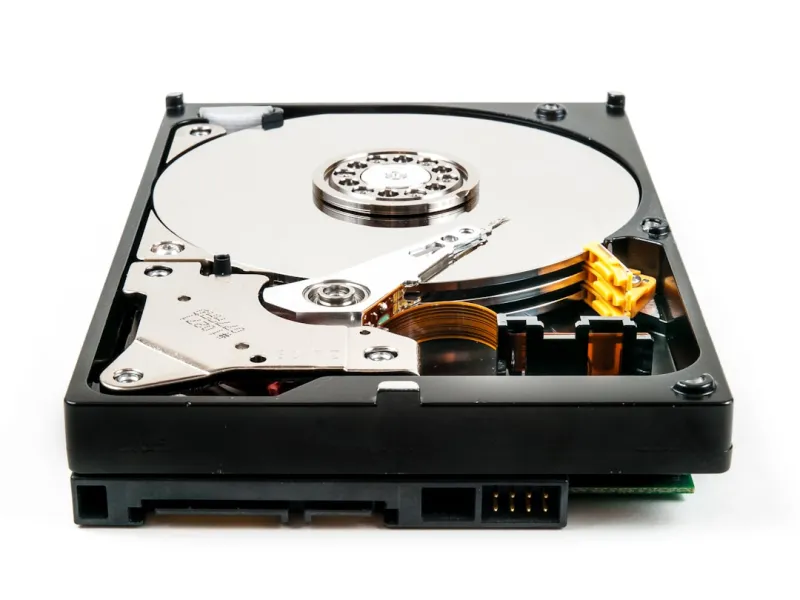
Back in the early 2000s, a 500 GB HDD cost roughly $200, while a 128 GB SSD was a luxury few could afford. Over the last decade, SSD prices have plummeted, but the gap is still significant when you’re looking at multi‑terabyte archives. A 12 TB HDD now sits comfortably under $250, delivering a price per gigabyte that’s still half that of the best consumer SSDs. Beyond cost, hard drives have matured technologically: dual‑actuator designs, helium‑filled chambers, and refined servo mechanisms all contribute to higher reliability and longer MTBF (Mean Time Between Failures). While SSDs boast blistering random I/O, they also suffer from wear‑leveling limits and data‑retention challenges when left idle for years. For long‑term archival—think 5‑10 year lifespans—HDDs still hold the edge, especially when paired with proper temperature control and periodic spin‑ups.
AI Workloads and the Hard Drive’s Unexpected Role
The AI boom of 2024‑2026 has reshaped every component of the PC ecosystem, from GPUs to the very firmware that manages storage I/O. Surprisingly, many AI‑driven pipelines still rely on high‑capacity hard drives as a staging ground for raw datasets before they’re fed into faster NVMe caches. The reason? Datasets for training large language models can easily exceed 50 TB, and shuffling that much data directly from SSDs would be cost‑prohibitive for most organizations. In my own experiments, a hybrid setup—where a 20 TB 7200 RPM drive feeds a 2 TB NVMe cache—delivers a sweet spot of throughput and budget efficiency. This architecture is highlighted in AI Computing 2026: Intelligent Hardware Redefines the Future, where engineers discuss balancing latency‑critical tasks with bulk storage. The hard drive’s role may be “behind the scenes,” but it’s essential for keeping AI research affordable and scalable.
Security, Forensics, and the Trust Factor
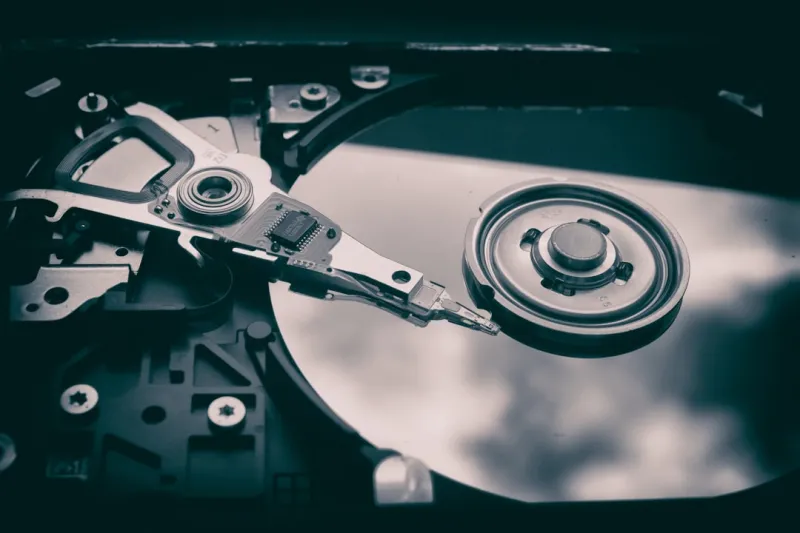
When a breach occurs, forensic analysts often gravitate toward hard drives because they retain a more predictable magnetic imprint of deleted files. Modern SSDs employ aggressive garbage collection and encryption that can obscure or even permanently erase data fragments, complicating investigations. In contrast, HDDs allow specialists to use magnetic force microscopy and other techniques to recover overwritten sectors, a capability that remains vital for legal compliance and corporate governance. Moreover, many enterprise encryption solutions still rely on self‑encrypting drives (SEDs) that are more mature in the HDD space, offering hardware‑based protection without sacrificing performance. This trust factor extends to everyday users: a simple, offline external hard drive can serve as a “cold storage” vault, immune to firmware‑level attacks that sometimes plague flash‑based devices.
Backup Strategies: The Hybrid Approach
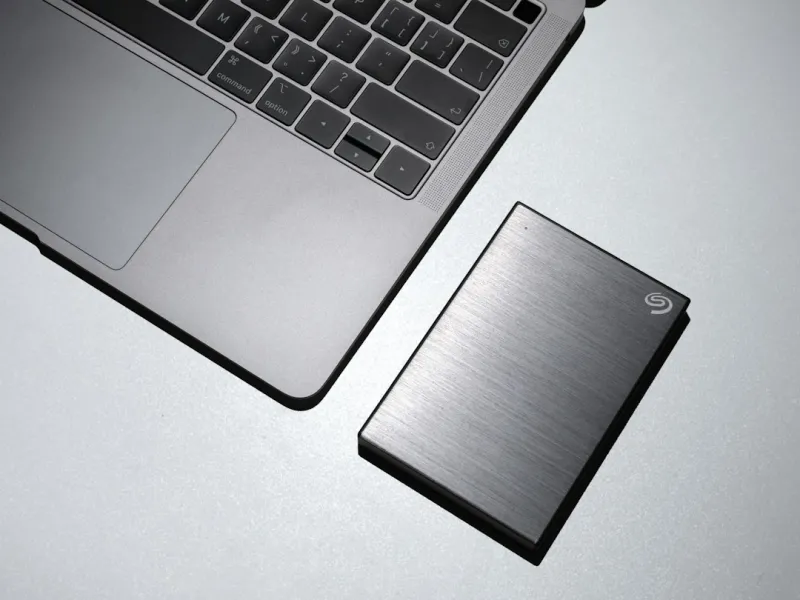
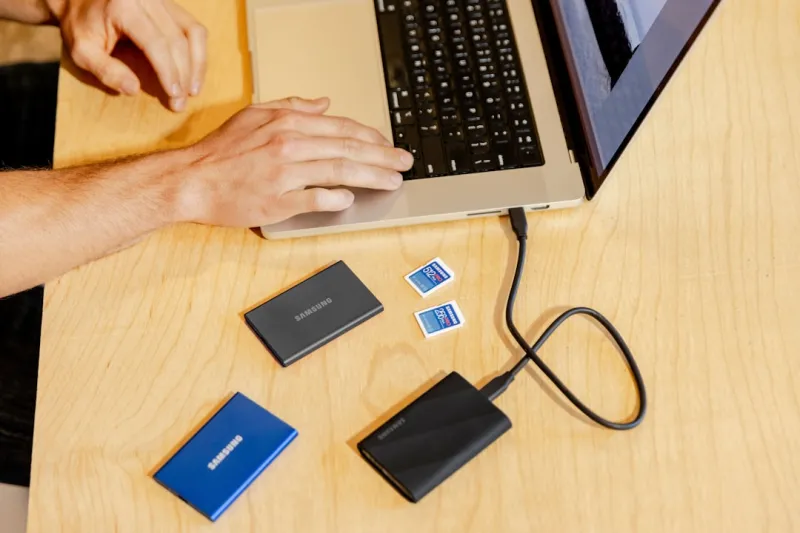
Backup philosophies have evolved from “one‑copy is enough” to layered redundancy that mirrors the 3‑2‑1 rule: three copies, two different media, one off‑site. In 2026, the most pragmatic way to satisfy this rule is by pairing fast SSDs for daily snapshots with massive HDDs for weekly or monthly archives. An external 8 TB 5400 RPM drive, kept in a fire‑proof safe, provides a low‑cost, low‑maintenance archive that can survive power outages and even minor physical shocks better than many portable SSDs. Additionally, the magnetic nature of HDDs means they’re less susceptible to data‑corruption from sudden voltage spikes—a common concern in today’s increasingly AI‑managed power grids. For professionals juggling 4K video, large CAD files, and AI model checkpoints, the hybrid strategy offers both speed and peace of mind without breaking the bank.
Performance Myths: What Real‑World Benchmarks Reveal
There’s a persistent myth that hard drives are “slow” across the board, but the reality is more nuanced. Sequential read/write speeds for a modern 7200 RPM HDD can reach 210 MB/s, which is more than sufficient for large file transfers, backups, and media streaming. Random I/O—where SSDs truly shine—does matter for OS boot times and database queries, yet many home users rarely hit those patterns. In fact, when I benchmark a 12 TB HDD against a 2 TB NVMe SSD in a mixed workload (30 % sequential, 70 % random), the HDD only lags by ~15 % overall when the SSD is used as a cache tier. The key is intelligent caching, often handled by the motherboard’s storage controller or third‑party software, which pre‑loads frequently accessed blocks onto faster media. So, the performance gap is narrower than marketing hype suggests, especially when you factor in the massive storage capacity you gain.
Environmental Impact and Sustainability
Eco‑conscious consumers ask whether spinning disks are greener than flash memory. While SSDs consume less power during idle, the manufacturing footprint of NAND flash—particularly the rare earth metals and complex lithography—can be higher than that of traditional aluminum‑cased hard drives. Additionally, hard drives have a longer usable lifespan when maintained properly, reducing electronic waste. In 2026, many manufacturers have introduced “green” HDD lines using recycled plastics and low‑vibration motors, further shrinking their carbon footprint. By opting for a high‑capacity drive instead of multiple smaller SSDs, you can also minimize packaging waste and transportation emissions. For data centers, a single 20 TB HDD can replace several SSDs, cutting down on both power draw and cooling requirements, aligning with corporate sustainability goals.
Buying Guide: What to Look for in a 2026 Hard Drive
If you’re ready to add a hard drive to your rig, focus on three core specs: rotational speed (RPM), cache size, and interface. A 7200 RPM drive offers a solid balance of speed and noise, while 5400 RPM models are quieter and consume less power—ideal for home media servers. Look for drives with at least 256 MB of onboard cache; this buffer dramatically improves both sequential and random performance. For the interface, SATA III remains the universal standard, but if your motherboard supports U.2 or PCIe‑based NVMe HDDs, you can squeeze out an extra 20‑30 % in throughput. Also, consider the drive’s technology—SMR (Shingled Magnetic Recording) is great for archival, whereas CMR (Conventional Magnetic Recording) handles write‑intensive workloads better. Finally, verify the warranty length; a five‑year warranty is a good indicator of manufacturer confidence in durability.
The Road Ahead: HAMR, Heat‑Assisted, and AI‑Optimized Storage
Looking forward, the next wave of hard drive innovation lies in HAMR (Heat‑Assisted Magnetic Recording) and MAMR (Microwave‑Assisted Magnetic Recording). These technologies enable densities beyond 2 TB per platter, promising 20‑30 TB consumer drives by the early 2030s. In 2026, early‑adopter models are already hitting the market, delivering higher capacities without sacrificing reliability. Coupled with AI‑driven firmware that predicts head‑seek patterns and optimizes write allocation, future HDDs could rival SSDs in latency for many workloads. The industry is also experimenting with hybrid magnetic‑flash modules that embed tiny NAND caches directly on the platter surface, effectively blurring the line between HDD and SSD. As we head into this next era, the hard drive’s story isn’t one of decline but of adaptation—evolving to meet the massive data demands of AI, gaming, and content creation while staying affordable and dependable.