When I first cracked open a brand‑new motherboard back in 2023, the smell of fresh solder and the promise of raw performance felt like pure alchemy. Fast‑forward to 2026, and that alchemy has been infused with artificial intelligence, quantum‑grade interconnects, and a renewed respect for components that were once deemed “legacy.” As someone who has built everything from budget rigs to workstation beasts, I can tell you that the hardware landscape this year is a delicate dance between raw horsepower and smart, self‑optimizing firmware. The excitement isn’t just about faster clocks or denser memory; it’s about systems that anticipate bottlenecks before they happen, that heal themselves, and that talk to each other in a language we’re only beginning to decipher. In this deep dive, I’ll walk you through the trends shaping our builds, the pitfalls that still trip up seasoned techies, and the AI‑driven tools that are turning troubleshooting from a guessing game into a data‑rich science.
The CPU Revolution: AI‑Enhanced Cores Take the Lead
2026’s flagship processors are no longer just about more cores or higher frequencies—they’re about AI‑enhanced cores that dynamically reallocate resources based on the workload in real time. Vendors have embedded neural accelerators directly into the silicon, allowing the CPU to offload pattern‑recognition tasks, from image classification to predictive cache management, without ever touching the main RAM. This shift means that traditional benchmarks are being replaced by AI‑centric performance suites that measure latency in inference, power efficiency during continuous learning, and even how well the processor adapts to new code paths on the fly. For builders, this translates to a new set of considerations: ensuring that your motherboard’s power delivery can handle sudden spikes from AI cores, and selecting cooling solutions that keep both the CPU and its integrated AI engine in the sweet spot. If you’re curious about how operating systems are finally catching up to this hardware leap, check out AI‑Powered Operating Systems in 2026: How the Core Finally Got Its Mojo for a deep dive into the software side of the equation.
Graphics Cards: From Raw Rasterization to Intelligent Rendering
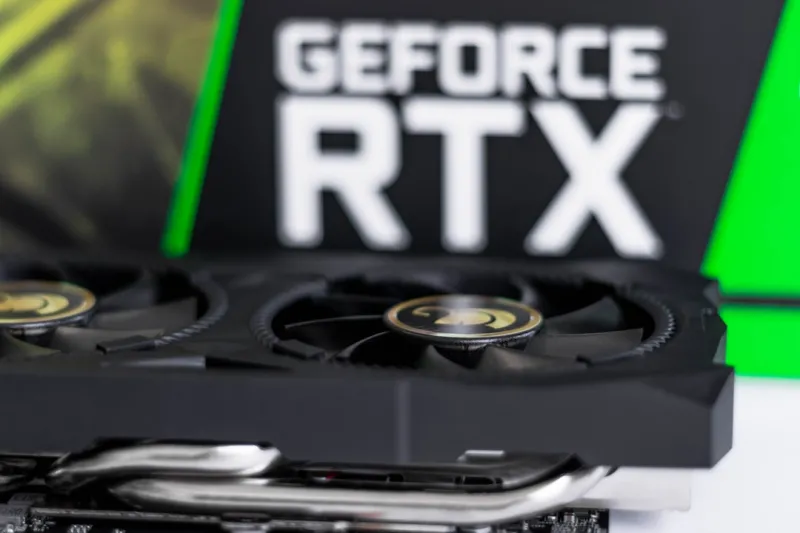
The GPU market in 2026 is dominated by cards that blend traditional raster pipelines with dedicated tensor cores optimized for real‑time ray tracing and generative AI. These “next‑gen GPUs” can synthesize textures on the fly, reducing the need for massive texture caches and slashing VRAM requirements for certain workloads. However, that intelligence comes with new failure modes: firmware mismatches, AI driver regressions, and even heat‑induced memory errors that were rare a few years ago. The days of simply swapping out a fan are over; modern troubleshooting demands an AI‑aware playbook that can parse error logs, predict the failing component, and even push a corrective micro‑code update without a reboot. For a step‑by‑step guide on navigating these complexities, I recommend reading Why Modern Video Card Troubleshooting Demands an AI‑Aware Playbook, which walks you through the diagnostic flow that most seasoned technicians now follow.
Memory Management in an AI‑Heavy World
With AI workloads constantly pulling and pushing data across the memory hierarchy, RAM manufacturers have introduced modules that feature built‑in error‑correction and predictive refresh cycles. These “smart DIMMs” can anticipate when a particular address is likely to be accessed and pre‑charge it, shaving microseconds off latency. But the flip side is that misconfigurations or firmware bugs can cause the RAM to behave erratically, leading to random crashes or subtle data corruption—issues that are notoriously hard to reproduce. In my own build logs, I’ve seen a single mis‑timed CL setting trigger a cascade of system freezes that only manifested under heavy AI inference loads. If you’re wrestling with memory that seems to have a mind of its own, the article Why Your RAM Is Acting Up and How to Fix It in 2026 offers a clear checklist, from BIOS tweaks to firmware updates, that can restore stability without sacrificing performance.
Storage: The Resurgence of Hard Drives Amidst SSD Dominance
It would be easy to write off spinning disks as relics, but 2026 has seen a surprising renaissance for hard drives, especially in AI‑driven data centers where massive, low‑cost storage pools are still essential. Modern HDDs now incorporate AI‑assisted read/write heads that adjust micro‑positioning in real time, dramatically improving sequential throughput and reducing latency spikes. Moreover, hybrid solutions that pair NVMe SSDs for hot data with high‑capacity HDDs for archival workloads are becoming the norm for both enterprise and enthusiast rigs. This hybrid approach not only balances cost and performance but also extends the lifespan of SSDs by off‑loading write‑heavy AI training datasets to the drives best suited for it. For a deeper look at why hard drives remain vital in the AI‑driven 2026 landscape, see Hard Drives Remain Vital in the AI‑Driven 2026 Landscape.
Motherboards and Networking: The AI‑Ready Backbone
The unsung heroes of any high‑performance build are still the motherboard and its networking suite. In 2026, chipsets are now equipped with on‑board AI co‑processors that handle traffic shaping, intrusion detection, and even predictive latency mitigation for online gaming and real‑time collaboration tools. These AI‑ready networks can re‑route packets before congestion occurs, delivering smoother streams and lower ping spikes. However, this sophistication requires careful BIOS configuration and driver alignment; a mismatched AI firmware version can cause the entire network stack to stall. To ensure you’re leveraging these capabilities, I’ve been following the guidelines laid out in Why 2026 Networking Is Finally AI‑Ready, which details the necessary updates, testing procedures, and security considerations for modern AI‑enabled Ethernet and Wi‑Fi modules.
Security in an AI‑Powered Environment
As hardware becomes smarter, the attack surface expands. Self‑learning malware now targets the very AI cores that boost performance, attempting to hijack predictive algorithms to create backdoors or exfiltrate data. The industry’s response has been a wave of AI‑powered threat detection solutions that operate at the firmware level, monitoring anomalous instruction patterns and isolating compromised modules before they can cause damage. For system builders, this means integrating trusted platform modules (TPMs) that support AI‑based attestation, as well as staying current with vendor‑issued micro‑code patches that address emergent threats. A comprehensive overview of the current threat landscape can be found in AI‑Powered Threats in 2026: How to Stay Secure in the Age of Self‑Learning Malware, which outlines practical steps you can take right now to harden your rig against the next generation of attacks.
Looking Ahead: Building for a Smarter Tomorrow
So, what does all this mean for the everyday builder in 2026? It means that every component you choose—from the CPU’s AI cores to the HDD’s predictive heads—must be evaluated not just on raw specs but on how well it integrates into an intelligent ecosystem. Embrace firmware updates as a regular maintenance ritual, invest in monitoring tools that leverage AI for diagnostics, and don’t overlook the humble components like capacitors and VRMs that still dictate overall system stability. As we continue to blur the line between hardware and software intelligence, the most rewarding builds will be those that treat each part as a collaborative partner rather than a standalone brick. Keep an eye on emerging standards, stay curious, and remember that the best performance gains often come from the smallest, smartest tweaks.