When I first cracked open a motherboard back in the early 2010s, the board was a fairly static canvas—just a few DIMM slots, a lone PCIe x16, and a handful of SATA connectors. Fast‑forward to 2026, and the motherboard has become a living, breathing hub that not only powers a machine but also orchestrates AI workloads, high‑speed networking, and ironclad security. My experience as a longtime builder and tinkerer has taught me that the board you choose is the single most influential decision you’ll make when assembling a future‑ready PC. It’s no longer just a passive substrate; it’s the command center where silicon, firmware, and software converge. In this post, I’ll walk you through the most critical trends reshaping motherboards today, explain why those trends matter for both enthusiasts and professionals, and share practical tips for picking a board that won’t feel obsolete before you’ve even finished your first benchmark run.
The Evolutionary Pulse of Modern Motherboards
One of the most transformative changes this year is the integration of AI‑centric chipsets. Vendors are no longer content with simply supporting a faster CPU; they’re embedding dedicated tensor cores, on‑board inference accelerators, and intelligent power‑gating mechanisms directly into the motherboard’s southbridge. This shift mirrors the insights I explored in why AI computing demands a whole‑new approach, where the need for low‑latency data paths and high‑throughput memory access became undeniable. Modern boards now feature ultra‑wide memory channels, dual‑channel DDR5‑5600+ support, and even LPDDR5 memory pools for rapid AI cache. The result is a system that can offload neural network inference to the motherboard itself, freeing the CPU for other tasks and slashing overall latency. If you’re planning to run AI‑enhanced workloads—whether it’s generative art, real‑time video analytics, or edge AI—you’ll want a board that treats AI as a first‑class citizen rather than an afterthought.
Power delivery has become an art form in its own right. The typical enthusiast board now boasts 18‑plus phases of VRM, with gallium nitride (GaN) switches replacing traditional MOSFETs on the highest‑end models. This change isn’t just about bragging rights; GaN’s superior efficiency translates to lower heat, quieter cooling, and more headroom for overclocking CPUs that push 5 GHz and beyond. In 2026, power budgets are no longer measured in watts alone but in terms of dynamic scaling—how quickly the board can respond to sudden spikes when a GPU launches a massive AI inference job or when a CPU cores out‑clocks for a burst of performance. Look for boards that advertise adaptive VRM phases, digital power‑control loops, and extensive monitoring via the BIOS. These features give you granular control over voltage curves, allowing you to fine‑tune performance while keeping thermal envelopes in check—a critical factor when you’re stacking high‑end components in a compact chassis.
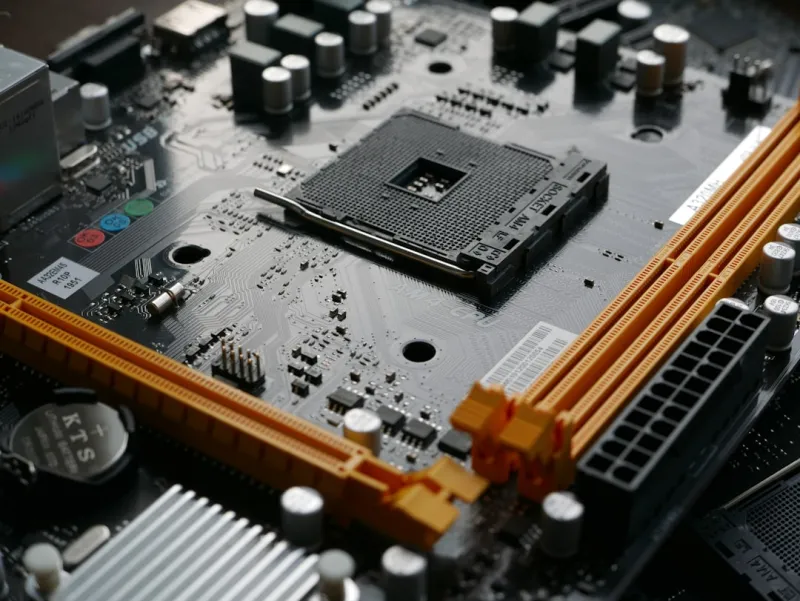
Form factor diversity has exploded, driven by the need to balance performance, expandability, and space constraints. While the classic ATX remains the workhorse for most builds, we’re seeing a resurgence of the E‑ATX form factor for workstation‑class platforms that demand multiple GPU slots, extra M.2 drives, and robust power phases. On the opposite end, mini‑ITX boards have shed their “budget” image; today’s premium mini‑ITX offerings pack full‑size VRM arrays, Wi‑Fi 7, and even 2.5 GbE LAN, making them viable for high‑performance portable rigs. The sweet spot for many enthusiasts in 2026 is the micro‑ATX board, which provides a balanced mix of expansion slots and compact dimensions. When choosing a form factor, consider your case size, cooling solution, and the number of PCIe lanes you’ll actually use—don’t overpay for an E‑ATX board if you’re only planning a single GPU and a couple of storage devices.
Power, Connectivity, and Security in 2026
Connectivity has taken a quantum leap forward, with PCIe 5.1 now standard on most high‑end boards, delivering up to 64 GT/s per lane. This bandwidth is essential not only for the latest GPUs but also for next‑gen NVMe SSDs that can sustain sequential reads above 10 GB/s. In addition, many motherboards now ship with multiple PCIe 5.0 M.2 slots, enabling a “storage‑first” architecture where the system’s primary data lake resides on ultra‑fast NVMe drives. USB4 has become ubiquitous, consolidating data, video, and power delivery into a single Type‑C port, while Thunderbolt 4 remains for legacy high‑speed peripherals. On the networking front, Wi‑Fi 7 and 10 GbE Ethernet are no longer niche; they’re essential for low‑latency, high‑throughput connections in AI‑driven workflows and cloud‑edge hybrid models. If you want to stay ahead of the curve, prioritize boards that pair these connectivity options with robust BIOS support for fine‑tuning link speeds and power management.
Security is no longer a checkbox; it’s a foundational design principle baked into the motherboard’s silicon. Modern boards come equipped with TPM 2.2 modules, hardware‑rooted Secure Boot, and dedicated cryptographic accelerators that offload encryption tasks from the CPU. This hardware‑level security is crucial for protecting AI models and sensitive data, especially when you’re dealing with edge devices that process personal information locally. The rise of AI‑driven malware, as discussed in how AI‑driven malware is redefining cyber defense, underscores the importance of a board that can enforce strict isolation between trusted and untrusted workloads. Look for motherboards that support firmware integrity verification, have BIOS passwords, and provide a clear pathway for firmware updates—these features collectively form a strong defensive perimeter against both software and hardware attacks.
Firmware and BIOS have evolved from static, menu‑driven interfaces into dynamic, AI‑assisted ecosystems. Modern UEFI implementations now incorporate machine‑learning algorithms that analyze your hardware configuration and suggest optimal memory timings, voltage curves, and fan profiles on the fly. This intelligent tuning reduces the barrier to entry for novice builders while still offering deep customization for seasoned overclockers. Additionally, the integration with software development pipelines, highlighted in the next wave of software development, means that firmware can be updated seamlessly via cloud services, ensuring you always have the latest security patches without manual flashing. When evaluating a board, check for features like BIOS flashback, dual‑BIOS redundancy, and support for remote firmware updates—these will keep your system resilient and future‑proof.
Building a Future‑Ready System with the Right Board
Choosing the right motherboard is about more than raw specs; it’s about constructing a balanced system that can grow with you. In my recent deep‑dive on beyond benchmarks: building a balanced, future‑ready PC, I emphasized the importance of harmony between CPU, GPU, storage, and the board’s capabilities. A board overloaded with features you’ll never use—like excessive M.2 slots or extra PCIe lanes—can waste money and complicate cable management. Conversely, a board that lacks sufficient VRM phases or connectivity will bottleneck even the most powerful components. My recommendation is to start by defining your primary use case—gaming, AI research, content creation, or a hybrid—and then match the motherboard’s feature set to those needs. Ensure you have adequate RAM slots for future upgrades, enough PCIe lanes for multi‑GPU or accelerator cards, and robust cooling solutions to keep the VRM temperatures in the sweet spot.
Finally, look ahead at the ecosystem surrounding the motherboard. Vendor support, community forums, and BIOS update cadence can make or break your long‑term experience. Boards from manufacturers with active developer communities tend to receive frequent micro‑code updates, which are essential for maintaining compatibility with new CPUs, GPUs, and security standards. Moreover, many enthusiast boards now ship with companion software that provides real‑time telemetry, fan curve adjustments, and even AI‑based predictive maintenance alerts. These tools not only simplify day‑to‑day management but also extend the lifespan of your rig by preventing overheating and component wear. In 2026, the smartest builds are those that treat the motherboard as a living platform—one that you can continuously tune, secure, and expand as technology races forward.