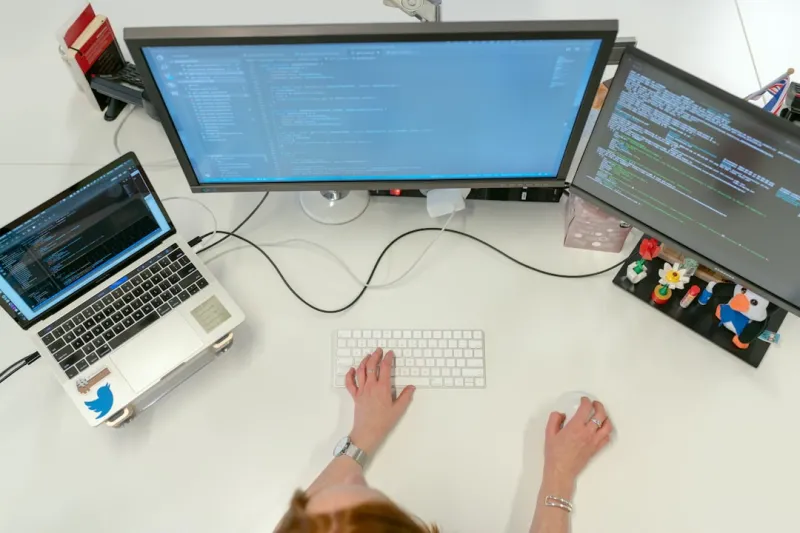
When I first started tinkering with custom rigs back in the early 2020s, my security mindset was simple: install a reputable antivirus, keep Windows updated, and call it a day. Fast forward to 2026, and that checklist feels archaic—like trying to lock a front door with a paperclip. The rise of AI‑driven threats, supply‑chain compromises, and firmware‑level exploits means power users can no longer rely on legacy defenses. In my experience, the most resilient setups blend hardware hardening, zero‑trust networking, and behavioral analytics that adapt in real time. This shift isn’t just for the IT crowd; it’s a necessity for anyone who builds a workstation that runs critical workloads, from AI model training to high‑stakes financial simulations. By treating security as a dynamic, layered architecture rather than a static product, we empower our rigs to stay ahead of the curve and keep our data, code, and creativity safe.
Redefining the Threat Landscape with AI
Artificial intelligence has become a double‑edged sword in 2026. On one side, it powers the next generation of productivity tools, but on the other, threat actors are weaponizing generative models to craft polymorphic malware that morphs faster than any signature‑based solution can catch. I’ve watched a single AI‑crafted trojan infiltrate a corporate network in minutes, leveraging legitimate system processes to remain invisible. The key takeaway? Traditional “detect‑and‑quarantine” tactics are obsolete. Instead, we need to adopt behavior‑centric monitoring that watches for anomalous patterns—like unexpected GPU utilization spikes or irregular network handshakes—across the entire stack. By integrating AI‑enhanced anomaly detection into the OS and firmware layers, we create a living shield that learns and evolves, turning the attacker’s own technology against them.
Hardware‑First Hardening
One of the most underrated defenses is securing the hardware itself. Modern CPUs now ship with built‑in mitigations for speculative execution attacks, but manufacturers often leave these features disabled by default to preserve performance. I always enable Intel’s PTES and AMD’s SEV extensions as soon as the BIOS is flashed. Additionally, leveraging a TPM 2.0 chip for full‑disk encryption and secure boot ensures that only trusted firmware can launch. For power users, the Guarding Your Rig: Advanced Security Strategies for Power Users guide walks through setting up measured boot and attestation pipelines that lock down the boot process from the silicon up. Pair this with a dedicated management controller that monitors temperature, voltage, and even firmware integrity in real time, and you have a hardware posture that can survive even the most sophisticated firmware exploits.
Zero‑Trust Networking in the Home Lab
Zero‑trust isn’t just a buzzword for enterprises; it’s a practical framework for any home lab or remote workstation. In 2026, the default assumption is that every device on the network could be compromised, so we enforce strict identity verification and least‑privilege access. I segment my network into VLANs: one for IoT devices, another for development rigs, and a third for media streaming. Each segment talks through a firewall that validates mutual TLS certificates before allowing any traffic. This architecture dramatically reduces the blast radius of a compromised machine. Moreover, leveraging software‑defined networking tools lets me dynamically adjust policies as new devices join or leave. The result is a resilient environment where even a rogue USB drive can’t pivot laterally without triggering alerts.
Beyond Antivirus: A Modern Blueprint
Antivirus software still has a role, but it’s now a small piece of a broader security mosaic. The Beyond Antivirus: The Power‑User’s Blueprint for Modern Computer Security article outlines a five‑layered approach: hardware integrity, OS hardening, application sandboxing, network segmentation, and continuous monitoring. I personally deploy containers for risky applications—like web browsers and email clients—so they run in isolated environments with restricted filesystem access. Coupled with endpoint detection and response (EDR) tools that feed telemetry into a SIEM, I can trace suspicious activity back to its source within minutes. This proactive stance shifts the focus from reacting to infections to preventing them outright.
Secure Software Development Practices
Power users often double as developers, and that dual role demands a secure development lifecycle (SDLC). In 2026, integrated development environments (IDEs) now embed static analysis engines that flag vulnerable code patterns before they compile. I make it a habit to run dependency‑check tools that scan for known CVEs in open‑source libraries, especially those pulled from fast‑moving ecosystems like npm or PyPI. Additionally, I sign all binaries with a code‑signing certificate stored in the TPM, ensuring downstream users can verify authenticity. By treating security as a first‑class citizen throughout the build, test, and deployment phases, we eliminate many of the attack vectors that attackers exploit in supply‑chain assaults.
Continuous Learning and Community Defense
The security landscape evolves at breakneck speed, and staying ahead requires a commitment to continuous learning. I spend a few hours each week scanning reputable threat intel feeds, participating in Discord security channels, and contributing to open‑source hardening scripts. Community collaboration is a powerful force; when a new ransomware variant surfaces, coordinated disclosures and shared mitigation scripts can protect thousands of rigs overnight. I also run a small “security drill” on my own network quarterly, simulating phishing attacks and lateral movement to test the resilience of my defenses. These exercises not only reveal blind spots but also reinforce good habits, turning theoretical knowledge into practical muscle memory.
Future‑Proofing Your Security Posture
Looking ahead, the next wave of threats will likely blend quantum‑resistant cryptography challenges with deeper AI integration. To future‑proof our rigs, we must adopt flexible architectures that allow quick swapping of cryptographic modules and firmware updates without downtime. Investing in modular hardware—like detachable security co‑processors—enables us to upgrade the trust anchor as standards evolve. On the software side, embracing open‑source security frameworks ensures we aren’t locked into proprietary solutions that may lag behind emerging threats. By building a security ecosystem that is both adaptable and community‑driven, power users can maintain a robust defense posture well into the next decade.
Takeaway: Security as an Ongoing Journey
In the end, the most effective security strategy is not a checklist but a mindset—one that treats every component, from the GPU’s firmware to the Wi‑Fi router’s ACLs, as a potential entry point. By integrating AI‑driven monitoring, hardware hardening, zero‑trust networking, and a disciplined development workflow, we transform our rigs into resilient fortresses capable of weathering today’s threats and tomorrow’s unknowns. Remember, the goal isn’t to achieve perfect security—a myth—but to create layers that make compromise costly, complex, and ultimately unattractive to attackers. Stay curious, stay vigilant, and let your rig be the embodiment of proactive defense.