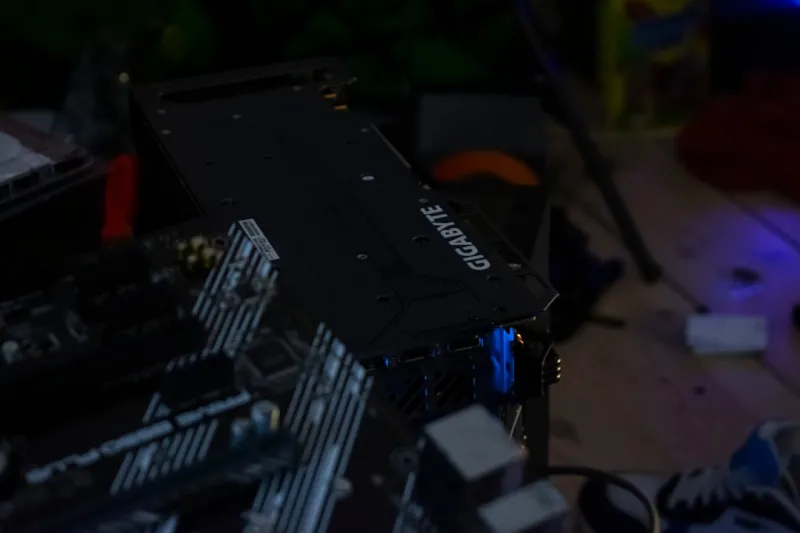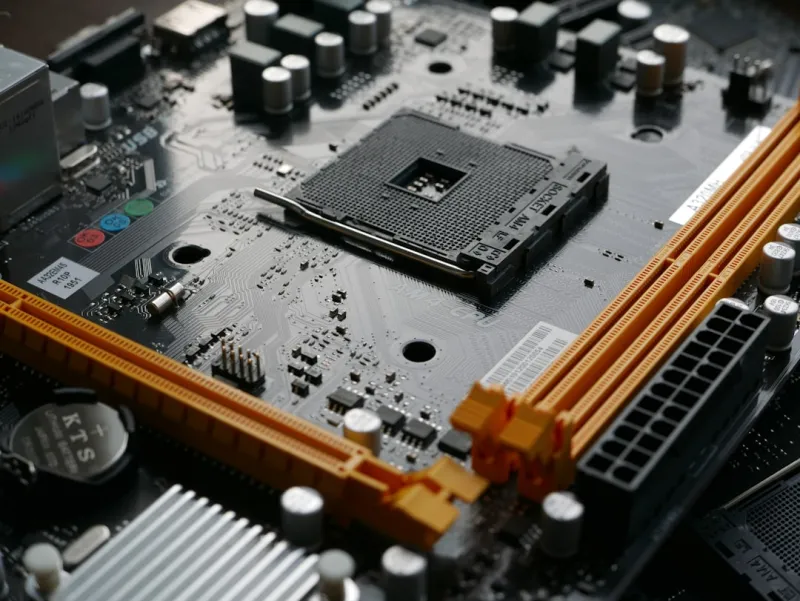
When I first cracked open my 2023 rig, the motherboard felt like the quiet backstage crew—essential, but rarely the star of the show. Fast‑forward to 2026, and that perception has flipped on its head. Modern boards are now the command centers of AI‑enhanced laptops and desktops, integrating smart controllers that can predict thermal spikes, auto‑tune voltage curves, and even allocate workloads between CPU cores before the OS even asks. As a long‑time builder who’s watched the industry evolve from the era of BIOS blinking cursors to today’s sleek firmware dashboards, I’m constantly amazed by how these silicon canvases have become proactive participants in system performance. In this post, I’ll walk you through the most compelling trends reshaping motherboards this year, why they matter for every enthusiast and professional, and how you can future‑proof your next build without breaking the bank.
The Rise of AI‑Powered Circuitry
One of the biggest game‑changers in 2026 is the integration of AI accelerators directly onto the motherboard. These low‑power neural engines sit alongside traditional southbridge chips, constantly monitoring temperature, power draw, and even software usage patterns. By analyzing this data in real time, they can dynamically adjust fan curves, shift power delivery, and pre‑emptively throttle components to avoid thermal throttling—something that used to require third‑party software tweaks. This AI layer also talks to the operating system, feeding it predictive insights that improve boot times and application launch speeds. If you’re curious about the broader impact of AI on hardware, check out this deep dive on AI‑powered motherboards for a technical breakdown of the chips powering these decisions.
Hardware‑Rooted Security Gets a Boost
Security has always been a cornerstone of motherboard design, but 2026 takes it to a new level with hardware‑rooted trust modules that are now mandatory on most consumer boards. These modules embed a tamper‑resistant element that stores cryptographic keys, ensuring that the boot process can verify every firmware component before it runs. Coupled with a dedicated TPM 2.2 chip, the board can enforce secure boot policies even if the OS is compromised. For gamers and content creators alike, this means fewer worries about ransomware sneaking in through a corrupted BIOS update. The synergy between these security modules and the AI controller also enables real‑time anomaly detection, flagging irregular voltage patterns that could signal a hardware‑based attack. As cyber threats grow more sophisticated, having a motherboard that can act as your first line of defense is no longer a luxury—it’s a necessity.
Form Factor Evolution: From ATX to Flex‑Mod
The classic ATX form factor still reigns, but a new “Flex‑Mod” design is gaining traction among builders who crave both size efficiency and expandability. Flex‑Mod boards feature a modular IO zone that can be swapped out for different port configurations—think a compact Mini‑ITX chassis that can suddenly sport a full‑size PCIe slot and multiple M.2 slots without a full‑size board swap. This flexibility is especially valuable for creators who need to pivot between portable workstations and high‑performance rigs. Manufacturers are also experimenting with staggered mounting holes and reinforced PCB layers to reduce flex under heavy GPU loads. The result is a board that can physically survive the stresses of modern high‑power components while offering a customizable connectivity suite that adapts to your workflow. If you want to stay ahead of these shifts, the 2026 tech updates article outlines how these modular trends are influencing the broader ecosystem.
Power Delivery for the Next‑Gen CPUs and GPUs
Power delivery has become an art form, with 2026 boards sporting up to 20+ phases of VRM, each tuned for sub‑microsecond response times. The new “Smart Phase” architecture uses AI‑driven load balancing to distribute current more evenly across phases, dramatically reducing heat and extending component lifespan. This is crucial for the latest AMD “Zen 5” and Intel “Meteor Lake 2” CPUs that can draw upwards of 250 W under boost, as well as the new RTX 5090 GPUs that push 450 W in a single card. The boards also feature advanced DC‑DC converters that provide clean, ripple‑free power to USB‑C PD ports, enabling 240 W laptop‑style charging from a desktop rig. Combined with high‑efficiency superconductive traces, these power solutions not only improve performance but also lower the overall system noise—a win for anyone who values a quiet workspace.
Connectivity: PCIe 6.0, USB4, and Beyond
Connectivity is where the motherboard truly shines as the hub of modern computing. PCIe 6.0 lanes are now standard on premium boards, offering 64 GT/s per lane and unlocking bandwidth for next‑generation SSDs and AI accelerators. Meanwhile, USB4‑Gen3 ports deliver up to 80 Gbps, making external storage and high‑resolution docking stations practically seamless. Thunderbolt 5 integration brings 120 Gbps data rates, supporting dual‑4K displays at 240 Hz or a single 8K monitor with HDR. For those building a home lab, the inclusion of 10 GbE Ethernet with built‑in SmartSwitch capabilities means you can segment traffic without a separate network appliance. All these interfaces are managed by the onboard AI controller, which can prioritize bandwidth for latency‑critical applications like VR or cloud gaming, ensuring that you never hit a bottleneck during a crucial session.
The New BIOS: AI‑Assisted Firmware
Remember the days of manually flashing BIOS files and hoping you didn’t brick your system? Those days are largely over. The 2026 BIOS, now commonly called “Smart UEFI,” comes with a built‑in AI assistant that can suggest optimal overclock settings, warn you about incompatible hardware, and even roll back to a known‑good firmware version if it detects instability. The interface is fully graphical, supporting touch and voice commands, and it integrates directly with the OS to pull telemetry data for a holistic view of system health. For power users, the advanced mode still offers granular control, but the AI layer provides a safety net that reduces the learning curve for newcomers. If you’ve been hesitant to dive into BIOS tweaking, this evolution makes experimentation both safer and more rewarding.
Real‑World Build: Choosing the Right Board for Your Needs
Let’s walk through a practical scenario. Imagine you’re building a workstation for 3D rendering, video editing, and occasional AI model training. You’ll need a CPU with high core counts, a GPU with ample VRAM, and fast storage. In 2026, the optimal motherboard would be a Flex‑Mod board with at least 12 + 2 VRM phases, PCIe 6.0 x16 slots, and three M.2 2280 slots supporting both NVMe and Optane modules. Look for a board with integrated Wi‑Fi 7 and 10 GbE for fast network transfers, and ensure it has a robust AI controller to manage thermal profiles during long rendering sessions. Pair this with a reliable BIOS that offers AI‑driven tuning, and you’ve got a system that will stay relevant for years. If you’re unsure which board fits these criteria, the Windows 2026 article highlights hardware pairings that maximize OS‑level AI benefits.
Future‑Facing Features: On‑Board Quantum Co‑Processors?
Looking ahead, manufacturers are experimenting with tiny quantum‑co‑processor modules that sit alongside traditional silicon. While still in early adoption, these modules can offload specific cryptographic operations, drastically reducing the time required for secure key generation and verification. Coupled with the board’s AI engine, the quantum element can dynamically decide which tasks benefit most from quantum acceleration, offering a hybrid compute environment. Though not yet mainstream, the roadmap suggests that by the end of the decade, such capabilities could become a standard feature on high‑end motherboards, further blurring the line between conventional and emerging computing paradigms. Keeping an eye on these developments now will help you select a platform that can accommodate future upgrades without a complete redesign.
Final Thoughts: Building with Confidence in 2026
Motherboards have evolved from passive backbones into intelligent, secure, and modular platforms that dictate the performance ceiling of any system. In 2026, the combination of AI‑driven power management, hardware‑rooted security, and next‑gen connectivity means you can build a machine that not only meets today’s demanding workloads but also adapts to tomorrow’s innovations. When choosing your next board, prioritize AI integration, robust VRM design, and modular connectivity to ensure longevity. Remember, the motherboard you select is the foundation of your digital experience—invest wisely, and it will reward you with stability, speed, and the confidence to push the boundaries of what’s possible.