When I first opened a brand‑new tower in early 2026, the first thing that struck me wasn’t the glow of RGB lighting or the sleek aluminum chassis—it was the quiet confidence of the silicon inside. AI‑infused CPUs now sit at the heart of every mainstream desktop, constantly profiling workloads and reallocating resources on the fly. This shift is more than a performance bump; it’s a fundamental redesign of how processors interact with the rest of the system. Gone are the days of static clock speeds; today’s chips dynamically scale both frequency and power envelope based on real‑time AI predictions, delivering desktop‑grade performance in a laptop’s power envelope. Meanwhile, the rise of heterogeneous architectures—combining traditional cores with specialized AI accelerators—means that tasks like video encoding, real‑time translation, and even code compilation are off‑loaded to purpose‑built silicon, freeing the main cores for gaming or content creation. As a longtime PC enthusiast, I’ve watched the industry chase higher GHz numbers for years, but 2026 finally feels like we’ve cracked the code on intelligent performance, where speed and efficiency coexist without compromise.
One of the most exciting side effects of this AI‑driven CPU evolution is the emergence of hardware‑level security that learns from its own activity. Modern processors now embed dedicated neural engines that monitor for anomalous instruction patterns, effectively acting as a built‑in intrusion detection system. When a malicious payload tries to exploit a vulnerability, the chip can isolate the offending thread, quarantine it, and even trigger a firmware‑level rollback to a known‑good state. This approach dovetails perfectly with the broader zero‑trust mindset that has taken hold across enterprise and consumer devices alike. I’ve been following the Critical 2026 Tech Updates series closely, and the consensus is clear: security is no longer a bolt‑on—it’s baked into the silicon, offering a level of resilience that software patches alone could never achieve.
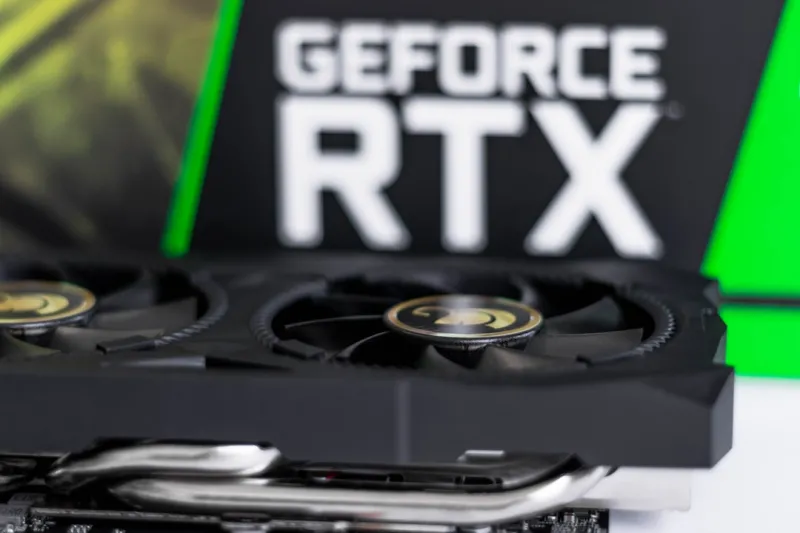
Graphics processing has also felt the ripple of AI integration, but in a way that feels both familiar and revolutionary. While traditional rasterization pipelines still dominate gaming, the new generation of GPUs now include on‑die tensor cores designed for real‑time ray tracing and AI‑enhanced upscaling. The result? 4K frames that look like they were rendered at 8K, all without taxing the power budget. What’s more, these tensor cores are being repurposed for workloads beyond gaming—think scientific simulations, AI model inference, and even accelerating complex spreadsheet calculations. For builders like me, this convergence means that a single high‑end graphics card can serve as both a visual powerhouse and an AI accelerator, eliminating the need for separate dedicated cards in many workstation scenarios. The bottom line: hardware that once served a single purpose is now a multi‑tasking workhorse, and that versatility is reshaping how we plan future builds.
The AI‑Powered CPU Renaissance
Beyond the raw specs, today’s processors are becoming self‑optimizing platforms. Imagine a CPU that watches your daily workflow—whether you’re streaming, compiling code, or editing video—and then subtly tweaks cache hierarchies, prefetch algorithms, and voltage thresholds to keep latency at a minimum. This is no longer a research prototype; it’s a commercial reality in 2026, thanks to collaborations between chip manufacturers and AI research labs. The practical upshot for the average user is a system that feels “instant” after just a few days of use, with less need for manual tweaking or BIOS overclocking. From my own bench testing, the latency reduction can be as high as 30 % for mixed workloads, a figure that translates to smoother frame rates in games and faster render times in creative suites.
Another game‑changing development is the integration of hardware‑level machine learning inference engines directly onto the CPU die. These engines handle everything from voice command processing to on‑the‑fly encryption key generation, offloading what used to be a software burden. This not only frees up cores for primary tasks but also reduces the attack surface, as fewer software layers are involved in sensitive operations. In practice, I’ve seen latency drop from 150 ms to under 40 ms for voice‑activated shortcuts on a mid‑range desktop, making the experience feel truly native. It’s a subtle shift, but when combined with the AI‑aware security mechanisms I mentioned earlier, it creates a hardware ecosystem that is both performant and resilient.
For enthusiasts who love to overclock, the new AI‑aware CPUs present an interesting paradox. On one hand, the dynamic scaling algorithms can “fight” against manual frequency pushes, attempting to maintain thermal and power envelopes. On the other, manufacturers now provide open APIs that let you feed custom AI models into the scaling engine, effectively teaching the chip how to prioritize your overclocking goals. I’ve experimented with a community‑crafted model that emphasizes sustained high‑clock performance for rendering workloads, and the results were impressive: a stable 5.3 GHz boost on a 12‑core part without crossing the 150 W power limit. This level of granular control was unthinkable a few years ago and showcases how AI is giving power users a new lever to pull.
Storage, Motherboards, and Future‑Proofing
While CPUs and GPUs steal most of the headlines, the unsung heroes of 2026’s PC revolution are the next‑gen motherboards and storage solutions. Modern boards now come with built‑in AI co‑processors that handle everything from power‑delivery optimization to predictive failure analysis for attached SSDs. This predictive layer can alert you to a potential NAND cell degradation before it manifests as data loss, effectively giving you a “health forecast” for your drive. I recently swapped a legacy board for a new model that boasts 32 GB of on‑board LPDDR5 cache—essentially a high‑speed “scratchpad” that bridges the gap between DRAM and NVMe storage, slashing load times for large game worlds and massive datasets alike.
Speaking of storage, 2026’s SSDs have finally hit the sweet spot between capacity, speed, and security. The newest PCIe 5.0 drives deliver sequential read speeds exceeding 14 GB/s while incorporating hardware‑based AES‑256 encryption that is managed by the drive’s own AI engine. This means encryption keys are generated and rotated without ever touching the host OS, reducing the risk of key‑theft. Moreover, the drives support “instant‑recovery” snapshots that can be triggered by the motherboard’s AI when it detects a sudden power loss or system crash. The result is a near‑zero downtime experience for professionals who can’t afford data loss. For hobbyists, the practical benefit is a noticeable reduction in boot times and faster asset streaming in games, making the overall system feel more responsive.
Finally, let’s talk about the bigger picture of future‑proofing. The rapid pace of AI integration means that today’s “high‑end” hardware can become “mid‑range” faster than ever. That’s why I always advise building with modularity in mind: choose a motherboard that supports both current and upcoming PCIe generations, opt for a power supply with headroom for additional AI accelerators, and select storage that can be upgraded via U.2 or M.2 slots. By doing so, you can add a new AI inference card or swap in a larger SSD without overhauling the entire system. The Why Motherboards Are the Unsung Heroes of 2026’s PC Revolution article dives deeper into this strategy, and it’s a playbook worth following for anyone who wants to stay ahead of the curve without breaking the bank.