The 2026 Hardware Landscape: A Reality Check
When I first built my rig in the early 2020s, I could have never imagined the sheer complexity of the ecosystem we navigate today. 2026 isn’t just an incremental step; it’s a paradigm shift where AI workloads, quantum‑adjacent processing, and ultra‑high‑speed interconnects coexist on a single motherboard. Consumers demand laptops that can render 8K video, run massive language models, and still last a full workday, while enterprises push for servers that can crunch petaflops without choking on heat. That pressure has forced silicon manufacturers to rethink every block of the stack—from the way transistors are laid out to how power is delivered across the board. In this article I’ll walk you through the trends that are shaping our builds, the hardware that’s finally keeping pace with AI, and the practical steps you can take right now to future‑proof your setup. Buckle up, because the hardware world has become as dynamic as the software it powers.
GPU Powerhouses: From Rasterization to Generative AI
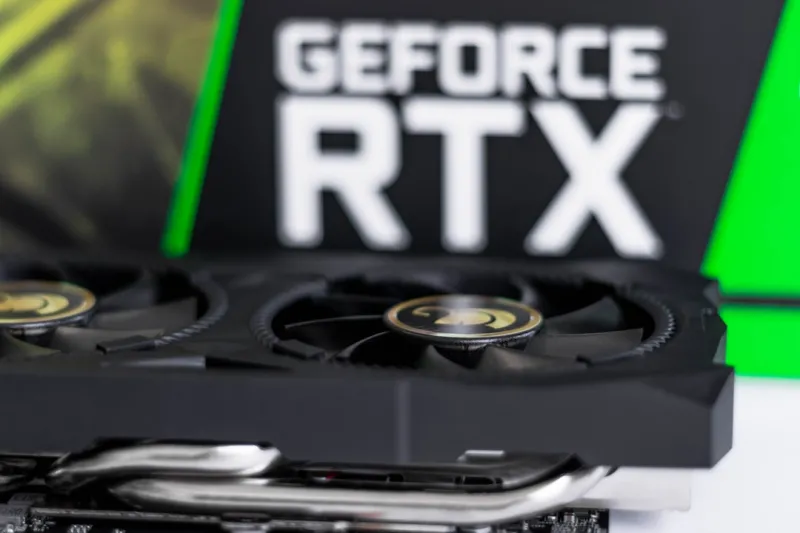
Graphics cards have always been the poster child for performance bragging rights, but in 2026 they’ve evolved into full‑blown AI accelerators. The latest RTX 6000‑series chips integrate dedicated tensor cores that can handle diffusion models and real‑time inference without taxing the main GPU pipeline. This dual‑purpose design means you can game at 4K 144 Hz and then flip a switch to launch a local LLM for code assistance, all without swapping cards. Manufacturers are also embracing chiplet architectures, stitching together multiple smaller dies to bypass the diminishing returns of monolithic GPUs. The result is higher yields, better thermal distribution, and a flexible upgrade path—swap out a compute‑heavy chiplet while keeping the rasterization block intact. For builders like us, this translates to a more modular investment: you can target AI workloads now and still have a solid gaming experience tomorrow. Understanding these nuances is essential before you drop six figures on a single piece of silicon.
CPU Hybrids and the Rise of Heterogeneous Cores
The era of homogeneous cores is officially behind us. Intel’s 13th‑gen “Alder Lake‑X” successors and AMD’s Zen 5+ line both champion a hybrid approach, pairing high‑performance cores with energy‑efficient “efficiency” cores on the same die. In 2026 the scheduler algorithms have become AI‑driven, dynamically allocating tasks to the appropriate core cluster based on workload patterns it learns over time. This results in noticeable gains for multitasking: a heavy video render runs on the P‑cores while background AI assistants sit comfortably on the E‑cores, preserving power and reducing thermal spikes. The key takeaway for builders is to prioritize motherboards with robust power delivery and ample PCIe lanes, because the CPU’s ability to feed data to GPUs, NVMe storage, and AI accelerators now hinges on that bandwidth. Moreover, many of the newer CPUs include integrated AI inference engines, meaning you can offload certain model inferences directly to the processor without a discrete card, shaving latency and power consumption.
Memory Evolution: DDR6, LPDDR6, and the RAM Reliability Factor
Memory has finally caught up with the demands of AI‑centric workloads. DDR6‑3200 modules are now mainstream, offering a 30 % bandwidth boost over DDR5 while keeping latency in check. For laptops, LPDDR6 brings that same performance to a power‑constrained environment, enabling on‑device inference that previously required a desktop‑grade GPU. However, with great speed comes the age‑old reliability headache: higher frequencies stress the memory controller and DIMM traces, leading to occasional instability. That’s why I always recommend pairing high‑speed kits with a motherboard that offers extensive memory training options and, when possible, a modest overclock headroom. If you’ve ever been frustrated by random crashes, you’ll appreciate the detailed guide in our Why Your RAM Is Acting Up and How to Fix It in 2026 article, which walks you through BIOS tweaks, voltage adjustments, and the importance of matching timings across kits. A stable memory foundation is the silent hero behind smooth AI and gaming experiences.
Magnetic Storage: Why Hard Drives Still Matter in an SSD World
Solid‑state drives dominate the performance conversation, but don’t write off the humble hard disk just yet. In 2026, magnetic storage has carved out a niche as the go‑to solution for AI‑heavy datasets that exceed the cost‑effective capacity of SSDs. Modern 20 TB SMR and CMR drives boast improved reliability algorithms, allowing them to serve as tier‑2 storage for training corpora, video archives, and large language model checkpoints. The advantage is twofold: they’re significantly cheaper per gigabyte and they provide a stable, non‑volatile repository that can survive power interruptions without the wear‑leveling concerns of NAND. For builders designing hybrid workstations, pairing a lightning‑fast NVMe boot drive with a multi‑TB HDD array delivers the best of both worlds—instant OS responsiveness and massive, affordable capacity for AI data. Learn more about why magnetic storage remains vital in the AI‑driven landscape in our Hard Drives in 2026: Why Magnetic Storage Still Powers AI‑Heavy PCs deep dive.
AI‑Ready Hardware: The Must‑Have Upgrade for Every Builder
If you’re still debating whether to invest in AI‑ready components, let me be clear: it’s no longer a “nice‑to‑have” but a “must‑have.” The Why AI‑Ready Hardware Is the Must‑Have Upgrade for Every 2026 PC Builder piece outlines how integrated AI accelerators, from Tensor cores on GPUs to dedicated inference chips on motherboards, dramatically reduce latency for real‑time applications like voice assistants, image upscaling, and edge inference. These accelerators often come with software stacks that auto‑optimize workloads, meaning even hobbyist developers can tap into powerful models without writing low‑level code. From a practical standpoint, the ROI appears quickly: AI‑enhanced video editing tools cut render times by half, and local AI chatbots free you from cloud subscription fees. When selecting a build, prioritize platforms that expose PCIe 5.0 lanes, support for Intel’s QuickAssist, and AMD’s Infinity Fabric extensions, ensuring you have the bandwidth to feed these specialized units.
Smart Networking: Intelligent Fabric for Seamless Data Flow
Networking in 2026 finally feels intelligent, not just fast. The emergence of AI‑driven switches and adaptive mesh fabrics means that data packets are now prioritized based on the type of workload—GPU‑bound rendering traffic gets a different QoS tag than bulk storage replication. While many consumer‑grade routers still lag behind enterprise solutions, the new generation of Wi‑6E/7 devices integrates on‑board ML models that learn your typical traffic patterns and pre‑emptively allocate spectrum. This is especially valuable for gamers and creators streaming high‑resolution content while simultaneously training models on the same network. If you’re setting up a home lab, consider a small‑form‑factor AI‑ready switch that can be managed via a unified dashboard, giving you visibility into latency spikes and the ability to apply policies on the fly. The result is a smoother experience across the board, and fewer “why is my download so slow?” moments.
Power Delivery and Cooling: Keeping the Beast Tamed
All that raw performance demands a power delivery system that’s both robust and intelligent. 2026 sees a surge in 1200W‑plus PSUs equipped with digital monitoring chips that communicate directly with the motherboard to adjust voltage curves in real time, optimizing efficiency while protecting against surges. Coupled with liquid‑metal thermal interfaces and hybrid cooling loops that combine liquid and vapor‑phase cooling, builders can now sustain boost clocks on both CPU and GPU for extended periods without hitting thermal throttling. The key is to pair these high‑end solutions with chassis that have optimized airflow paths—think mesh front panels, directional fans, and modular dust filters. For those on a tighter budget, a well‑tuned AIO cooler and a quality 80+ Platinum PSU still provide ample headroom for most AI‑centric workloads, as long as you keep an eye on temperature spikes via software telemetry.
Future‑Proofing: Modularity and Upgradability in a Rapidly Changing Market
One of the biggest lessons I’ve learned over the past decade is that technology moves fast, but your wallet doesn’t. To safeguard your investment, focus on modularity: choose a case that supports E‑ATX and extended GPU lengths, a motherboard with ample PCIe slots, and a power supply with multiple rail configurations. This approach allows you to swap in newer AI accelerators, upgrade to higher‑capacity RAM, or add additional NVMe drives without a full system overhaul. Additionally, keep an eye on the emerging standard of compute modules—small, pluggable cards that house dedicated AI cores, much like a GPU but with a footprint comparable to a M.2 SSD. By designing your build with these forward‑compatible elements, you’ll be prepared for the next wave of AI‑driven hardware without the headache of starting from scratch.
Conclusion: Building for the Now and the Next
In 2026, building a PC is no longer just about raw horsepower; it’s about orchestrating a harmonious ecosystem where AI, graphics, storage, and networking work together seamlessly. By understanding the latest GPU tensor core integrations, embracing hybrid CPU designs, selecting high‑speed yet reliable memory, and leveraging magnetic storage for massive datasets, you create a platform that can handle today’s demanding applications and tomorrow’s breakthroughs. Don’t forget to future‑proof with modular components and AI‑ready hardware, and you’ll find yourself well‑positioned for the inevitable shifts that lie ahead. Whether you’re a creator, a gamer, or a data scientist, the principles outlined here will guide you toward a build that feels both cutting‑edge and resilient—because in the fast‑moving world of computer hardware, staying ahead means building smart, not just fast.