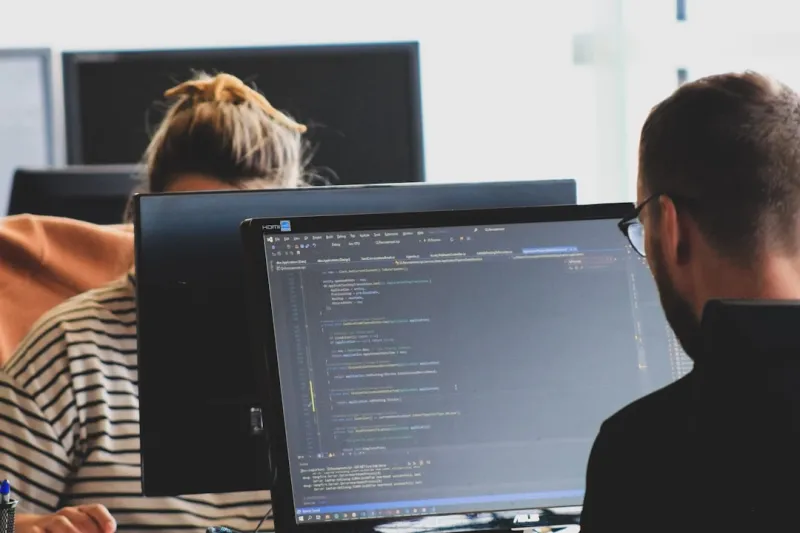
Software development in 2026 feels like stepping onto a moving treadmill that’s gaining speed every sprint. As someone who’s been writing code since the early days of the web, I’ve watched the landscape shift from monolithic applications to micro‑services, then to serverless, and now to an ecosystem where AI is a co‑developer on the team. The biggest surprise? How quickly the tools we once considered experimental have become the default. Today, an IDE can suggest entire functions, predict bugs before they’re introduced, and even refactor legacy code with a single click. This hyper‑automation is reshaping not just how we write code, but how we think about problem‑solving, team dynamics, and the value of human creativity in the software stack.
AI‑Driven Development: From Assistant to Partner
The most palpable change this year is the rise of AI‑driven development platforms that blur the line between developer and machine. These systems analyze billions of lines of open‑source code to recommend patterns that fit your specific context, dramatically cutting the time spent on boilerplate. In practice, I’ve started my day by feeding a high‑level description of a new feature into a model, watching it spin up a scaffold, and then polishing the output with a few manual tweaks. The result is a development loop that feels less like a grind and more like a conversation. For a deeper dive into this shift, check out AI‑Driven Development in 2026: Security, Edge, and the New Coding Paradigm, which outlines the security implications and the new coding paradigm emerging from this collaboration.
Edge Computing Meets Security‑First Design
In 2026, edge computing isn’t just about latency; it’s about embedding security at the very edge of the network. Developers now design services that run on distributed nodes with built‑in encryption, AI‑powered anomaly detection, and zero‑trust verification baked into the runtime. This approach forces us to think about data sovereignty and compliance from day one, rather than retrofitting policies later. The payoff is a dramatically reduced attack surface, as threats are identified and neutralized before they can propagate to central systems. The convergence of AI, edge, and security is thoroughly explored in Critical 2026 Tech Updates: AI, Security, and Hardware That Redefine the Future, which highlights real‑world case studies of edge‑first architectures.
Hardware Evolution Fuels Software Innovation
Software developers have always been at the mercy of the hardware beneath them, but 2026 marks a turning point where hardware is finally catching up to software’s ambitions. GPUs now come with dedicated AI cores that can accelerate model inference locally, while CPUs feature built‑in encryption accelerators that make end‑to‑end security a default rather than an afterthought. This hardware leap has unlocked new possibilities for real‑time data processing and on‑device learning, meaning we can push complex workloads to the edge without compromising performance. To understand how these hardware improvements are reshaping our development choices, read Why 2026 Is the Year Hardware Gets Smarter, Faster, and Safer.
Observability and AI‑Powered Debugging
Traditional logging and static monitoring are giving way to AI‑augmented observability platforms that can predict failures before they manifest. By ingesting telemetry across the entire stack—application metrics, infrastructure health, and user behavior—these platforms generate actionable insights with a level of precision that was unimaginable a few years ago. For developers, this means spending less time chasing obscure bugs and more time delivering value. A typical workflow now includes an AI‑driven root‑cause analysis that correlates a spike in latency with a recent code deployment, suggesting a precise line of code to inspect. The shift has also sparked a cultural change: teams are becoming more proactive, treating observability as a core feature rather than an afterthought.
Zero‑Trust DevSecOps Becomes the Baseline
Security is no longer a gatekeeper at the end of the pipeline; it’s woven into every stage of development through zero‑trust principles. Modern CI/CD tools now enforce identity verification for every artifact, and policy‑as‑code ensures compliance checks run automatically with each merge. This pervasive security mindset reduces the chance of a compromised build slipping into production. The approach is detailed in Zero‑Trust, AI‑Driven, and Hardware‑Hardening: How to Secure Your Digital Life in 2026, which outlines practical steps for integrating zero‑trust into everyday development workflows.
Hybrid Cloud Strategies Powered by AI Compute
While public cloud remains dominant, 2026 has seen a resurgence of hybrid strategies that leverage on‑prem AI accelerators for sensitive workloads. Companies are deploying AI inference engines on their own racks to keep proprietary models close to the data, while still tapping the elasticity of the cloud for training and scaling. This blend offers the best of both worlds: data privacy, reduced egress costs, and the ability to burst into the cloud when demand spikes. The balance hinges on the capabilities described in AI Computing in 2026: How Power, Security, and Edge Are Redefining the Future, which breaks down the performance trade‑offs and security considerations for hybrid deployments.
Talent, Learning, and the Future of the Developer Experience
With the toolchain becoming more intelligent, the skill set required of developers is evolving. Mastery now includes prompting AI models effectively, interpreting AI‑generated suggestions, and understanding the ethical implications of automated code. Learning platforms have responded by offering courses that blend traditional programming fundamentals with AI‑assisted development techniques. Moreover, open‑source communities are rapidly adopting AI‑driven contributions, creating a feedback loop that accelerates innovation. As we look ahead, the developer experience will increasingly center on human‑AI collaboration, where the most successful teams are those that can harness AI’s speed without losing the creative spark that only humans provide.
Closing Thoughts: Embrace the Change, Shape the Future
The software development landscape in 2026 is a vibrant tapestry of AI, edge, security, and hardware breakthroughs—all converging to redefine what’s possible. For developers willing to experiment with AI partners, adopt zero‑trust mindsets, and leverage the new generation of smart hardware, the opportunities are boundless. The key is to stay curious, keep learning, and view each new tool as a teammate rather than a threat. By doing so, we not only keep pace with the rapid evolution but also help steer it toward outcomes that benefit users, businesses, and the broader tech ecosystem.