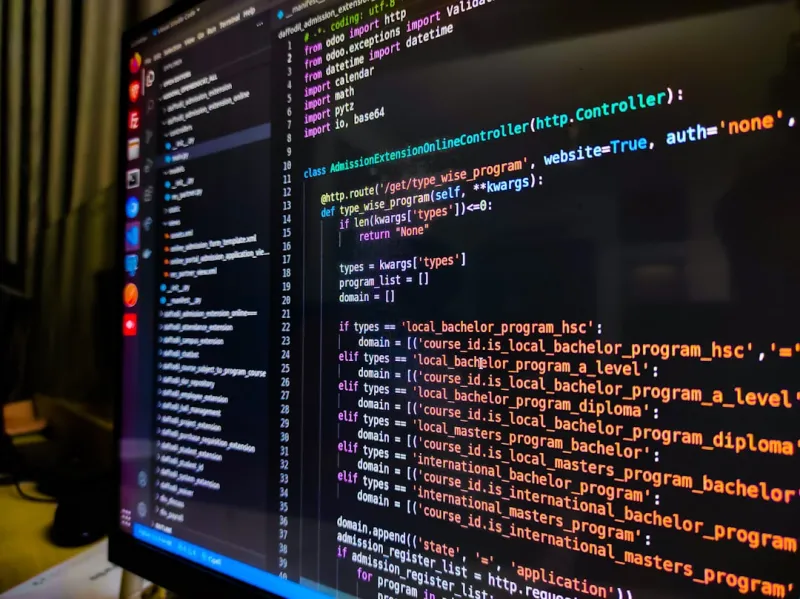
When I first cut my teeth on a clunky IDE in the early 2010s, the idea of an AI‑assisted development workflow sounded like sci‑fi hype. Fast‑forward to 2026, and that hype has solidified into a daily reality for developers of every stripe. Modern IDEs now embed large language models that can autocomplete entire functions, suggest architectural patterns, and even flag potential security flaws before you run a test suite. This shift isn’t just about convenience; it’s reshaping how we think about code ownership, team dynamics, and delivery speed. The biggest takeaway? AI is no longer a peripheral add‑on—it’s a core collaborator, and learning to “talk” to it effectively is as essential as mastering any new programming language. In this piece, I’ll walk you through the practical implications of AI co‑pilots, the rising importance of security‑by‑design, and why performance tuning is taking on a whole new dimension in the era of heterogeneous hardware.
The AI Co‑Pilot Has Arrived
In 2026, the term “AI co‑pilot” isn’t a buzzword; it’s a feature you enable with a single click. Integrated large language models can read the context of your project, propose code snippets, and even generate unit tests that achieve 90 % coverage on the fly. This capability dramatically shortens the feedback loop, allowing developers to iterate faster than ever before. However, the power comes with responsibility: blindly accepting AI suggestions can embed subtle bugs or security gaps. I’ve found that the best practice is to treat AI output as a draft, reviewing it through the same lenses you’d apply to any third‑party library. Pair programming with an AI also democratizes expertise—junior developers gain instant exposure to best‑practice patterns, while senior engineers can focus on higher‑level design concerns. As we lean into these tools, the skill set of a modern developer expands to include prompt engineering, a nuanced understanding of model limitations, and a disciplined review workflow.
Security by Design Becomes Non‑Negotiable
Security used to be an afterthought, tacked on in the final stages of a release cycle. The landscape of 2026 tells a different story: threats are more automated, more sophisticated, and often weaponized by AI themselves. Integrating security early—right from the code scaffolding generated by an AI co‑pilot—has become a baseline expectation. Static analysis tools now harness machine learning to detect anomalous patterns that traditional rule‑based scanners miss, such as subtle privilege escalation vectors hidden in asynchronous code. Moreover, the rise of supply‑chain attacks means developers must verify the provenance of every dependency, treating each third‑party package as a potential attack surface. By embedding security checks into CI/CD pipelines and leveraging AI‑driven vulnerability assessments, teams can catch issues before they ever reach production. This shift not only protects users but also reduces costly remediation cycles, making security a competitive advantage rather than a compliance checkbox.
Performance Is No Longer a Single‑Thread Concern
Hardware diversification is reshaping performance optimization. CPUs now sport a blend of high‑performance cores and energy‑efficient cores, while GPUs and specialized AI accelerators sit side‑by‑side in the same workstation. Writing code that intelligently dispatches workloads across this heterogeneous landscape is a new art form. Profilers have evolved to visualize cross‑processor interactions, and compilers can auto‑vectorize code for GPU execution when they detect suitable patterns. For developers, the challenge lies in understanding where parallelism makes sense and how to avoid contention that can degrade latency. In practice, this means embracing task‑based concurrency models, leveraging async/await patterns, and being mindful of memory locality. The payoff is significant: applications that once struggled to meet real‑time constraints now achieve sub‑millisecond response times, unlocking new possibilities in edge computing, AR/VR, and low‑latency financial services.
Beyond Code: The Holistic Development Ecosystem
Software development today is a symphony of interlocking components—code, infrastructure, AI, and security—all orchestrated through unified platforms. This holistic view is explored in depth in Beyond Code: AI, Security, and Hardware, where the convergence of these domains is mapped out. The key insight is that developers must think beyond the confines of a single repository; they need to understand the runtime environment, the data pipelines feeding their applications, and the continuous monitoring tools that keep services healthy. By adopting “infrastructure as code” practices alongside AI‑augmented development, teams can spin up reproducible environments that mirror production, catch configuration drifts early, and ensure compliance. This integrated approach reduces hand‑off friction between dev, ops, and security squads, fostering a culture where velocity and resilience coexist harmoniously.
AI‑Powered Operating Systems Shape the Runtime
The operating system itself has become an intelligent partner. Modern OS kernels now incorporate AI modules that dynamically allocate resources based on workload predictions, balance power consumption, and pre‑emptively isolate suspicious processes. As detailed in AI‑Driven OS Evolution, these capabilities enable applications to run more efficiently, especially on devices with limited power budgets like IoT edge nodes. For developers, this means you can trust the OS to handle low‑level optimizations, freeing you to focus on business logic. However, it also introduces a new surface for testing: you must verify that AI‑driven scheduling decisions don’t inadvertently starve critical threads or cause latency spikes. Incorporating OS‑level telemetry into your observability stack is now a best practice, ensuring you have visibility into the decisions your platform is making on your behalf.
Continuous Learning: From Prompt Crafting to Ethical AI Use
One of the most underrated skills for a developer in 2026 is the ability to craft effective prompts for AI tools. This isn’t about writing natural‑language sentences; it’s about structuring queries that guide the model toward safe, performant, and secure code suggestions. Prompt engineering has become a discipline taught alongside algorithms in many bootcamps. Additionally, ethical considerations are front‑and‑center. Developers must ensure that AI‑generated code does not inadvertently reproduce biased logic or expose sensitive data. This involves auditing model outputs, maintaining provenance logs, and establishing governance policies that define acceptable AI usage. Companies that embed these practices into their development lifecycle not only mitigate risk but also build trust with users who are increasingly aware of AI’s influence on software.
Collaboration Across Distributed, AI‑Enhanced Teams
Remote work is the norm, and AI tools are the glue that binds distributed teams together. Real‑time code review assistants can annotate pull requests with context‑aware suggestions, while AI‑driven documentation bots keep wikis up‑to‑date by extracting information from recent commits. These assistants reduce the cognitive load on engineers, allowing them to focus on creative problem‑solving rather than repetitive maintenance tasks. Moreover, version control platforms now offer AI‑powered conflict resolution that predicts the most logical merge outcome, cutting down the time spent on manual reconciliations. By integrating these capabilities into daily workflows, teams can maintain high velocity without sacrificing code quality or cohesion, regardless of geographic dispersion.
The Future‑Ready Developer Toolkit
What does a future‑ready developer’s toolkit look like in 2026? It’s a blend of traditional compilers, AI co‑pilots, security scanners, and observability dashboards—all stitched together through robust APIs. Tools like AI‑augmented IDEs, container orchestration platforms, and edge‑optimized runtime environments form the core. Additionally, developers should maintain fluency in scripting languages that can glue these components together—think Python for data‑heavy pipelines, Rust for performance‑critical modules, and TypeScript for full‑stack consistency. Investing time in learning these languages pays dividends as they each excel in specific niches of the modern stack. Finally, continuous upskilling via community forums, webinars, and hands‑on labs ensures you stay ahead of the curve as new AI models and hardware generations emerge.
Conclusion: Embrace the Evolution, Shape the Future
The software development landscape of 2026 is a dynamic tapestry woven from AI, security, performance, and collaborative tooling. By embracing AI as a co‑pilot, embedding security from the first line of code, optimizing for heterogeneous hardware, and leveraging intelligent operating systems, developers can deliver richer, faster, and safer applications than ever before. The journey isn’t without challenges—prompt engineering, ethical AI use, and the need for continuous learning demand a proactive mindset. Yet, those who adapt will find themselves at the forefront of innovation, shaping products that redefine what software can achieve. The future is already here; it’s up to us to harness it responsibly and creatively.