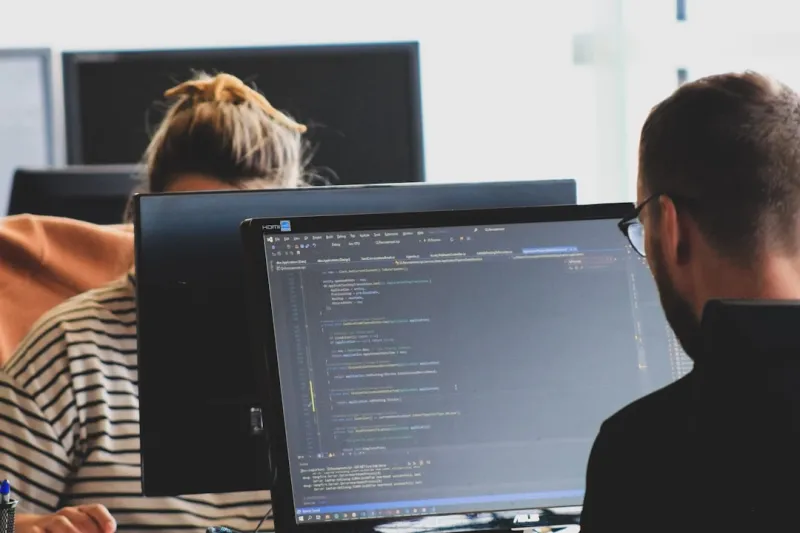
Software development in 2026 feels like stepping onto a moving treadmill that’s constantly accelerating. AI models now sit side‑by‑side with our code editors, suggesting entire functions before we’ve even typed a line. Cloud‑native architectures have matured to the point where a single microservice can spin up, scale, and self‑heal without any human touch, thanks to sophisticated observability pipelines. Yet, despite the automation, the human element remains the differentiator—our ability to ask the right questions, interpret ambiguous requirements, and infuse products with genuine user empathy. The rise of “prompt‑first” development, where we craft detailed natural‑language prompts to steer AI assistants, is reshaping our daily rituals. As I watch junior developers lean on AI for boilerplate generation, I’m reminded that the core craft—designing elegant, maintainable systems—has never been more critical. In this article, I’ll unpack the trends that are redefining our craft, the hidden pitfalls we must navigate, and the strategic upgrades that will keep us ahead of the curve.
AI‑Revolutionized Development Environments
The IDE of yesterday—static syntax highlighting and occasional lint warnings—has been supplanted by intelligent assistants that can write, refactor, and even document code in real time. Tools integrated with large language models now parse our project’s context, offering one‑click implementations for common patterns like authentication flows or data validation. This shift reduces boilerplate fatigue, letting us focus on business logic and system design. However, reliance on AI also introduces a new class of bugs: “hallucinated” code that compiles but behaves unexpectedly. To mitigate this, teams are adopting “AI‑code reviews” where the model’s suggestions are automatically run through static analysis and unit test generation before a human signs off. The result is a tighter feedback loop that accelerates delivery without sacrificing quality. For a deeper dive into how AI is reshaping the very core of operating systems, check out the piece on AI‑redefined operating systems, which explores the symbiotic relationship between software layers and the intelligent kernels that now drive them.
Security at the Code Level
While AI streamlines code creation, it simultaneously expands the attack surface. Attackers are leveraging the same large language models to generate exploit snippets or discover vulnerable code patterns faster than ever before. This reality forces developers to embed security thinking into every stage of the development lifecycle. Threat modeling now incorporates AI‑generated threat vectors, and “secure‑by‑design” has moved from a buzzword to a mandatory checklist item. Encryption, in particular, stands out as the non‑negotiable backbone of modern applications. From end‑to‑end data protection to secure key management, developers must treat encryption not as an afterthought but as a foundational service. For a comprehensive look at why encryption is indispensable in today’s PC security landscape, read Why Encryption Is the Non‑Negotiable Backbone of Modern PC Security. Embracing these practices early reduces the need for costly patches later and builds trust with users who increasingly demand privacy.
Collaboration in a Hyper‑Connected World
Remote work has cemented its place, and the tools that facilitate seamless collaboration have evolved dramatically. Integrated suites now combine AI‑driven document generation, real‑time translation, and predictive scheduling, making global teams feel like they’re sitting in the same room. The latest updates to Microsoft Office illustrate this trend, blending AI assistants that draft meeting notes, suggest code snippets, and even flag potential compliance issues within documents. By embedding these capabilities directly into collaborative platforms, developers can iterate on designs, share prototypes, and receive instant feedback without toggling between disparate applications. This convergence not only boosts productivity but also shortens the feedback loop between product managers, designers, and engineers, fostering a culture of rapid experimentation.
Hardware‑Software Synergy: The New Performance Playbook
Performance optimization in 2026 is no longer just about algorithmic efficiency; it’s about aligning software with cutting‑edge hardware architectures. Modern motherboards now include dedicated AI accelerators that can offload inference tasks from the CPU, dramatically reducing latency for real‑time applications like augmented reality and autonomous drones. When we write code, we must be aware of these capabilities and design workloads that can harness them effectively. For instance, using tensor cores for batch processing can cut processing time by half compared to traditional CPU loops. This hardware‑aware mindset also influences language choice—Rust and Go are gaining traction for their low‑level control and concurrency models that map well onto AI‑accelerated pipelines. By understanding the “secret sauce” of modern motherboards, developers can unlock performance gains that were previously unattainable.
The AI‑Powered Networking Revolution
Networking has been quietly transformed by AI, turning static configurations into adaptive, self‑optimizing fabrics. In small businesses and home offices, intelligent routers now analyze traffic patterns, predict congestion, and re‑route packets before bottlenecks occur. For developers building SaaS platforms, this means that latency can be dynamically managed at the edge, ensuring a smoother user experience across diverse geographies. Moreover, AI‑driven security policies can automatically quarantine suspicious devices, reducing the window for potential breaches. To explore how this networking revolution is reshaping connectivity, read the deep dive on The AI‑Powered Networking Revolution Shaping Homes and Small Businesses. Embracing these adaptive networks allows us to design applications that are resilient, scalable, and ready for the next wave of distributed intelligence.
Testing and Quality Assurance in the Age of Automation
Automated testing has entered a new era where AI not only generates test cases but also predicts flaky tests and suggests remediation. Continuous integration pipelines now include AI agents that monitor test flakiness trends, prioritize critical failures, and even propose code refactors to eliminate root causes. This proactive approach reduces downtime and accelerates release cycles. However, it also demands a shift in mindset: developers must treat test data as a living artifact, regularly reviewing AI‑generated suggestions for relevance and coverage. Pairing AI‑driven QA with traditional manual testing creates a hybrid model that captures both breadth and depth, ensuring that edge cases—especially those involving security or performance under load—are not overlooked.
Future‑Proof Skills: Learning to Lead the AI‑First Development Wave
Staying relevant as a developer in 2026 hinges on cultivating a blend of technical depth and AI fluency. Mastery of prompt engineering, understanding model limitations, and the ability to fine‑tune AI assistants for domain‑specific tasks are becoming as essential as knowing a programming language. Additionally, soft skills—critical thinking, ethical reasoning, and cross‑functional communication—are amplified when collaborating with AI tools that can amplify both good and bad decisions. Investing in continuous education platforms that offer hands‑on labs for AI integration, secure coding, and performance tuning will pay dividends. Organizations that foster a culture of learning, where developers are encouraged to experiment with emerging AI services, will outpace competitors who cling to legacy workflows.
Conclusion: Embrace the Fusion, Guard the Foundations
The software development landscape in 2026 is a dynamic tapestry woven from AI innovation, security imperatives, and hardware advancements. By embracing AI‑augmented tools while maintaining a vigilant eye on encryption, testing, and performance, we can deliver products that are both cutting‑edge and trustworthy. The key is balance: leverage AI to accelerate routine tasks, but anchor every decision in solid engineering principles. As we move forward, let’s champion a mindset that sees AI as a collaborator—not a replacement—and commit to continuous learning that keeps our skills sharp and our code resilient. The future is bright for those who adapt, and the journey starts with the choices we make today.