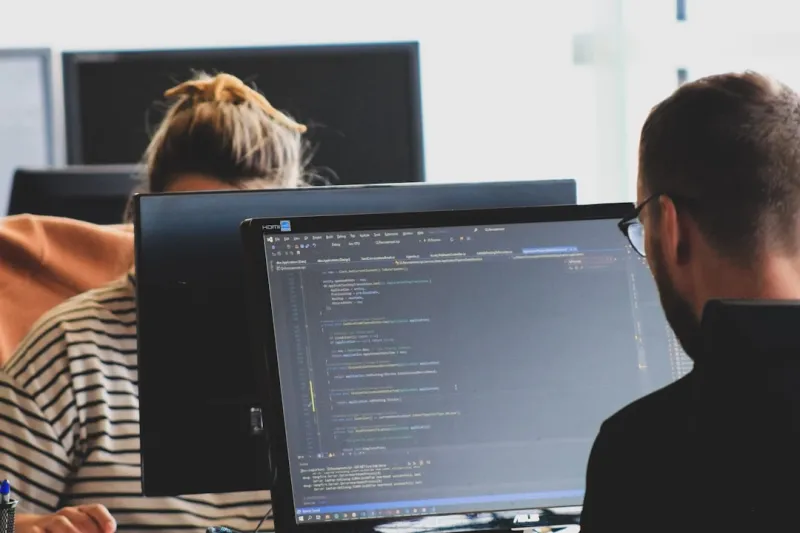
When I first cracked open my first laptop back in the early 2000s, I never imagined that “software development” would evolve into a discipline where a single line of code could spin up an AI‑powered workstation, spin down a cloud cluster, or even trigger a hardware‑level alert on your motherboard. Fast‑forward to 2026, and the reality is far richer—and far more demanding—than the nostalgic memory of debugging with a printed stack trace. As a lifelong power user and developer, I’ve learned that thriving today requires a hybrid mindset: the precision of a systems engineer, the agility of a startup founder, and the curiosity of a researcher. In this piece, I’ll walk you through the habits, tools, and mental models that keep my codebase performant, secure, and future‑proof, while also sharing the hard‑won lessons that only a decade of relentless iteration can teach. Whether you’re a solo freelancer or part of a sprawling devops team, these insights aim to sharpen your edge and keep you ahead of the relentless pace of change.
Embracing the Power‑User Mindset in Modern Development
Power users aren’t just “tech‑savvy”; they are the bridge between raw hardware potential and elegant software solutions. This mindset starts with a relentless curiosity about every layer of the stack, from the firmware flashing on your motherboard to the orchestration scripts that spin up containers in the cloud. In 2026, the most effective developers treat their development environment as a living organism—monitoring performance metrics, tweaking BIOS settings, and even adjusting power profiles on the fly. That’s why I constantly reference the principles laid out in Harnessing the Power‑User Mindset to Future‑Proof Your Software Development. By internalizing those strategies, I’ve been able to anticipate bottlenecks before they manifest, turning potential crises into opportunities for optimization. The result is a workflow that feels less like a series of chores and more like an evolving conversation with the machine.
AI‑Powered Workstations: The New Baseline for Developers
AI isn’t a distant promise; it’s the engine under today’s most productive workstations. In 2026, AI‑accelerated GPUs and dedicated inference chips have become as essential to a developer’s toolkit as a good text editor. These devices don’t just speed up model training—they intelligently allocate resources, predict code completion, and even suggest refactoring patterns based on millions of open‑source repositories. I recently upgraded to a workstation that integrates an AI co‑pilot directly into the IDE, allowing me to ask, “How can I reduce the latency of this API call?” and receive a concrete code snippet within seconds. For those curious about the hardware trade‑offs, my deep dive in AI‑Powered Workstations: What Every Power User Needs to Know breaks down the GPU vs. CPU vs. dedicated AI accelerator dilemma, helping you choose a rig that matches both your budget and your performance goals.
Selecting the Right Stack and OS for Speed and Stability
The operating system you run your code on can be the difference between a sub‑second response and a sluggish, error‑prone service. In 2026, the lines between Linux, Windows, and macOS have blurred thanks to containerization, but each still carries unique advantages. Linux remains king for low‑level networking and resource control, while Windows now offers native WSL2 integration that rivals any pure‑Linux environment for certain .NET workloads. My personal setup leans heavily on a dual‑boot configuration, allowing me to spin up a Linux VM for backend services and switch to Windows for UI prototyping. This flexibility mirrors the advice in Operating System Strategies Every Power User Must Master, where the author emphasizes tailoring your OS choice to the specific demands of your stack rather than defaulting to familiarity.
Continuous Integration Meets Real‑Time Collaboration
Continuous Integration (CI) pipelines have matured from simple test runners to sophisticated, real‑time collaboration platforms. In 2026, CI tools now embed AI‑driven code analysis, security scanning, and performance profiling directly into the merge request workflow. When I push a feature branch, the pipeline not only runs unit tests but also predicts the impact on latency, suggests micro‑optimizations, and flags any newly introduced security vulnerabilities. This level of insight reduces the feedback loop to minutes, allowing teams to ship confidently and iterate rapidly. Moreover, integrated chat ops let developers annotate builds, request manual approvals, and even roll back problematic deployments with a single command—all within the same collaborative environment. The net effect is a development culture that prizes speed without sacrificing rigor.
Security, Encryption, and Future‑Proofing Your Codebase
Security can no longer be an afterthought; it must be baked into every line of code and every deployment artifact. In 2026, the rise of post‑quantum cryptography and zero‑trust architectures forces developers to rethink traditional encryption models. I’ve adopted a layered approach: end‑to‑end encryption for data in transit, hardware‑rooted keys for storage, and continuous threat modeling integrated into CI pipelines. The shift toward homomorphic encryption, while still emerging, offers a glimpse of a future where data can be processed without ever being decrypted—a game‑changer for compliance‑heavy industries. By staying abreast of the latest standards and regularly auditing dependencies, you not only protect your users but also future‑proof your applications against the inevitable evolution of attack vectors.
Debugging at Scale: From Blue Screens to Cloud Logs
Debugging used to be a local affair—attach a debugger, reproduce the crash, and fix the bug. Today, with distributed micro‑services and serverless functions, the problem space expands dramatically. The classic “blue screen” is now a metaphor for opaque failures that surface deep within a cloud provider’s infrastructure. To combat this, I rely on centralized observability platforms that aggregate logs, metrics, and traces across the entire stack. By correlating a sudden spike in latency with a specific function invocation, I can pinpoint the root cause within seconds. The key is to instrument every layer—from the front‑end React components to the low‑level kernel modules—so that when an anomaly occurs, the system speaks back in human‑readable terms. This proactive stance transforms debugging from a reactive firefight into a predictable, data‑driven process.
The Human Factor: Mentorship, Community, and Burnout Prevention
Technology evolves, but the human element remains the most unpredictable variable. In 2026, the pressure to adopt new tools and frameworks can lead to burnout, especially for power users juggling multiple high‑stakes projects. I’ve found that cultivating a community of peers and mentors is essential to maintaining long‑term productivity. Regular code reviews, pair‑programming sessions, and informal “tech talks” create a feedback loop that surfaces blind spots and fosters continuous learning. Moreover, setting clear boundaries—like dedicated “no‑meeting” days and intentional downtime—helps preserve mental health. Remember, a well‑rested mind is more adept at spotting subtle performance regressions or security flaws than any automated tool could ever be.
Looking Ahead: What 2027 May Hold for Developers
While it’s impossible to predict every breakthrough, several trends are already shaping the horizon. Edge computing will bring AI inference closer to the user, reducing latency and bandwidth costs. Quantum‑ready development kits will start to appear, inviting early adopters to experiment with hybrid algorithms. And the convergence of low‑code platforms with traditional codebases will blur the lines between citizen developers and seasoned engineers. As we stand on the cusp of these changes, the core principles—curiosity, disciplined experimentation, and a power‑user mindset—will remain our compass. By staying adaptable and continuously refining our toolset, we can ensure that 2027 is not a year of disruption, but a year of opportunity.