
When I first built my rig back in the early 2020s, the mantra was “buy cheap and upgrade later.” Fast forward to 2026, and that philosophy feels almost nostalgic. The pace of software innovation—especially AI‑driven workloads and real‑time ray tracing—means that a stagnant machine quickly becomes a bottleneck, not just for gaming but for any serious productivity task. Upgrading isn’t a luxury; it’s a strategic move to keep your workflow fluid, your creative pipelines humming, and your system secure against emerging threats. In this article, I’ll walk you through the most impactful upgrades you can make right now, explain why each component matters, and share how to prioritize spending for maximum ROI. Expect a blend of hard‑core specs, practical budgeting tips, and a few insider shortcuts that only a seasoned power‑user like myself would consider. By the end, you’ll have a clear roadmap that turns your PC from a dated workhorse into a 2026‑ready powerhouse.
CPU: The Heartbeat of Modern Workloads
The central processing unit remains the core driver of performance, and 2026 introduces a new generation of hybrid architectures that blend high‑performance cores with power‑efficient efficiency cores. This design excels at handling mixed workloads—think a video rendering process running alongside an AI chatbot service. When selecting a CPU, look beyond raw clock speed; consider core count, cache size, and the motherboard’s chipset support for features like PCIe 5.0 and DDR5 memory. If you’re on a mid‑range system, upgrading to a 12‑core model can shave 30‑40 % off rendering times, while a 16‑core beast will future‑proof you for upcoming software that leverages massive parallelism. Don’t forget to check the TDP rating—pairing a high‑end CPU with a modest cooler can lead to thermal throttling, undoing any performance gains. For a holistic approach, see my Upgrade Blueprint guide, which maps out the ideal CPU‑to‑motherboard pairings for every budget tier.
GPU: From Gaming to AI Acceleration
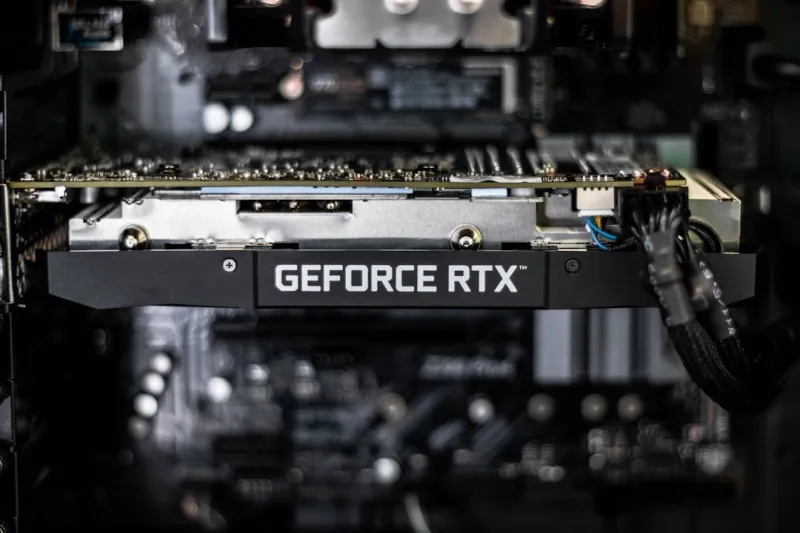
Graphics cards have transcended their gaming roots and now serve as general‑purpose accelerators for AI, scientific simulations, and even cryptocurrency mining—though the latter has waned due to regulatory shifts in 2026. Modern GPUs feature dedicated tensor cores and ray‑tracing units, making them indispensable for creators who work with 4K video, 3D modeling, or real‑time rendering in engines like Unreal. When upgrading, focus on VRAM capacity; 12 GB is the new baseline for 4K editing, while 24 GB or more is advisable for deep‑learning workloads. The latest RTX 6000 series offers a sweet spot of performance and power efficiency, but the emerging AMD Radeon X series provides compelling alternatives with superior rasterization at comparable price points. Ensure your power supply can handle the increased draw—most high‑end cards demand 300 W or more. Pairing a strong GPU with optimized drivers and software settings can boost productivity by up to 70 % in AI‑assisted design tasks.
RAM: Size, Speed, and Latency Matters
Memory is often the silent workhorse that determines whether your system feels snappy or sluggish under multitasking pressure. In 2026, DDR5 has become the standard, delivering higher bandwidth and lower power consumption than its DDR4 predecessor. However, speed isn’t the only factor; latency (CL) and timings still play crucial roles in real‑world performance. For most power users, 32 GB of DDR5‑6000 MHz with CL‑30 strikes a balance between capacity and speed, enabling seamless switching between heavy IDEs, virtual machines, and browser tabs loaded with AI‑enhanced extensions. If you’re into heavy video editing or running multiple VMs, consider scaling up to 64 GB to avoid swapping to disk, which can cripple performance despite SSD speeds. When installing, populate the memory channels symmetrically to take advantage of dual‑channel or quad‑channel architectures, which can add up to a 15 % uplift in bandwidth. Remember, adding more RAM after the fact is easier than swapping a motherboard, so plan ahead for future expansion.
Storage: SSDs, NVMe, and the Future of Speed
The era of spinning hard drives is effectively over for primary storage, but they still have a niche for archival purposes. For speed, NVMe PCIe 5.0 SSDs now offer read/write rates exceeding 14 GB/s, slashing game load times and compressing large video files in seconds. If your budget allows, a 2 TB NVMe drive paired with a secondary 4 TB SATA SSD creates a tiered storage system: the fast drive handles OS, applications, and active projects, while the larger SATA drive stores raw footage and backups. Don’t overlook the importance of proper partition alignment and TRIM support, which keep SSD performance consistent over time. For those still transitioning, the Hard Drive Mastery article details optimal cloning procedures and migration strategies that minimize downtime. Lastly, enable Windows’ storage spaces or macOS’ APFS snapshots to protect against data loss without sacrificing speed.
Motherboard Compatibility and Future‑Proofing
The motherboard is the backbone that determines how well all other components can communicate and scale. In 2026, Z‑series chipsets dominate the high‑end market, offering PCIe 5.0 lanes, USB4 ports, and integrated Wi‑Fi 7. When selecting a board, verify that it supports the CPU socket you’ve chosen, offers enough M.2 slots for your NVMe drives, and includes robust VRM cooling for sustained overclocking. A common mistake is overlooking BIOS updates; many manufacturers release firmware that unlocks memory compatibility and improves power delivery for newer CPUs. If you anticipate adding more GPUs or storage down the line, prioritize boards with multiple PCIe 5.0 slots and ample SATA ports. Additionally, look for integrated debugging tools like POST code LEDs, which can dramatically reduce troubleshooting time—a feature I discuss in depth in my Motherboard Troubleshooting guide. By investing in a quality motherboard now, you safeguard against costly replacements as technology evolves.
Power Supply and Cooling: The Unsung Heroes
Even the most powerful components are rendered useless without reliable power delivery and effective thermal management. In 2026, 80 PLUS Gold and Platinum certified units are the norm for high‑performance rigs, offering up to 92 % efficiency, which translates to lower electricity bills and less heat generation. Calculate your system’s total wattage using online tools, then add a 20‑30 % buffer to accommodate future upgrades; most modern GPUs alone can draw 300‑350 W under load. As for cooling, a hybrid approach—combining a high‑static‑pressure AIO liquid cooler for the CPU with strategically placed case fans—ensures optimal airflow across VRMs and memory modules. Pay attention to the radiator size; a 240 mm unit is adequate for most builds, but a 360 mm radiator provides headroom for aggressive overclocking. Don’t forget to clean dust filters regularly; clogged filters can raise internal temperatures by several degrees, impacting performance and longevity.
Peripheral Upgrades That Multiply Productivity
While core components dominate the upgrade conversation, peripheral enhancements can dramatically boost your day‑to‑day efficiency. A high‑refresh‑rate 144 Hz monitor with low input lag makes a noticeable difference when editing video timelines or navigating complex CAD models. Pair it with an ergonomic mechanical keyboard featuring customizable macros; these shortcuts can shave seconds off repetitive tasks, compounding into hours saved over weeks. For those who spend long hours in front of the screen, a dual‑monitor setup or even a 4K ultrawide display can reduce window switching and increase workspace real estate. Additionally, upgrading to a USB‑C dock with Thunderbolt 4 support enables fast peripheral connections, including external GPUs for on‑the‑go power. Don’t underestimate audio—a quality headset with noise‑cancelling capabilities improves focus during virtual meetings, especially as remote collaboration remains prevalent in 2026.
Putting It All Together: A Step‑by‑Step Upgrade Plan
Now that we’ve dissected each component, let’s translate that knowledge into an actionable plan. First, audit your current system: note CPU model, GPU, RAM size, storage configuration, and power supply wattage. Next, prioritize upgrades based on the tasks that bottleneck you the most—rendering? Focus on CPU and GPU. Data‑intensive workflows? Expand RAM and switch to an NVMe SSD. Create a budget spreadsheet, allocating roughly 40 % to the CPU/GPU combo, 20 % to RAM, 15 % to storage, 15 % to motherboard and PSU, and 10 % to peripherals. Order parts from reputable vendors that offer return policies, and schedule a weekend for installation to avoid work interruptions. Follow a systematic build process: install CPU and cooler on the motherboard first, add RAM, then mount the motherboard in the case, connect the PSU, install storage, and finally the GPU. Power on, enter BIOS to verify component detection, and run stress‑test utilities like Prime95 and 3DMark to confirm stability. For a deeper dive into post‑upgrade optimization, see my Windows Power‑User Secrets guide, which covers registry tweaks and power plans that extract every ounce of performance.
Final Thoughts: Stay Agile in 2026 and Beyond
The tech landscape in 2026 is a moving target, with AI, immersive media, and quantum‑ready applications reshaping what we expect from our PCs. By approaching upgrades as a strategic, iterative process rather than a one‑off splurge, you keep your system nimble, extend its lifespan, and stay ahead of the curve. Remember, the most effective upgrades align with your personal workflow and the software you rely on daily. Keep an eye on emerging standards—PCIe 6.0, DDR6, and next‑gen storage protocols are on the horizon, and a modular mindset will make future transitions smoother. As a power‑user, your edge comes from staying informed, experimenting responsibly, and sharing knowledge with the community. Happy building, and may your rigs run cool, fast, and forever ready for the challenges of 2026 and beyond.