

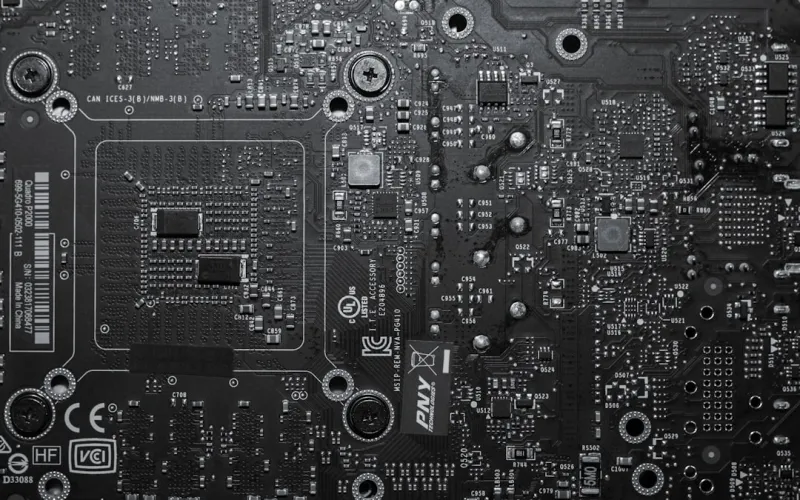
When I first dove into the world of custom rigs, the motherboard was the silent hero that most builders either glorified or ignored. In 2024, that truth has only deepened: the board you choose now dictates not just performance today, but how gracefully your system ages over the next several years. Think of the motherboard as the foundation of a house—if it’s built on weak concrete, every upgrade you add will feel the tremor. Modern chipsets are exploding with capabilities—PCIe 5.0 lanes, DDR5 support, integrated Wi‑Fi 7, and advanced power delivery—so the decision isn’t merely about socket compatibility anymore. It’s about aligning the board’s roadmap with your own aspirations, whether that’s AI‑driven workloads, high‑frame‑rate gaming, or content‑creation pipelines that chew through data like a beast. In this article I’ll walk you through the nuances that matter, from chipset selection to firmware polish, and share the exact checklist I use when I’m mapping out a future‑proof platform. Strap in; the motherboard mastery journey starts now.
Why Motherboard Choice Matters in 2024
Every builder knows that the CPU is the star, but the motherboard is the stage manager directing every cue. In the current era, the stage is crowded with PCIe 5.0 SSDs that can saturate a single lane, high‑speed DDR5 memory that demands immaculate signal integrity, and power‑hungry CPUs that can draw well over 200 W. A board that lacks robust VRM cooling or adequate power phases will throttle under load, turning what could be a buttery smooth experience into a choppy nightmare. Moreover, the lifespan of a motherboard often outlasts the CPU socket it supports, making it a long‑term investment. Selecting a platform that offers BIOS updates for upcoming processors can save you from a costly board swap when the next-gen silicon hits the market. That’s why I always cross‑reference the Motherboard Mastery in 2024 guide to ensure I’m not just buying today’s best, but tomorrow’s most adaptable foundation.
The Chipset Landscape: From B560 to X670E
Chipsets are the nervous system of your motherboard, dictating the bandwidth, I/O options, and expansion capabilities you’ll have at your fingertips. For Intel enthusiasts, the jump from B560 to Z790 introduces PCIe 5.0, increased USB 4 ports, and more refined power delivery, which is essential for the latest Alder Lake and Raptor Lake CPUs. On the AMD side, the B650 offers a budget‑friendly entry with DDR5 and PCIe 5.0, while the X670E pushes the envelope with full PCIe 5.0 support across both GPU and storage lanes, making it the go‑to for builders chasing the bleeding edge. The key is matching chipset features to your workload: if you’re planning on an AI‑heavy workstation, the extra PCIe lanes on an X670E can host multiple accelerator cards without bandwidth bottlenecks. Conversely, a content creator focused on video editing may prioritize a chipset with abundant USB‑C ports for fast peripheral connections. Understanding these subtleties lets you pick a board that feels like an extension of your creative workflow rather than a limiting factor.
Form Factor Realities: ATX, Micro‑ATX, Mini‑ITX
Form factor is more than a physical dimension; it shapes airflow, component density, and future upgrade paths. ATX remains the workhorse, offering up to seven expansion slots, ample VRM real estate, and generous heatsink space—ideal for power‑hungry CPUs and multi‑GPU setups. Micro‑ATX trims the footprint while still delivering four PCIe slots and decent VRM layouts, striking a sweet spot for compact yet capable builds. Mini‑ITX is the champion of portability, but it forces compromises: fewer VRM phases, limited RAM slots, and a single PCIe x16 slot that may be wired to a lower bandwidth lane. If you aim to future‑proof, consider the expansion ecosystem you’ll need in five years—additional M.2 slots, extra SATA ports, or even a second GPU. The right form factor balances your desk real estate with the headroom for tomorrow’s components, ensuring that you won’t be forced into a full chassis redesign when the next upgrade beckons.
Power Delivery and VRM: Fueling Next‑Gen CPUs
Voltage Regulator Modules (VRMs) are the unsung heroes that translate wall power into clean, stable electricity for your CPU and other critical components. Modern high‑core‑count processors like the Intel Core i9‑13900K or AMD Ryzen 9 7950X can spike well beyond 200 W under boost, demanding a motherboard with a robust VRM design—typically 14+ phases with high‑quality chokes and MOSFETs. Effective thermal solutions, such as large aluminum heatsinks, heat pipes, or even active cooling, keep the VRM temperatures low, preserving efficiency and longevity. A weak VRM not only throttles performance but can cause instability during overclocking or heavy workloads like AI model training. When evaluating a board, look for specifications like “12+2 DrMOS” or “16‑phase power delivery” and check independent reviews for thermal performance. Remember, a solid VRM is the difference between a system that sustains peak performance and one that falters the moment you push it hard.
PCIe 5.0 and Beyond: Future‑Proofing Expansion
PCIe 5.0 has finally become mainstream, offering double the bandwidth of its predecessor—up to 32 GT/s per lane. This translates to lightning‑fast NVMe SSDs that can hit 14 GB/s sequential reads and GPUs that can utilize the full data pipe without bottlenecks. However, not all motherboards expose the full complement of PCIe 5.0 lanes; some reserve them for the primary GPU slot while relegating M.2 slots to PCIe 4.0. If you anticipate needing multiple high‑speed storage devices or plan to experiment with accelerator cards like FPGA or AI inference modules, prioritize a board that offers multiple PCIe 5.0 slots. Additionally, keep an eye on upcoming standards—PCIe 6.0 prototypes are on the horizon, and selecting a motherboard with a forward‑compatible BIOS can make that transition smoother. In my own builds, I’ve always opted for the most generous PCIe lane allocation to keep the system adaptable to emerging technologies.
Integrated Features: Wi‑Fi 7, USB4, and Audio
Integrated connectivity has leaped forward, and the right motherboard can eliminate the need for pricey add‑on cards. Wi‑Fi 7, the newest wireless standard, promises multi‑gigabit speeds with ultra‑low latency—perfect for cloud‑based rendering or real‑time collaboration. USB4, built on the Thunderbolt 4 spec, consolidates data, video, and power delivery into a single port, simplifying cable management and future‑proofing peripheral connections. High‑definition audio codecs, such as ESS ES9023 or Realtek ALC4082, provide audiophile‑grade sound without external DACs. When I assess a board, I compare the number of USB‑C ports, the presence of Thunderbolt support, and the quality of the onboard audio solution, especially for content creators who rely on accurate monitoring. These integrated features not only declutter your build but also add resale value, making the motherboard an even more compelling long‑term asset.
BIOS and Firmware: The Silent Gatekeeper
The BIOS is the silent gatekeeper that can either unlock or lock the potential of your hardware. A well‑crafted UEFI firmware offers a clean interface, granular voltage controls, and quick updates that keep the board compatible with new CPUs and memory modules. In 2024, manufacturers are pushing OTA (over‑the‑air) updates, allowing you to patch security vulnerabilities or add features without a bootable USB stick. However, not all BIOSes are created equal; some suffer from buggy memory compatibility lists or limited overclocking knobs. I always verify that the board’s BIOS has a robust update history and supports features like XMP 3 for DDR5, automatic power‑limit tuning, and secure boot. A reliable firmware foundation ensures your system remains stable, secure, and ready for future enhancements, turning the motherboard into a truly future‑proof platform.
Building a Balanced System: Pairing Motherboard with CPU, RAM, and GPU
Even the most advanced motherboard can’t compensate for a mismatched component trio. Balancing the CPU’s core count and power envelope with the motherboard’s VRM capabilities prevents throttling. Pair DDR5‑5600 or faster kits with a board that advertises robust memory trace design to maintain tight timings under load. For graphics, ensure your PCIe slot runs at full x16 bandwidth; some boards downgrade to x8 when two M.2 drives occupy certain lanes. I recommend mapping out your component hierarchy on paper before purchase: list your CPU, target RAM speed, desired storage count, and GPU tier, then cross‑reference these with the motherboard’s specifications. This systematic approach reduces the risk of bottlenecks and maximizes the ROI of each part, delivering a harmonious system that feels cohesive rather than a patchwork of mismatched pieces.
Final Checklist: Your Blueprint for a Future‑Proof Platform
Before you click “add to cart,” run through this quick audit: (1) Verify chipset compatibility with your CPU and future upgrade path; (2) Confirm the VRM phase count and cooling solution meet your power needs; (3) Ensure sufficient PCIe 5.0 lanes for your storage and expansion plans; (4) Check for integrated Wi‑Fi 7, USB4, and premium audio if you value built‑in features; (5) Review BIOS update frequency and community support; (6) Match the form factor to your case while allowing room for additional cooling; (7) Cross‑check the board’s warranty and post‑sale firmware roadmap. For a deeper dive into the strategic approach I use, see my Future‑Proof Your PC in 2024 playbook. By ticking each box, you’ll secure a motherboard that not only powers today’s demands but also embraces the innovations that 2025 and beyond will bring, turning your rig into a lasting, high‑performance workhorse.