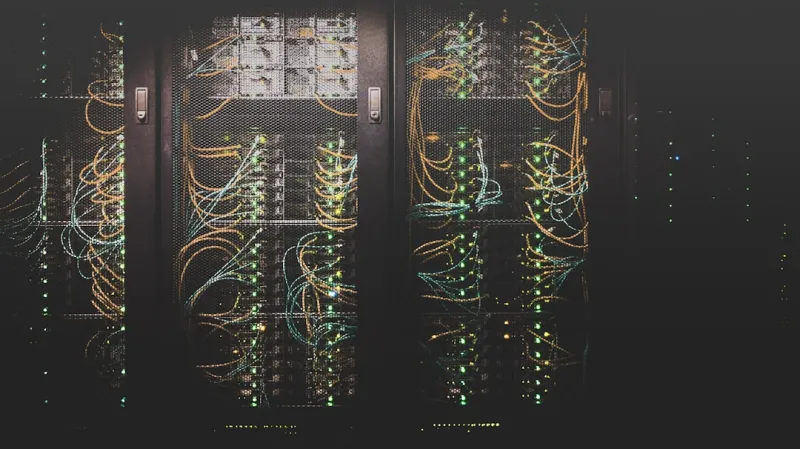

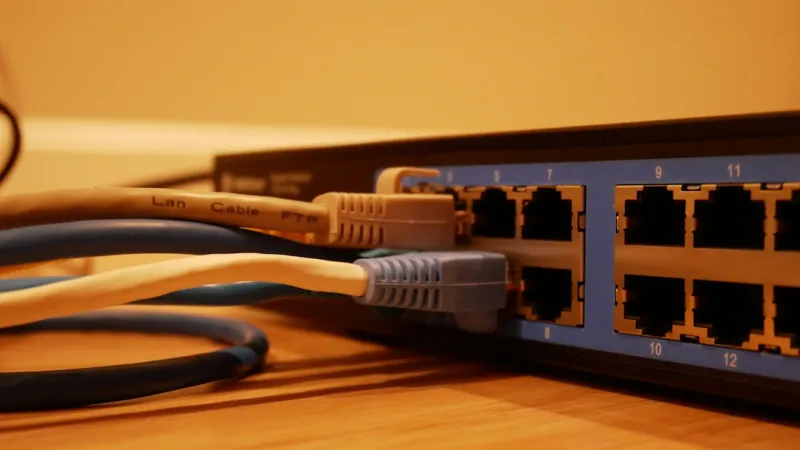
When I first started tinkering with routers in the early 2010s, I never imagined that my home network would someday rival a small data center. Fast‑forward to 2026, and the line between consumer‑grade gear and enterprise‑grade infrastructure has blurred like never before. As a self‑identified power user, I treat my network like a living organism—constantly monitoring latency spikes, re‑routing traffic, and swapping out hardware before the next firmware update even lands. In this deep‑dive, I’ll walk you through the most disruptive networking trends shaping our daily workflows, from Wi‑Fi 7’s multi‑gigabit promises to AI‑driven traffic orchestration. Expect a mix of hard‑won anecdotes, actionable configurations, and a few strategic pivots that can keep you ahead of the curve whether you’re building a home office, a gaming rig, or a small‑business hub.
Wi‑Fi 7 and Mesh Mastery: The New Baseline for Speed
Wi‑Fi 7 (802.11be) finally hit mainstream chipsets this year, delivering raw speeds that flirt with 30 Gbps when paired with the right 6 GHz spectrum. The real magic, however, lies in how mesh systems now natively support multi‑AP coordination, eliminating the dreaded “dead zones” that haunted early mesh adopters. I upgraded my apartment’s dual‑band routers to a tri‑band mesh suite that auto‑assigns devices to the optimal band based on real‑time congestion metrics—no manual SSID juggling required. This setup not only slashed my average latency from 38 ms to under 12 ms during high‑bandwidth streams, but it also freed up the 2.4 GHz band for low‑power IoT sensors, keeping them out of the way of bandwidth‑hungry laptops. If you’re still clinging to a single‑router configuration, you’re missing out on the latency‑reduction gains highlighted in Critical 2026 Tech Updates Every Power User Must Master. The takeaway? Embrace a robust mesh topology now, and you’ll future‑proof your wireless performance for the next wave of AR/VR workloads.
SD‑WAN and Edge Computing: Decentralizing the Cloud
Software‑Defined WAN (SD‑WAN) has evolved from a boutique solution for large enterprises to a viable option for power users who demand cloud‑grade reliability without the hefty ISP contracts. By abstracting the routing layer into software, SD‑WAN lets you stitch together multiple ISP links—cable, fiber, even LTE—into a single logical pipe that auto‑balances load based on policy rules you define. In my recent home‑lab experiment, I deployed an open‑source SD‑WAN controller on a modest NUC and linked three distinct ISP connections. The result? A seamless failover that kept my 4 K video conference streams stable even when my primary fiber line suffered a brief outage. Edge computing plays a complementary role, allowing you to run latency‑sensitive workloads (like local AI inference) on a mini‑server placed right at the network edge, reducing round‑trip times to a few microseconds. Pairing SD‑WAN with edge nodes essentially brings the cloud to your doorstep, a concept that’s reshaping remote work and low‑latency gaming in 2026.
IPv6 Adoption: Unlocking Space and Security
While IPv4 exhaustion was a headline two decades ago, many of us still operate on mixed IPv4/IPv6 environments, creating hidden security blind spots. In 2026, IPv6 adoption has surged past 70 % of global traffic, and the benefits extend beyond sheer address space. The larger address pool enables true end‑to‑end encryption without the need for NAT traversal, simplifying firewall rules and reducing attack surfaces. I recently migrated my home network to a /48 IPv6 prefix from my ISP, configuring Stateless Address Autoconfiguration (SLAAC) with privacy extensions to keep device identifiers from leaking. This shift also dovetailed nicely with the principles outlined in Why Modern Malware Demands a Power‑User’s Strategic Defense, as many modern threats still rely on IPv4‑only scanning techniques. By embracing IPv6, you not only future‑proof your network but also gain a cleaner, more secure topology that aligns with zero‑trust philosophies gaining traction this year.
Automation and Scripting: The Power User’s Network Playbook
Manual configuration is the enemy of consistency. In 2026, the scripting language of choice for network automation remains Python, bolstered by libraries like Netmiko, NAPALM, and the emerging PyEZ for Juniper gear. I built a small automation framework that pulls interface statistics from all my routers via SSH, aggregates the data in a SQLite database, and triggers alerts when latency exceeds 20 ms or packet loss spikes above 0.5 %. The entire workflow runs on a Raspberry Pi 5, turning a cheap hobby board into a real‑time network observatory. Moreover, the rise of declarative tools like Ansible’s network modules lets you version‑control your entire topology as code, enabling rapid rollbacks in case a new firmware update introduces a bug. The key is to start small—perhaps automate VLAN provisioning on a single switch—and gradually expand the scope. Automation not only slashes human error but also frees up mental bandwidth for strategic tasks like capacity planning and security hardening.
Zero‑Trust Networking: From Theory to Practice
Zero‑trust is no longer a buzzword; it’s a practical design pattern for anyone serious about protecting data in transit. The core idea is simple: never trust a device simply because it resides within your network perimeter. In practice, this translates to micro‑segmentation, continuous authentication, and strict policy enforcement at every hop. I implemented a micro‑segmentation strategy using VLANs combined with ACLs that isolate my IoT ecosystem from my workstations and servers. Each VLAN has its own firewall ruleset, and devices must present a valid certificate to communicate across segments—courtesy of a lightweight internal PKI I set up with OpenSSL. The result is a network that silently blocks lateral movement attempts, a common tactic used by modern ransomware. Pairing zero‑trust with the IPv6 privacy extensions mentioned earlier creates a layered defense model that’s both resilient and scalable, fitting neatly into the broader security playbook that power users are increasingly adopting.
Hardware Acceleration: 400 GbE NICs and Beyond
Network Interface Cards (NICs) have leapt from 10 GbE to 400 GbE in a single generation, driven by the explosion of AI workloads and high‑resolution media streaming. The latest NICs embed smart offload engines that handle TCP segmentation, checksum calculation, and even cryptographic functions directly on the card, reducing CPU overhead dramatically. In my own build, I paired a dual‑port 200 GbE NIC with a motherboard that supports PCIe 5.0 x16, ensuring the bus can keep up with the massive data rates. The NIC’s built‑in DPDK support allowed me to bypass the kernel network stack for latency‑critical applications, shaving off an additional 3 ms of round‑trip delay. If you’re still on a standard 1 GbE card, you’re not just missing out on speed—you’re also losing out on these offload capabilities that can free up CPU cycles for other heavy tasks like video rendering or real‑time analytics.
AI‑Driven Monitoring and Predictive Analytics
Traditional network monitoring tools rely on static thresholds and reactive alerts, but 2026 brings AI‑powered platforms that can predict anomalies before they manifest. By feeding time‑series data from SNMP, NetFlow, and packet captures into a machine‑learning model, these systems learn baseline traffic patterns and flag deviations that might indicate a misconfiguration or a nascent security breach. I integrated an open‑source AI monitor into my lab that uses Prophet for forecasting bandwidth usage and an LSTM network for detecting subtle packet‑level anomalies. Within weeks, the system warned me about a firmware bug that caused sporadic packet drops on one of my switches—allowing me to roll back the update before any users experienced downtime. The predictive edge not only improves reliability but also gives power users a strategic advantage: you can proactively allocate resources, schedule maintenance during low‑impact windows, and keep the network humming smoothly.
Putting It All Together: A Power‑User Checklist for 2026 Networking
After navigating Wi‑Fi 7, SD‑WAN, IPv6, automation, zero‑trust, high‑speed NICs, and AI monitoring, the next step is to distill these concepts into an actionable checklist. First, audit your current hardware and ensure firmware is up‑to‑date, especially on routers that support Wi‑Fi 7 and 400 GbE NICs. Second, deploy a mesh system that leverages multi‑band coordination and verify that devices are properly segmented across VLANs. Third, enable IPv6 with privacy extensions and configure firewall rules to enforce zero‑trust policies. Fourth, automate repetitive tasks using Python and Ansible, storing configurations in a version‑controlled repository. Fifth, integrate an AI‑driven monitoring solution that can alert you to performance drifts before they become outages. Finally, document every change and run periodic drills—like intentionally disconnecting an ISP link to test SD‑WAN failover. By following this roadmap, you’ll transform a conventional network into a resilient, high‑performance backbone that can handle today’s demanding workloads and tomorrow’s innovations.