
When I first cracked open my first IDE back in 2003, the world of software development felt like an endless frontier—raw, unpredictable, and brimming with potential. Fast‑forward two decades, and the landscape has mutated into a hyper‑connected ecosystem where AI whispers in our code reviews, cloud platforms spin up environments faster than a coffee machine brews a latte, and security considerations are baked into every pull request. In this post I’m pulling back the curtain on what’s truly trending right now, why it matters to every developer from the solo freelancer to the enterprise‑scale engineering team, and how you can ride the wave without getting washed away. Think of it as a road map drawn from the trenches, peppered with the same practical hacks I share in my talks and workshops, and anchored by a few of my favorite deep‑dives into related topics.
AI‑Powered Development: The New Co‑Pilot
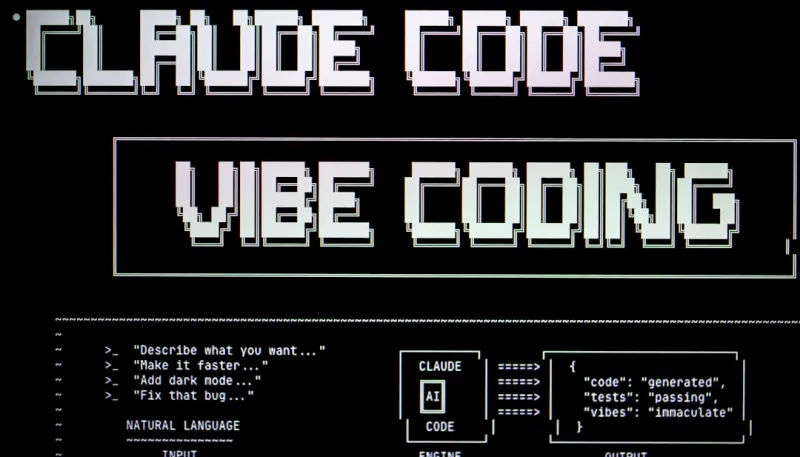
The most palpable shift in recent years is the rise of AI‑assisted coding tools that sit beside us like a diligent co‑pilot. From autocomplete that predicts whole function bodies to static analysis that flags subtle security flaws before they ship, these assistants are reshaping how we write, review, and refactor code. I still remember the first time a model suggested an entire recursive algorithm for a tree traversal—what felt like magic quickly turned into a lesson about trusting, but verifying, machine suggestions. The key is to treat AI as a productivity amplifier, not a replacement for critical thinking. Pair it with rigorous unit testing, and you’ll see cycle times shrink dramatically. If you’re curious about the broader implications of AI on compute workloads, check out my deep dive on AI Computing in 2025, where I explore how these models will demand new hardware paradigms and developer mindsets.
Low‑Code, No‑Code, and the Democratization of Software
Low‑code platforms have leapt from niche internal tools to mainstream production environments, blurring the line between developer and citizen developer. While the hype can be overwhelming, the reality is nuanced: these platforms excel at accelerating CRUD‑heavy applications, rapid prototyping, and automating mundane workflows, freeing seasoned engineers to tackle the truly complex problems. I’ve integrated low‑code modules into several enterprise pipelines, and the biggest win wasn’t speed—it was the cultural shift toward shared ownership of the product roadmap. However, the trade‑off is a new kind of technical debt—vendor lock‑in, limited extensibility, and sometimes opaque performance characteristics. Balancing this requires a clear governance model: define where low‑code is acceptable, enforce code reviews even on generated artifacts, and maintain a fallback path for custom extensions. As we lean into this democratization, remember that the best low‑code solutions still have a solid API backbone and are built with observability in mind.
Security as Code: Embedding Protection Early
Security used to be an after‑the‑fact checklist item, but today it’s an integral part of the CI/CD pipeline—sometimes even a code comment away. Modern DevSecOps practices embed static application security testing (SAST), dependency scanning, and container image hardening directly into the build process. I’ve seen teams reduce vulnerabilities by up to 60% simply by shifting left and automating policy enforcement. One practical tip: treat your security policies as code, store them in version control, and version‑bump them alongside your application. This approach not only provides auditability but also fosters collaboration between security analysts and developers. If you’re interested in the evolution of security thinking, you might enjoy the article The Evolution of Computer Security, where I trace the journey from perimeter defenses to zero‑trust architectures.
The Intersection of Software Development and Computer Hardware
Hardware is no longer a silent backdrop; it’s an active participant in software performance and cost decisions. The rise of specialized accelerators, such as GPUs for machine learning and TPUs for inference, forces developers to think about data locality, memory bandwidth, and parallelism at the code level. In my recent analysis, I highlighted how understanding the nuances of RAM latency and storage I/O can shave milliseconds off latency‑critical services. For a deep dive on this synergy, read The Intersection of Software Development and Computer Hardware. The takeaway? Write code that is hardware‑aware without becoming hardware‑bound: use abstractions that allow you to swap out back‑ends, profile continuously, and stay abreast of emerging silicon trends that could unlock new capabilities for your applications.
Performance Optimization in a Cloud‑Native World
Performance tuning has taken on a new complexion in cloud‑native architectures. With microservices, serverless functions, and container orchestration, the bottlenecks often reside in network latency, cold start times, and inefficient serialization rather than pure CPU cycles. I recommend a layered approach: start with application‑level profiling to pinpoint hot paths, then move outward to examine infrastructure metrics—think latency histograms from your service mesh and cache hit ratios from your distributed cache. Investing in observability tools that correlate logs, traces, and metrics pays dividends when you need to triage a performance incident under pressure. Additionally, don’t overlook the impact of language runtimes; for example, moving a performance‑critical component from Python to Go can reduce latency by 30% with minimal code rewrite.
Preparing for the 2025 Tech Landscape
Looking ahead, the trends shaping 2025 are already in motion: quantum‑ready algorithms, edge AI, and increasingly autonomous development pipelines. While it’s tempting to chase every shiny new tool, the strategic approach is to build adaptable foundations. Embrace modular architecture, invest in API‑first design, and keep your CI/CD pipelines flexible enough to integrate emerging runtimes. One concrete step is to experiment with “infrastructure as code” patterns that can spin up both traditional VMs and serverless environments from the same declarative configuration. This duality ensures you’re not locked into a single execution model as the market evolves. For a broader perspective, my piece on The Future of Tech: Trends to Watch outlines the macro forces that will dictate which tools gain traction and which fade into obscurity.
Community, Continuous Learning, and the Human Factor
Technology moves fast, but the human element moves faster. In my experience, the most resilient developers are those who actively participate in communities—whether through open‑source contributions, tech meetups, or blogging. Sharing knowledge not only solidifies your own understanding but also surfaces blind spots you might miss when working in isolation. I allocate at least an hour a week to read recent pull requests from projects I admire, and I make a habit of writing short retrospectives on lessons learned after each sprint. This practice has helped me stay ahead of emerging patterns, such as the shift toward declarative security policies and the growing importance of data observability in AI pipelines. Remember, a thriving developer ecosystem is the catalyst that transforms fleeting trends into lasting standards.
Practical Steps to Future‑Proof Your Development Stack
So, how do you translate these insights into day‑to‑day actions? Start by conducting a “tech debt audit”: list the languages, frameworks, and services that are critical to your product, and evaluate their long‑term viability, community health, and compatibility with upcoming hardware trends. Next, establish a “sandbox” environment where you can pilot emerging tools—be it an AI code reviewer, a new container runtime, or a serverless platform—without jeopardizing production stability. Finally, embed a quarterly “innovation sprint” into your roadmap, giving teams dedicated time to experiment, refactor, and share findings. By institutionalizing these practices, you create a feedback loop that continuously aligns your stack with the evolving tech horizon, ensuring you’re not merely reacting to change but actively shaping it.
Conclusion: Embrace the Flux, Keep the Core Strong
The software development arena is in perpetual motion, and the only constant is change. Yet, amidst the whirlwind of AI assistants, low‑code platforms, and hardware accelerators, the fundamentals—clean code, solid architecture, and a collaborative mindset—remain timeless. By blending curiosity with disciplined engineering, you can harness today’s trends without sacrificing the stability that users expect. As we march toward 2025, remember that the most valuable asset you possess is the ability to learn, unlearn, and relearn quickly. Keep your codebase adaptable, your pipelines observable, and your community engaged, and you’ll find that the future isn’t something to fear—it’s an open canvas waiting for the next line of code you write.