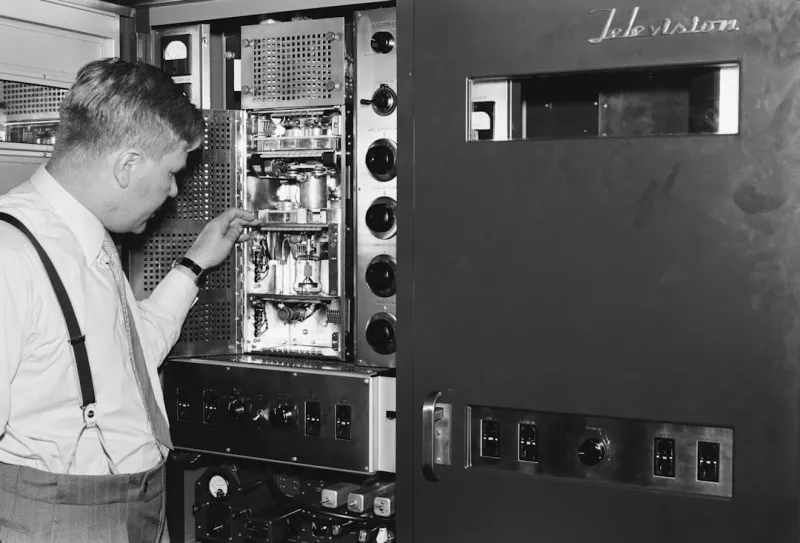
When I first booted a Windows 95 machine in the early 2000s, the idea of an operating system that could learn from you was pure science‑fiction. Fast forward to 2026, and that fantasy has become our everyday reality. Modern OSes are no longer static platforms; they are living, adaptive environments that anticipate our needs, optimize resources, and even protect us from threats before they materialize. As a longtime tech enthusiast, I’ve watched the OS landscape morph from clunky command lines to sleek, AI‑infused experiences that feel almost psychic. This shift is driven by three forces: unprecedented hardware capabilities, a flood of AI research finally making it to consumer devices, and a market that demands seamless, secure performance across laptops, desktops, and even wearable compute. In this post, I’ll break down how AI is redefining the core experience of operating systems, what it means for security, and how you can future‑proof your setup in a world where the OS itself is becoming a co‑pilot.
AI‑Driven Interfaces: From Clicks to Conversations
One of the most visible changes in 2026 operating systems is the rise of context‑aware, voice‑first interfaces that understand not just commands but intent. Imagine telling your PC, “I need to prep for a presentation,” and the OS automatically pulls the latest slides, opens a notes app, and adjusts your screen layout for optimal readability. This isn’t a gimmick; it’s built on deep learning models that run locally, thanks to the explosion of AI‑ready hardware. The result is a fluid, almost conversational workflow that cuts down on multitasking fatigue. Predictive UI elements now suggest actions based on your recent habits, while background processes dynamically allocate CPU and GPU cycles to keep latency invisible. If you’ve been following my deep dive on how AI is reshaping OS cores, you’ll recognize many of these features in the article Operating Systems in 2026: How AI Is Redefining the Core Experience. The takeaway? Your OS is evolving from a passive container to an active collaborator, and the best part is it learns from you, not the other way around.
Security Gets Smarter: Battling AI‑Powered Malware
With great power comes great responsibility, and AI’s infiltration into the OS also opens doors for smarter adversaries. In 2026 we’re witnessing a new class of threats that leverage generative models to craft polymorphic malware capable of evading traditional signatures. However, the same AI that empowers attackers also equips defenders. Modern operating systems now embed autonomous threat‑detection agents that continuously analyze system behavior, flag anomalies, and quarantine suspicious processes in real time. These agents are trained on global threat intel feeds, enabling them to anticipate attack vectors before they hit your machine. If you’re curious about the cat‑and‑mouse game playing out in the shadows, check out my recent piece on AI‑Powered Malware in 2026: How to Stay Ahead of the Next Generation Threats. By integrating AI at the kernel level, OS vendors are turning the tables, making security a proactive, self‑healing process rather than a reactive patch‑cycle.
Modular Kernels: The Rise of Adaptive Micro‑Architectures
The traditional monolithic kernel—once the undisputed backbone of Windows, Linux, and macOS—is giving way to a more modular, microkernel‑inspired design that can hot‑swap components on the fly. This architecture is essential for accommodating AI accelerators, dedicated neural processing units, and other specialized hardware without rebooting. In practice, it means you can enable a new AI service, like real‑time language translation, and the OS will load the required driver stack without disrupting your workflow. Adaptive kernel modules also improve system stability; if a particular AI plugin misbehaves, the OS isolates it, preventing a full system crash. Developers now have a richer API surface to interact with hardware directly, reducing latency for AI workloads. The shift toward modularity is not just a technical curiosity—it’s a response to the growing demand for flexible, upgradable platforms that can keep pace with rapid AI advancements.
Edge and Cloud Convergence: The Hybrid OS Experience
Another trend reshaping the operating system landscape is the seamless blend of edge computing with cloud services. In 2026, many devices no longer rely solely on local resources; instead, they offload heavy AI inference tasks to nearby edge servers, achieving near‑instant results while preserving battery life. This hybrid approach is facilitated by OS‑level orchestration layers that intelligently decide where to run a given workload—locally, at the edge, or in the cloud—based on latency, privacy, and cost considerations. For gamers, this means ultra‑low‑lag streaming of AI‑enhanced graphics; for professionals, it translates to real‑time collaboration on 3D models without the need for a workstation. The OS now acts as a traffic director, negotiating bandwidth and security policies on the fly, which also simplifies the user experience: you no longer need to manually configure VPNs or proxy settings to tap into edge resources.
Built‑In Encryption: Making Strong Crypto the Default
Security is no longer an optional add‑on; it’s baked into the core of every operating system released this year. Full‑disk encryption, end‑to‑end messaging, and secure enclaves are now enabled by default, with transparent key management that requires no user intervention. This shift is driven by the realization that weak crypto is a liability in an AI‑enhanced threat landscape. By leveraging hardware‑based random number generators and post‑quantum algorithms, modern OSes provide a security baseline that meets both consumer and enterprise compliance standards. If you want a deeper look at why encryption has become mandatory, read my analysis in Encryption in 2026: Why Strong Crypto Is No Longer Optional. The net effect? Users enjoy peace of mind, and developers can focus on building features rather than scrambling to retrofit security after a breach.
Developer‑Centric Innovations: New APIs and Containerization
From a developer’s perspective, 2026 operating systems are a playground of powerful, AI‑aware APIs that simplify complex tasks. Unified AI service layers expose pre‑trained models for vision, speech, and language directly to applications, eliminating the need for third‑party SDKs. Coupled with native container support, developers can spin up isolated environments that leverage the OS’s AI acceleration without worrying about dependency hell. The result is faster time‑to‑market for AI‑infused apps, and a more consistent user experience across devices. Moreover, the OS now offers predictive debugging tools that analyze code patterns and suggest optimizations before you even run your program. This synergy between OS capabilities and developer tooling is fostering an ecosystem where innovation happens at the edge, not just in massive data centers.
Preparing for the Future: Tips to Future‑Proof Your Setup
So, how can you stay ahead in this rapidly evolving OS environment? First, invest in AI‑ready hardware—processors with integrated neural cores and ample RAM—to ensure your machine can handle on‑device AI workloads. Second, keep your OS updated; the latest patches often include critical AI security models that defend against emerging threats. Third, familiarize yourself with the OS’s privacy dashboard; understanding what data is collected and how it’s used empowers you to make informed choices. Finally, explore the ecosystem of AI extensions offered through the OS’s marketplace; many are free, community‑driven projects that can add functionality without bloat. By treating your operating system as a living platform—one that you nurture with regular maintenance and thoughtful upgrades—you’ll reap the benefits of AI without falling prey to its pitfalls.
Where to Go Next: Dive Deeper into AI‑Driven Tech
If today’s overview sparked your curiosity, there’s a wealth of related content waiting for you. For a broader view of how AI is reshaping connectivity, check out Smart Networks in 2026: How AI Is Redefining Connectivity. These articles complement the operating system trends we’ve explored and will give you a holistic picture of the AI‑centric future of personal computing. Stay tuned, stay curious, and remember—your OS is no longer just software; it’s an intelligent partner on your digital journey.